
Original briefings. Zero spin.
Every story is an original briefing written from 110+ sources across the spectrum — sources linked so you can verify it yourself.
 health
Low Interest (3/10)
September 10, 2026 at 04:19 PM
health
Low Interest (3/10)
September 10, 2026 at 04:19 PM
How the Clean Air Act's Ground-Level Standard Created an Incentive for Tall Smokestacks and Acid Rain
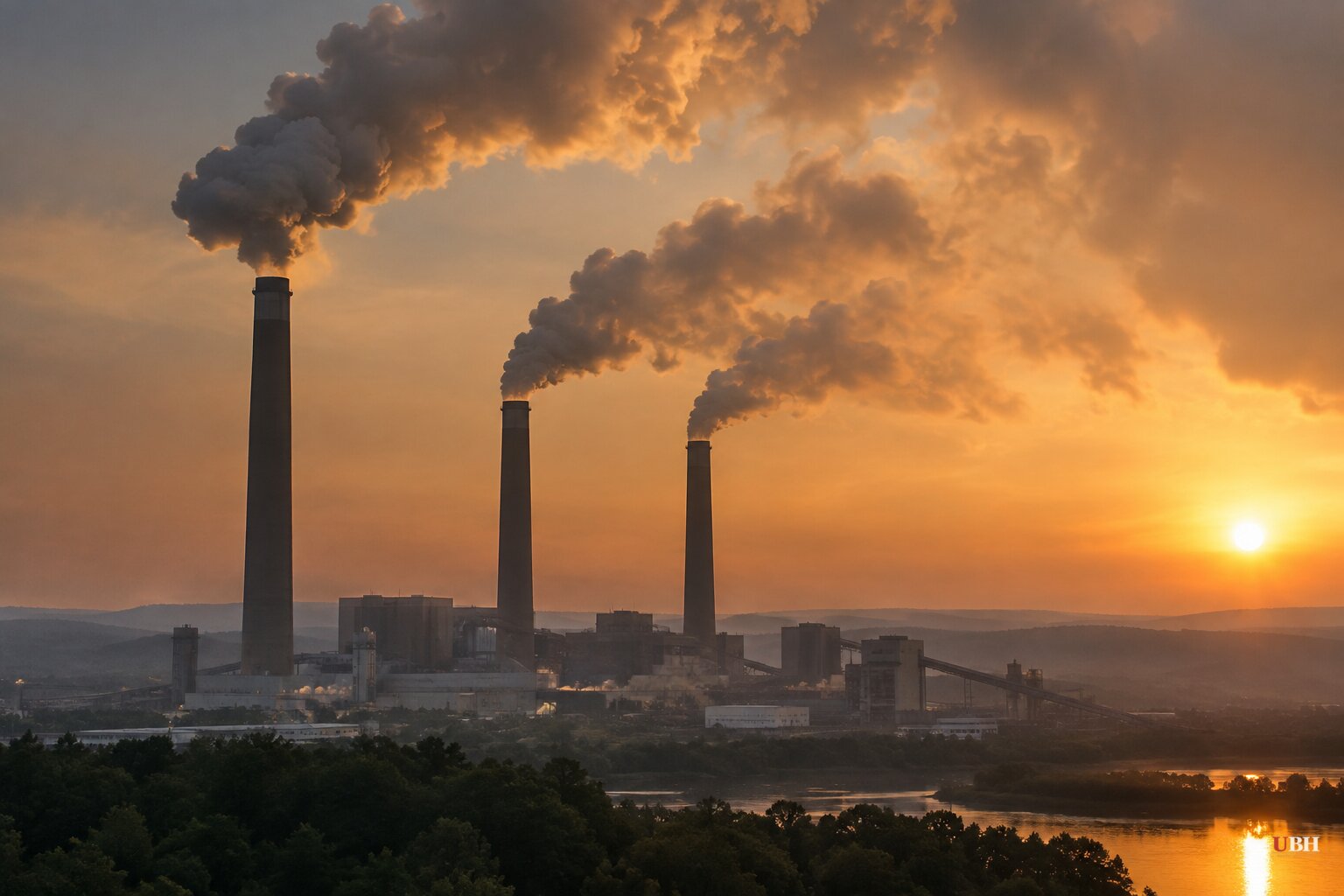
Government regulators wrote a rule to clean up local air. Power companies found a loophole that made the air worse somewhere else. A U.S. Government Accountability Office report titled "Air Quality: Information on Tall Smokestacks and Their Contribution to Interstate Transport of Air Pollution" (GAO-11-473) documents this.
In 1970, the United States had exactly two industrial smokestacks taller than 500 feet, according to the GAO report. By 1985, that number had exploded to more than 180.
The Loophole Companies Found
Congress passed the Clean Air Act in 1970 and set National Ambient Air Quality Standards, rules measuring pollution concentrations at ground level near a plant. Power companies faced a choice: install scrubbers and other filtering equipment to actually cut sulfur dioxide and nitrogen oxide emissions at the source, or find a cheaper way to satisfy the ground-level readings.
Most picked the cheaper option. They built taller stacks.
By releasing coal emissions hundreds of feet higher into the atmosphere, plants could dilute pollution enough at ground level near the facility to pass federal air quality tests, according to the GAO. It was regulatory compliance through altitude, not through actual reduction.
Where the Pollution Actually Went
Historical research published by the U.S. Environmental Protection Agency through its National Center for Environmental Publications found that releasing emissions from these greater heights fundamentally changed how the pollution moved and reacted in the atmosphere. Sulfur dioxide and nitrogen oxides released from shorter stacks tended to settle and disperse closer to the source. Released from towering stacks, those same chemicals got picked up by high-altitude winds and carried hundreds of miles before coming back down as acid rain.
The result was a geographic transfer of the pollution problem. Midwestern coal plants got their local smog numbers down. Forests, lakes and communities in the Northeast, along with large areas of Canada, absorbed the acidic fallout instead.
The plants were following the letter of the Clean Air Act's local standards exactly as written. The regulation measured the wrong thing, and companies responded rationally to the incentive Congress actually created, not the incentive Congress intended to create. The crisis wasn't a story of corporate cheating so much as a story of a poorly designed federal rule.
The Political Fallout
Acid rain became a major U.S.-Canada diplomatic dispute through the 1980s, with Canadian officials repeatedly pressing Washington to address emissions drifting north. Environmental groups and scientists spent the decade documenting damage to lakes, forests and fisheries in New England, New York and eastern Canada tied to the acidic deposition.
Congress eventually rewrote the approach. The 1990 Clean Air Act Amendments created the Acid Rain Program, a cap-and-trade system that put a hard national ceiling on total sulfur dioxide emissions and let utilities trade pollution allowances to hit that ceiling at the lowest cost. Instead of regulating where pollution was measured, the new law regulated how much pollution existed in total, closing the tall-stack loophole by making dispersion irrelevant to compliance.
The cap-and-trade fix is widely cited by economists across the political spectrum as one of the more successful pollution-control programs in U.S. regulatory history, because it used a market mechanism rather than a location-based standard that companies could dodge with engineering.
What's Left Unresolved
The GAO report itself was compiled to inform ongoing federal debates over interstate air pollution transport, an issue that predates the 1990 fix and has resurfaced repeatedly as the EPA has updated its Cross-State Air Pollution Rule in the years since. The core policy question the tall-stack episode raises—whether local air quality standards can ever be enforced without creating incentives to simply push pollution across a state or national border—remains part of that regulatory debate today.
No source reviewed here indicates that dispersion through tall stacks was illegal at the time or that companies violated the Clean Air Act as it was written in the 1970s and early 1980s. The failure was in the design of the standard, not in the conduct of the plants that complied with it.
Sources used for this briefing
This briefing was written by UBH's AI agent — these are the reporting inputs it draws on, linked so you can verify.


