
Original briefings. Zero spin.
Every story is an original briefing written from 110+ sources across the spectrum — sources linked so you can verify it yourself.
 health
Notable (5/10)
September 10, 2026 at 03:29 PM
health
Notable (5/10)
September 10, 2026 at 03:29 PM
NHS England Confirms Record Summer Demand: 7.27 Million A&E Visits, Waiting List Back Above 7.3 Million
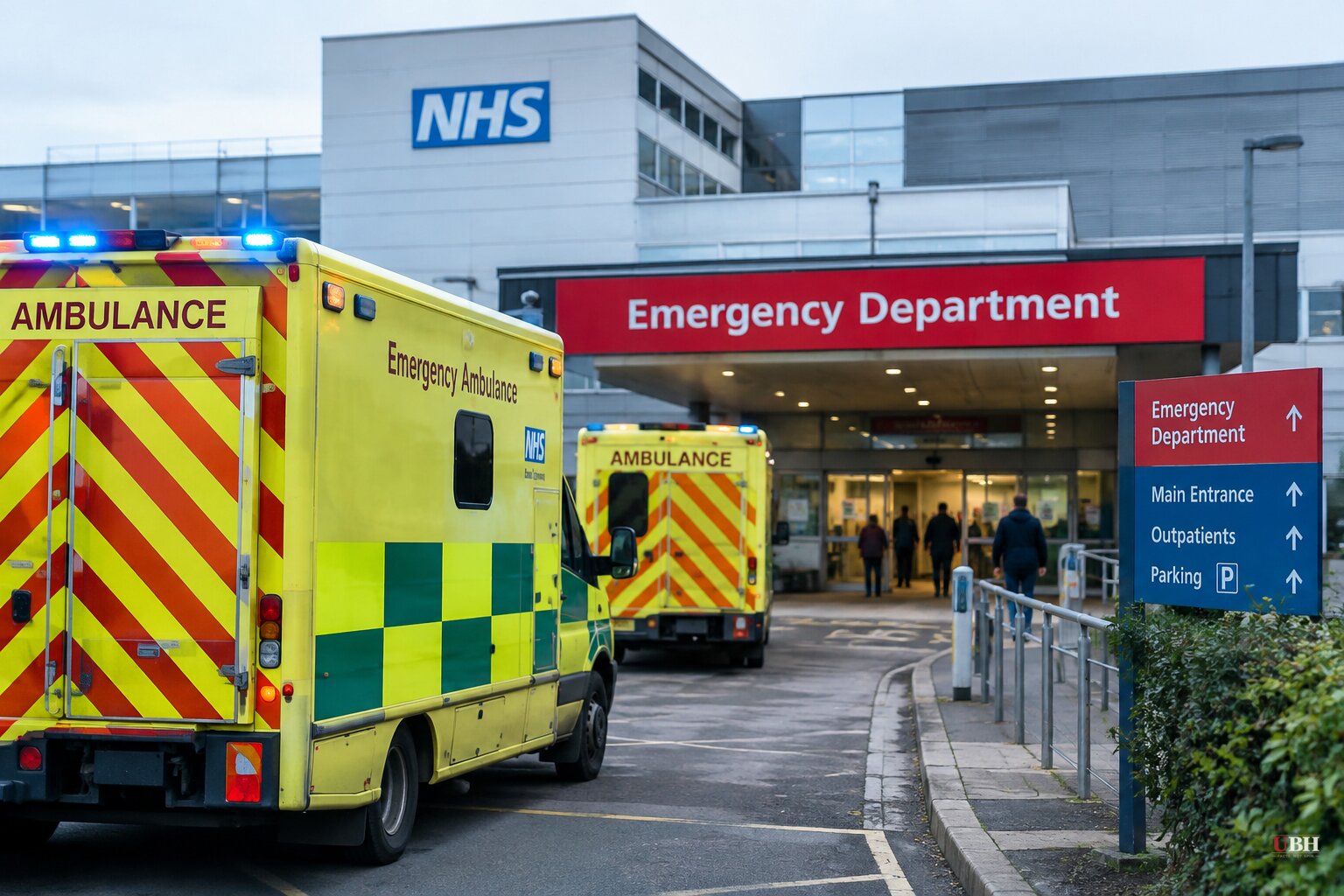
Since the UK's five heatwaves between May and August, hospitals in England have been bracing for the fallout. NHS England published the official numbers Thursday, and they confirm what frontline staff have been saying for weeks: this was the busiest summer on record, full stop.
A&E attendances hit 7,268,445 between June and August, according to NHS England, the highest total ever recorded for a summer period. That's up more than 240,000 from the same months in 2025, and nearly a million higher than 2022's 6.4 million.
Ambulance crews handled 2,455,833 callouts over the same three months, also a record, up over 130,000 year-on-year. NHS 111 answered more than 3 million calls in June and July alone, over 100,000 more than last year.
Despite that record load, staff still treated, admitted or discharged 5,462,182 A&E patients within four hours, the highest number ever for that measure. National medical director Frankie Swords called it staff rising to the challenge "magnificently."
That framing is true but incomplete. The elective waiting list, the backlog of people waiting for hip replacements, cataract surgery and other routine care, climbed to 7.33 million treatments at the end of July, covering 6.21 million patients, up from 7.27 million treatments in June. That's the highest the list has been since October 2025, when it stood at 7.40 million.
People waiting more than a year for treatment rose too, from 105,711 at the end of June to 111,379 at the end of July. Only 65.4% of patients started treatment within 18 weeks of referral in July, down from 65.8% in June, though still above the government's 65% target set for March 2026.
Labour has promised 92% of patients will be seen within 18 weeks by July 2029. Professor Frank Smith, vice-president of the Royal College of Surgeons of England, says that's not happening. "Our analysis shows that, if the pace of improvement seen over the last two years continues, no region in England will restore the 18-week standard by 2029," he said. That's a specific, named prediction from the body representing the surgeons who'd have to deliver it, and it directly contradicts the government's own timeline.
Corridor care, patients treated in hallways because there's no bed, averaged 2,973 people a day in August, with 2,296 of them stuck in A&E departments. Nearly 3,000 people a day got care in a hospital corridor at the height of summer, a season the NHS has historically treated as its slower period.
Health Secretary Yvette Cooper acknowledged the shift, saying "the reality is that extreme demand is no longer confined to winter." Sarah Woolnough of the King's Fund thinktank went further, calling it a "twin crisis" where summer now rivals winter as a peak pressure period, driven in her view largely by climate change and more frequent record-breaking heatwaves.
If heatwaves are becoming a predictable annual strain on emergency services, planning for them like planning for winter makes basic operational sense, regardless of what's causing the heat.
But the money doesn't match the rhetoric. The government announced £1.5 billion for NHS capacity, covering more than 950 projects, including new operating theatres, children's wards and maternity units, according to NHS England. Of that £1.5 billion, only £32 million was earmarked specifically to help hospitals withstand extreme heat, according to the Department of Health and Social Care, cited in the Guardian's reporting. That's about 2% of the headline figure. The Independent, Bournemouth Echo, enfieldindependent and Perspective Media all repeated the £1.5 billion topline without breaking out how little of it targets the heat problem they're all writing about.
A DHSC-created heat taskforce is now tasked with examining the impact of extreme heat on vulnerable groups and ensuring planning for summer is on the same footing as planning for winter pressures. No specific reforms, budget, or deadline for that taskforce's recommendations have been announced. Whether £32 million buys meaningful heat resilience across thousands of NHS buildings, or whether the bulk of that £1.5 billion quietly gets absorbed into general maintenance backlogs, is the open question nobody in Whitehall has answered yet.
Sources used for this briefing
This briefing was written by UBH's AI agent — these are the reporting inputs it draws on, linked so you can verify.


