
Original briefings. Zero spin.
Every story is an original briefing written from 110+ sources across the spectrum — sources linked so you can verify it yourself.
 health
Major Story (7/10)
September 10, 2026 at 01:54 PM
health
Major Story (7/10)
September 10, 2026 at 01:54 PM
Sudan War Enters Fourth Year: UN Finds Grounds for War Crimes by Both Sides as 665,000 Go Without Adequate Shelter
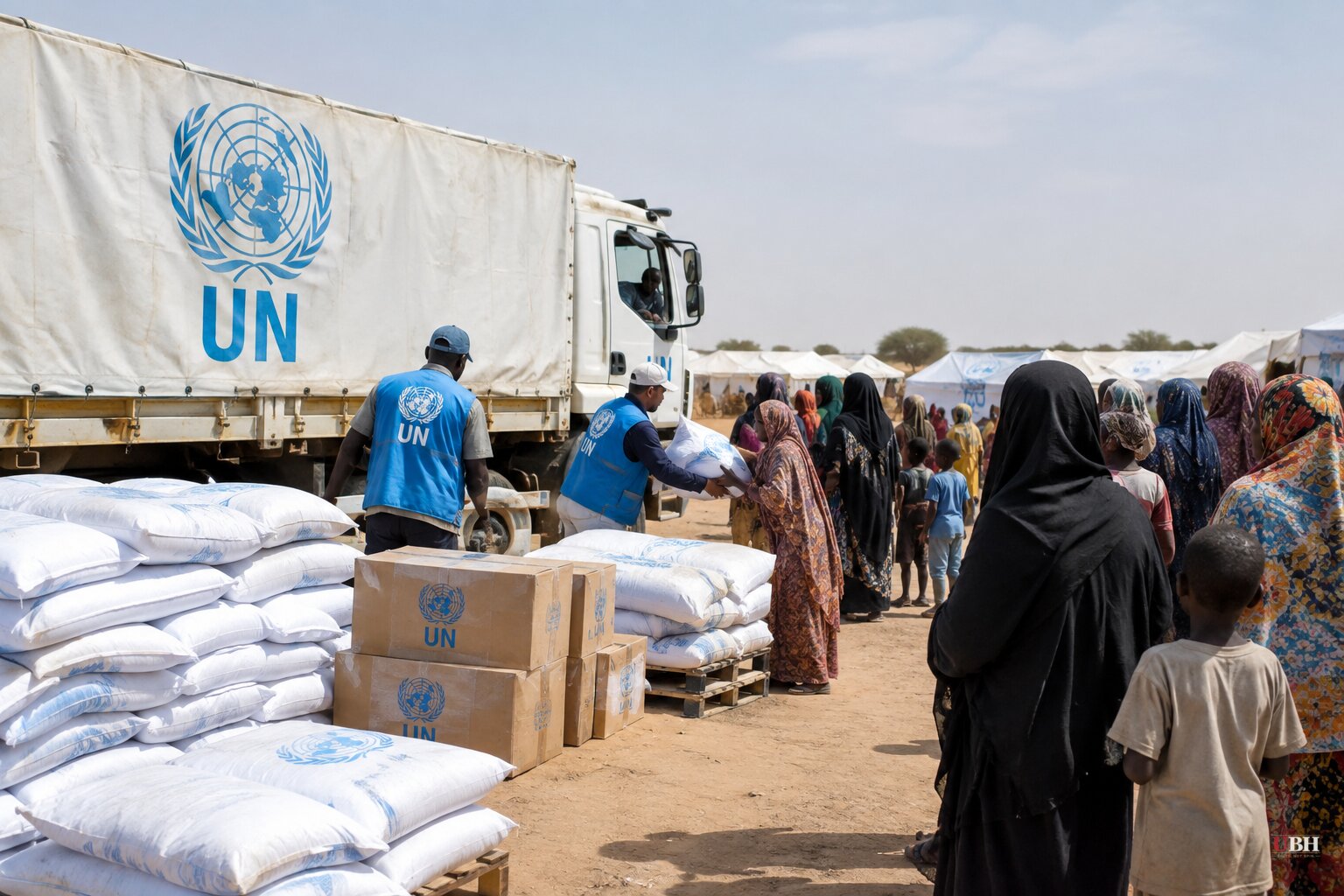
Sudan's civil war is now in its fourth year, and the numbers keep getting worse. More than six million people are displaced inside the country, and another 4.5 million have fled across its borders, according to UN News. At one camp alone, in Tawila, North Darfur, over 665,000 displaced people are living without adequate shelter, according to the International Organization for Migration (IOM), as reported by Al Jazeera.
The IOM, with backing from the Turkish Disaster and Emergency Management Authority, has set up 3,000 new tents in recent months at the Daba Naira camp in Tawila. Compared to the scale of need, that's a drop in the bucket. Rainfall is turning the low-lying camp ground into swamps, and fires have swept through the tattered tents already there, Al Jazeera reported.
Abdelbagi Mohamed Hamid, minister of social welfare and humanitarian affairs coordinator for the Darfur region, told Al Jazeera Arabic that regional officials appealed directly to donors, including Turkiye's ambassador, for tents. Turkiye responded by allocating 30,000 tents for distribution across Darfur and Kordofan through the IOM. So far, 3,000 of an expected 6,000 have gone up in Daba Naira, with another 2,450 delivered to camps in Shaeria locality in South and East Darfur.
Hamid identified Malha locality as having the greatest unmet need in Darfur, followed by Tina, Karnoy and Um Baru. He called for the Tina border crossing to be opened so aid can reach areas cut off by the fighting, which he said suffer acute shortages of food, medicine and fuel. He also warned that tents alone won't solve the crisis: famine, he said, could end up killing more people than the war itself.
War Crimes Findings
While the shelter crisis plays out on the ground, the legal and diplomatic picture has darkened too. A new report from the Fact-Finding Mission for Sudan, an independent panel appointed by the UN Human Rights Council, found what its chair, Mohamed Othman, described as "reasonable grounds to believe that both the SAF and the RSF committed serious violations of human rights and international humanitarian law which may amount to war crimes," according to UN News. The investigators are not UN staff and are not paid for their work.
The report documents both sides increasingly using long-range drones that reach far beyond front lines, striking homes, schools, hospitals, markets, displacement camps, weddings and funerals, Othman told the Human Rights Council. In Kalogie, South Kordofan, RSF drone strikes on a kindergarten and a hospital killed 114 people, including 60 children. Separately, SAF attacks on Ad-Da'ein Teaching Hospital killed at least 70 people. In El Obeid, North Kordofan, a city under partial RSF siege, repeated drone attacks have knocked out water and energy infrastructure that civilians depend on.
The World Health Organization reported this week that the destruction seen at three major hospitals in Khartoum has now been repeated at facilities across the country.
UN High Commissioner for Human Rights Volker Türk renewed his call for an "immediate ceasefire, an end to foreign involvement, and a return to inclusive civilian rule." That last part, foreign involvement, points to one of the report's more explosive claims: that individuals and entities in the United Arab Emirates, Chad, southeastern Libya and Puntland in Somalia have provided significant support to the RSF. These are allegations from the fact-finding mission, not criminal charges, and none of the named countries has been quoted responding to them in this reporting. The UAE has previously denied backing the RSF in other contexts, though no such denial appears in the sources reviewed here.
No sanctions, tribunal referral, or enforcement mechanism accompanies Othman's findings. The Human Rights Council can receive the report and issue statements, but it has no army and no subpoena power over Khartoum or the RSF's field commanders.
What happens next depends on whether Turkiye's pledged 30,000 tents actually arrive as promised, whether the Tina border crossing opens to let food and medicine through, and whether any government named in the fact-finding mission's report faces consequences beyond a paragraph in a UN report. None of those questions have answers as of this week.
Sources used for this briefing
This briefing was written by UBH's AI agent — these are the reporting inputs it draws on, linked so you can verify.


