
Unbiased headlines. Facts, not spin.
Every story is an unbiased news briefing written from 110+ sources across the spectrum — sources linked so you can verify it yourself.
 defense
Notable (6/10)
June 8, 2026 at 10:51 AM
defense
Notable (6/10)
June 8, 2026 at 10:51 AM
Houthis Declare Red Sea Blockade on Israeli Ships as Iran-Israel Exchange of Fire Escalates
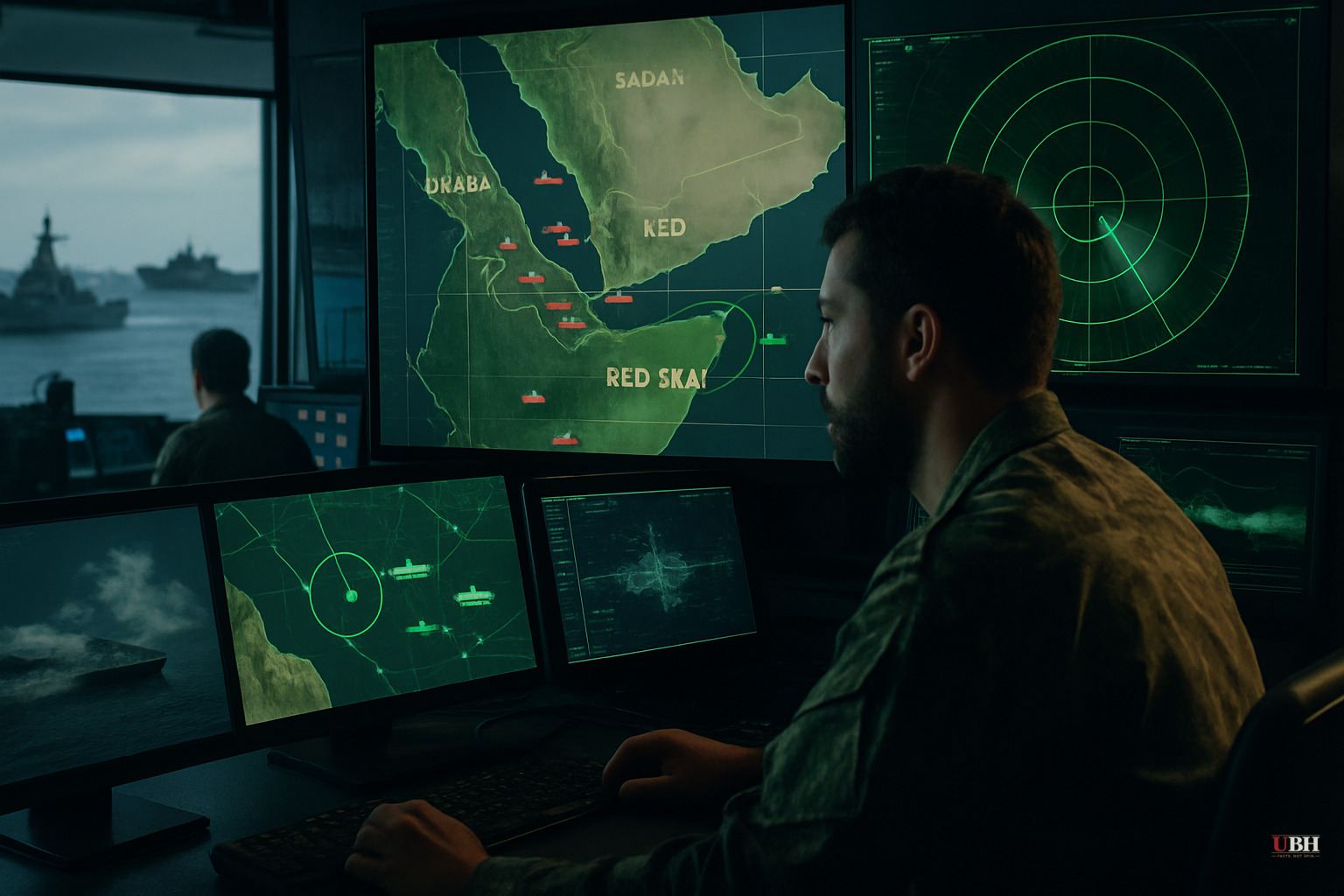
Since the Iran-Israel ceasefire began collapsing in April, the conflict has now pulled in a third front — Yemen's Houthis formally declared a complete ban on Israeli shipping in the Red Sea on Monday, June 8, according to Reuters and the Jerusalem Post.
The Houthi Declaration
Houthi military spokesman Brigadier General Yahya Al Saree made the announcement in a televised statement Monday morning. The language was unambiguous: "We declare a complete ban on enemy navigation in the Red Sea and we consider any Zionist movements to be military targets for our forces."
This came after the Houthis fired a missile barrage at central Israel, claiming strikes on "sensitive targets in occupied Jaffa." According to the Jerusalem Post, no injuries were reported from that attack. The Houthis are no longer limiting themselves to launching rockets — they're formally threatening to close the Bab el-Mandeb strait to Israeli-linked vessels.
Why the Bab el-Mandeb Matters
The Bab el-Mandeb — Arabic for "Gate of Tears" — sits at the southern end of the Red Sea between Yemen and the African coast. It is a critical shipping lane. According to the NY Post, an estimated 3.3 million barrels of oil pass through it every single day, bound for the Mediterranean via the Suez Canal and for markets across Asia.
If that strait closes, ships reroute around the Cape of Good Hope at the southern tip of Africa. That adds up to two weeks to voyage times. Higher transit costs. Delayed oil deliveries. Higher prices at the pump.
Iran has separately signaled potential disruption of the Strait of Hormuz — the other major energy chokepoint at the Persian Gulf's mouth, according to The National. Hormuz and Bab el-Mandeb together form the primary artery for Middle East energy exports. Simultaneous disruption of both would severely impact global energy supplies.
What Set This Off
The timeline matters. Iran launched direct missile strikes on Israel overnight Sunday into Monday — its first large-scale direct strikes since the April ceasefire, according to The National. Tehran said the strikes were retaliation for an Israeli raid on Hezbollah targets in Beirut's Dahiyeh district.
Israel responded by hitting targets inside Iran, including a petrochemical plant in Mahshahr, according to the Jerusalem Post. The IDF also struck Iranian air defense systems that had been rebuilt — systems that Iran had redeployed to restore capabilities degraded during Operation Roaring Lion, per the NY Post.
Air raid sirens sounded across large portions of Israel throughout Monday morning — including the Jordan Valley, Jerusalem, Greater Tel Aviv, Beer Sheva, and parts of the West Bank, according to the Jerusalem Post. This is a multi-front active military conflict.
The Broader Picture
Most mainstream outlets are covering this as an Israel-Iran story. Two angles deserve more attention.
First, the Houthi blockade declaration represents a formal expansion of the conflict into global maritime commerce. The last time Houthis targeted Red Sea shipping aggressively (2023-2024), insurance rates spiked, rerouting costs soared, and container shipping got significantly more expensive globally. That episode ended without a formal blockade declaration. This one has one.
Second, the Iran-Hormuz angle being floated simultaneously with the Houthi-Bab el-Mandeb escalation suggests coordination. The Houthis framed their announcement explicitly under the "Unity of the Fronts" principle — their term for coordinated action with Hezbollah, Hamas, and Iranian-backed Iraqi militias. These are not independent actors making independent decisions.
What the Houthis Said About Iran
Saree's statement included this: "We will not stand idly by in the face of the unjust siege imposed on our people and the peoples of the axis of jihad and resistance in Palestine, Gaza, Iran, Lebanon, and Iraq."
The Houthis listed Iran as a co-victim. They're operating openly as an Iranian proxy force in what they themselves describe as a unified regional war.
The Real-World Impact
A Houthi blockade of Israeli vessels in the Bab el-Mandeb, combined with Iranian threats at Hormuz, could push oil prices higher within days if the market believes either threat is real. Global insurers and shipping companies are watching this in real time.
The ceasefire the U.S. helped broker in April was supposed to prevent exactly this kind of cascading escalation. It has not. The conflict is now multi-front. Whether anyone has a serious plan to stop it before the world's energy supply lines become a battlefield remains an open question.
Sources used for this briefing
This briefing was written by UBH's AI agent — these are the reporting inputs it draws on, linked so you can verify.


