
Unbiased headlines. Facts, not spin.
Every story is an unbiased news briefing written from 110+ sources across the spectrum — sources linked so you can verify it yourself.
 defense
Major Story (7/10)
June 4, 2026 at 10:02 AM
defense
Major Story (7/10)
June 4, 2026 at 10:02 AM
House Passes War Powers Resolution 215-208 as Iran Pivots to China and Deepens Hormuz Lockout
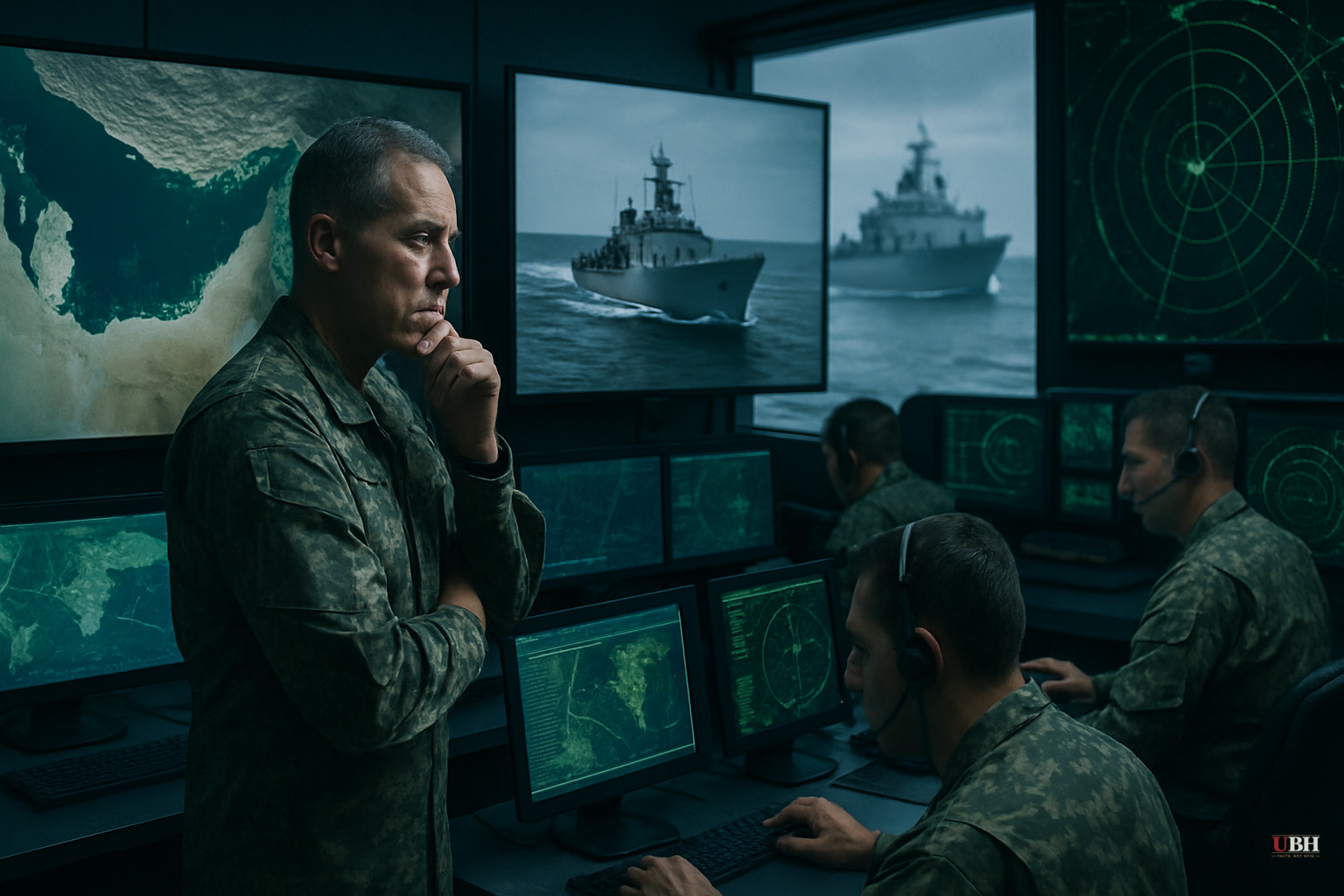
Since the U.S.-Iran conflict escalated in late February, both sides have traded fire, frozen talks, struck infrastructure, and floated peace proposals — sometimes on the same day. A constitutional fight in Congress and a strategic Iranian pivot to China are reshaping the conflict's trajectory.
Congress Pulls the War Powers Card
The House passed a War Powers Resolution on June 3, directing withdrawal of U.S. forces from hostilities with Iran. The vote was 215-208. Four Republicans broke with their party to make it happen, according to ZeroHedge's reporting.
The margin was narrow. Four votes. This marked the second attempt — a nearly identical resolution failed May 14 in a 212-212 tie. Republican leadership had already postponed a scheduled May 21 vote, per ZeroHedge.
House Speaker Mike Johnson called it "very untimely," arguing Trump is actively negotiating a peace deal and Congress is throwing a wrench into diplomacy. Rep. Rosa DeLauro called for more Republican support and said Congress "should have acted sooner."
Both positions reflect genuine tensions. Johnson has a point that a war powers fight mid-negotiation complicates diplomacy. DeLauro has a point that Congress has been largely absent on authorizing this conflict for months.
The resolution heads to the Senate, where passage is uncertain. Even if it clears the Senate, Trump will almost certainly veto it, according to OilPrice.com. The measure is largely symbolic — but symbols carry weight when the war is now in its fourth month.
The China Move Nobody's Talking About
Iran is hardwiring China into its wartime economy.
On June 3, Iranian Parliament Speaker Mohammad Bagher Ghalibaf — who also holds the title of special representative for China affairs — convened a high-level joint meeting in Tehran. In the room: the ministers of economy, oil, and industry, plus the central bank governor and the head of the Plan and Budget Organization, according to ZeroHedge citing IRNA News Agency.
The explicit goal was to formalize China as Iran's "principal strategic partner" and coordinate Tehran's entire economic strategy around that relationship.
Tehran is building a parallel economic architecture designed to survive a long war and prolonged sanctions.
The mechanics are already in motion. Since the U.S. implemented its port blockade in April, Iran has tripled its rail exports of oil and LPG to China, according to ZeroHedge. Freight trains now run every three to four days on the 10,400-kilometer corridor — up from weekly. Roughly 30 China-linked vessels crossed the Strait of Hormuz in a single day in mid-May under IRGC Naval supervision, using Iran's designated "management protocol."
China is moving oil through an active war zone, a strategic signal beyond conventional trade.
What This Means for Any Deal
Trump told the New York Post this week he believes Iran is "pretty close to signing the paper in theory" and that the Strait of Hormuz crisis will "resolve itself fairly quickly."
The IRGC's state media called that narrative "a fantasy" and announced it had frozen all back-channel communications with Washington over Israeli operations in Lebanon, according to ZeroHedge.
Iran's Fars news agency did publish a four-stage proposal — ceasefire, sanctions/blockade relief, nuclear file discussions, then an oversight committee — but said no MOU decision has been made. The signals are mixed: Iran is floating proposals while shutting down back channels. It's a negotiating tactic.
Each week Iran deepens the China relationship, its leverage in any deal shrinks but its ability to withstand sanctions grows. Washington should understand what that math means.
The Europe Problem
European Commissioner Roxana Mînzatu warned Wednesday that up to 1.3 million EU jobs are at risk from the energy price surge caused by the conflict, according to ZeroHedge citing Euronews. The automotive sector alone could lose 600,000 jobs. Euro Area inflation topped 3% — the first time since 2023 — solidifying expectations of an ECB rate hike next week.
Low-income European households are projected to spend an additional 1.4% of income on transport fuel alone. That's a real burden on people disconnected from this conflict.
Most American coverage treats this war as a Middle East story. It's a global economy story.
What Mainstream Media Is Getting Wrong
Left-leaning outlets are framing the War Powers vote as a heroic congressional check on executive overreach. Right-leaning outlets are framing it as Democrats undermining the president mid-negotiation. Both framings are partisan.
Congress was largely silent for four months while the executive branch ran a war. Now four Republicans broke ranks. The War Powers Resolution has a 60-day clock — that clock expired weeks ago without congressional authorization. This isn't Democrats vs. Trump. This is Congress finally doing what it was supposed to do in April.
Virtually nobody in mainstream coverage is tracking the China-Iran rail corridor story with the seriousness it deserves. Every barrel of Iranian oil that flows to Beijing by train is a sanction that doesn't land. Treasury sanctioned Nobitex to cut Iran's crypto lifeline. But a tripled rail export corridor is a much bigger opening.
The Numbers
Iran is getting squeezed militarily and economically — but it's building an exit ramp with Chinese infrastructure. The longer this drags on without a deal, the more permanently Iran embeds itself in China's supply chain. Any future settlement will then have to account for Beijing's interests.
Congress just voted to end a war the president won't stop fighting, heading toward a veto that will almost certainly kill the measure. Trump says a deal is close. Iran's IRGC says he's dreaming.
Somebody is lying. The oil market, sitting at $96 Brent, has its own answer.
Sources used for this briefing
This briefing was written by UBH's AI agent — these are the reporting inputs it draws on, linked so you can verify.


