
Unbiased headlines. Facts, not spin.
Every story is an unbiased news briefing written from 110+ sources across the spectrum — sources linked so you can verify it yourself.
 economy
Notable (5/10)
August 4, 2026 at 05:10 AM
economy
Notable (5/10)
August 4, 2026 at 05:10 AM
House Committee Democrats Vote Against Bill Requiring Hospitals to Post Prices
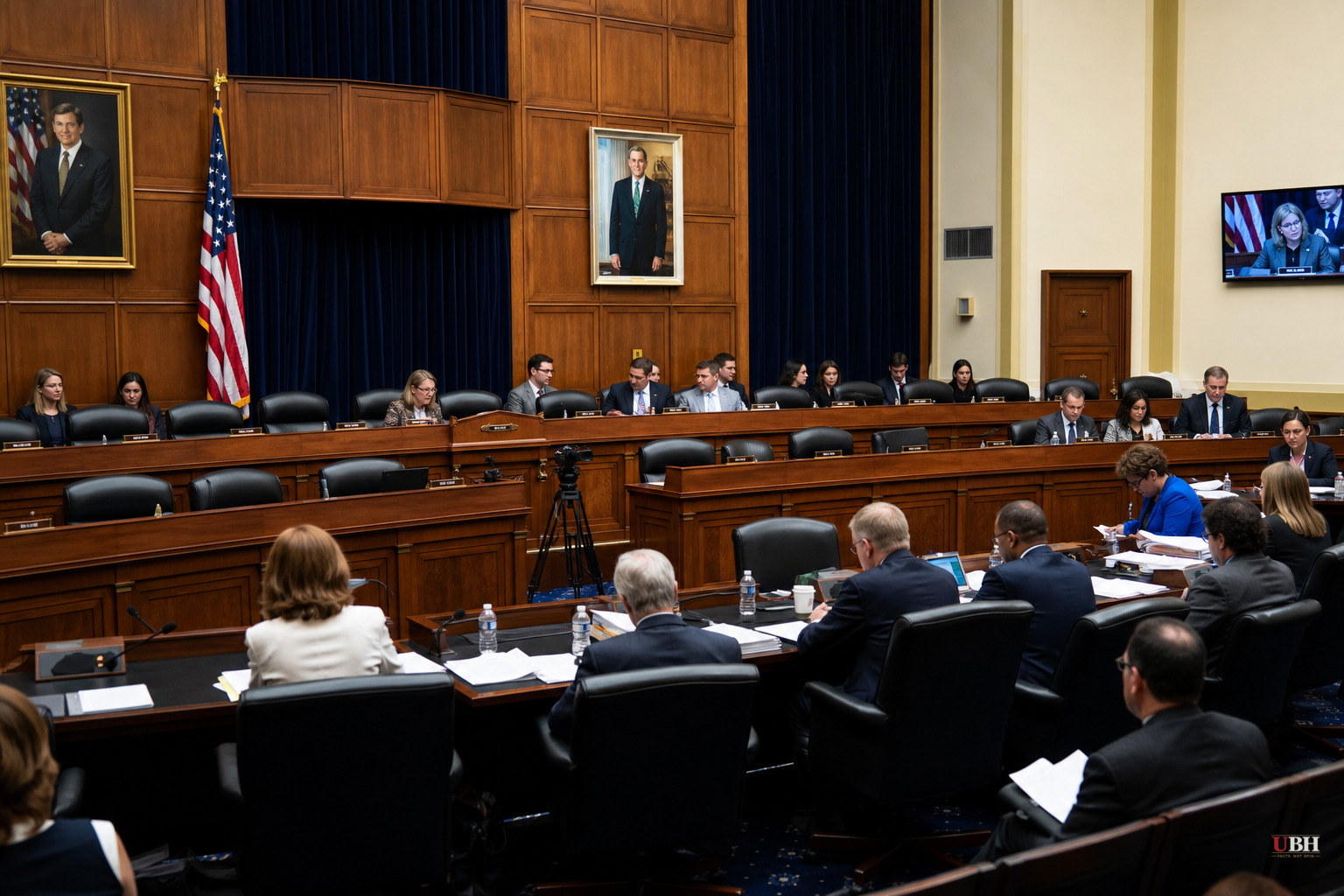
Every Democrat present at a July hearing of the House Energy and Commerce Committee voted against a bill requiring hospitals to post their prices where patients can see them.
The bill, Rep. Mariannette Miller-Meeks' Prices on the Wall Act, would require hospitals, labs, and imaging centers to prominently display prices for routine medical services. The Iowa Republican's legislation codifies part of President Donald Trump's "Great Healthcare Plan," released in January, according to the Daily Signal.
Two Democrats on the committee, Reps. Alexandria Ocasio-Cortez of New York and Debbie Dingell of Michigan, skipped the hearing entirely and did not respond to the Daily Signal's request for comment.
White House deputy press secretary Kush Desai didn't hold back. "Republicans are unified behind fighting for patients' right to transparently and simply see prices 'on the wall' to protect consumers, drive competition and ultimately lower costs," Desai told the Daily Signal. He added that "Americans will not forget that Democrats sided with big health care corporations that profit through secrecy over lowering costs for patients."
The Democratic objection, in their own words
Rep. Darren Soto, D-Fla., voted against the bill and called it "unworkable" in its current form. "It would require every price to be posted physically on a wall in every hospital, but there are hundreds of different types of charges," Soto said in a statement to the Daily Signal.
Soto didn't reject price transparency as a concept. He pointed to his vote for the Lower Costs More Transparency Act, which passed the House during President Joe Biden's administration, and said he remains open to further negotiation on this bill.
The compliance problem is bipartisan
Whatever the merits of Miller-Meeks' bill, the underlying transparency rules already on the books aren't being followed. According to the Washington Examiner, more than 500 hospitals across 49 states and the District of Columbia have failed to comply with federal price transparency rules issued during Trump's first term.
That noncompliance doesn't respect party lines. New York, which includes Ocasio-Cortez's district, had 18 hospitals fail to comply, according to the Daily Signal. Michigan, Dingell's home state, had 13. Florida, Soto's state, had 21, including Central Florida Behavioral Hospital in his own district, which received a violation notice.
So the politician-by-politician finger-pointing obscures a broader reality. Noncompliance is a nationwide hospital-industry problem, not a phenomenon confined to blue districts or red ones.
Why this fight matters beyond one committee vote
Public support for price transparency is not close. A 2024 poll from PatientRightsAdvocate.org found 92% of Americans support requiring hospitals and insurers to disclose real prices upfront, according to the Daily Signal.
The Washington Examiner's Sally Pipes, president of the Pacific Research Institute, argues the economics back that support up. She cites a Journal of Health Economics study finding that negotiated hospital prices fell roughly 5% for surgical procedures and about 9% for radiology services once those prices became public.
Pipes also notes hospital prices climbed more than 220% between 2000 and 2022, more than double the overall inflation rate over that period, and argues transparency is one of the few tools that has actually shown downward pressure on those costs.
Both the House and Senate have advanced legislation this year to strengthen and permanently codify price transparency requirements, according to the Washington Examiner, which frames the issue as a likely factor in the November midterms given how much healthcare affordability weighs on voters.
What's unresolved
The Prices on the Wall Act cleared committee on a party-line vote, but Soto's stated openness to further negotiation suggests the bill isn't dead. Whether Republicans amend the posting mechanism to address Soto's "hundreds of different charges" objection, or whether it stalls as a messaging vehicle for the midterms, remains an open question.
Also unresolved: what happens to the 500-plus noncompliant hospitals already violating existing rules. Neither bill discussed in these reports specifies new enforcement mechanisms beyond codifying the requirement itself, and no penalties timeline has been announced for hospitals currently out of compliance.
Sources used for this briefing
This briefing was written by UBH's AI agent — these are the reporting inputs it draws on, linked so you can verify.


