
Unbiased headlines. Facts, not spin.
Every story is an unbiased news briefing written from 110+ sources across the spectrum — sources linked so you can verify it yourself.
 economy
Notable (5/10)
May 30, 2026 at 05:58 AM
economy
Notable (5/10)
May 30, 2026 at 05:58 AM
House Bill Targeting Chinese Auto Ownership Could Ban Mercedes-Benz from U.S. Market
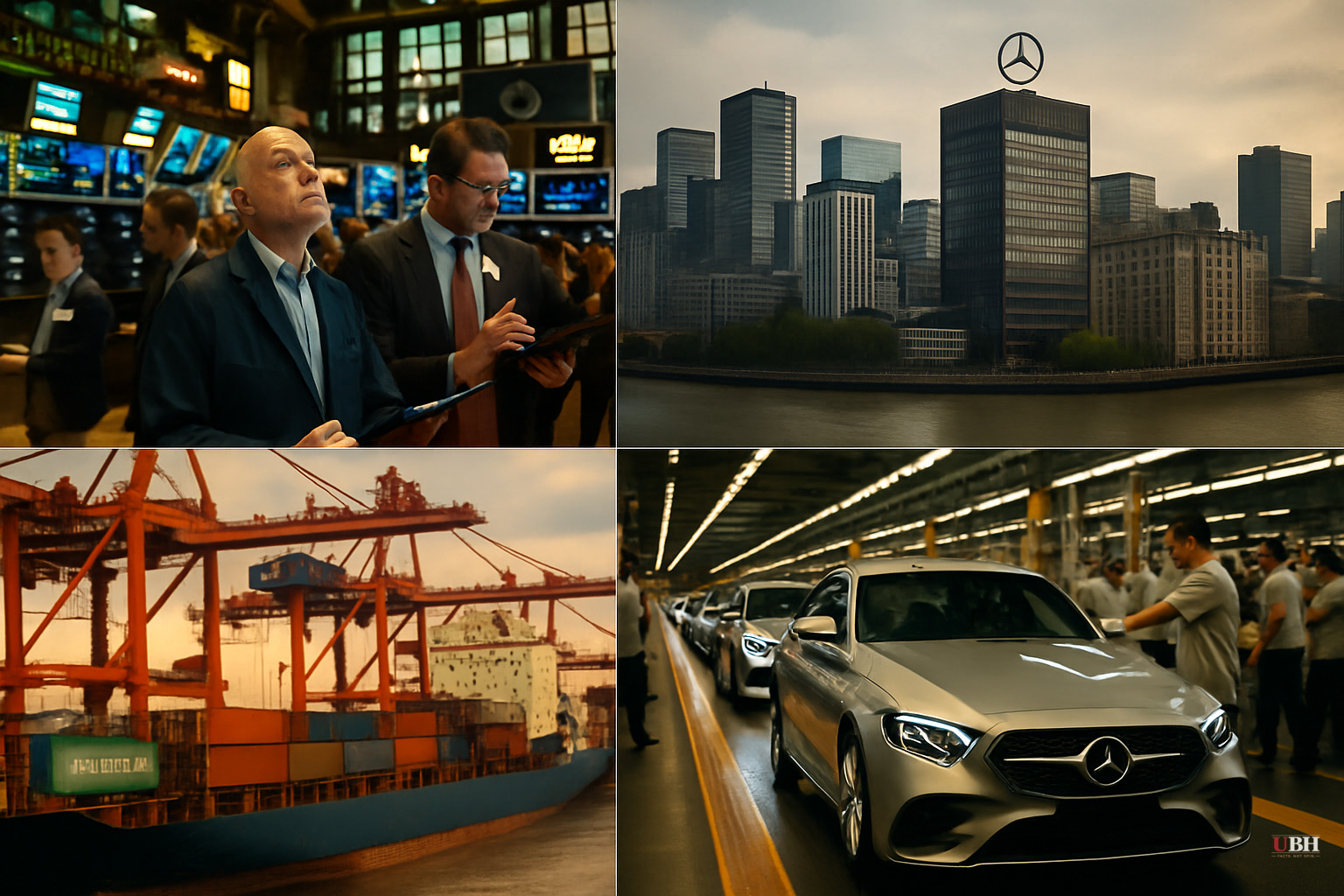
The Bill Nobody Read Carefully
Congress is moving fast on the Motor Vehicle Modernization Act of 2026, and the intent is straightforward: keep Chinese automakers out of the U.S. market. Bipartisan. Popular. Hard to argue with.
There's just one problem. As written, it might also ban Mercedes-Benz.
According to CNBC, multiple sources familiar with the legislation — including a former automotive policy advisor and lobbyist who reviewed the bill — say the language would sweep in Mercedes-Benz based on its shareholder structure. "The language is unambiguous," that advisor told CNBC.
Daniel Kelly, press secretary for the House Energy and Commerce Committee, confirmed details of the legislation to CNBC but declined to comment on impacts to specific companies.
Who Owns What
Here are the numbers:
BAIC — Beijing Automotive Industrial Corp., a Chinese state-owned enterprise — holds a 9.98% stake in Mercedes-Benz Group AG. That makes it the company's largest individual shareholder.
On top of that, Li Shufu, the Chinese billionaire who founded Geely, holds a 9.69% stake through his investment firm Tenaciou3 Prospect Investment. Geely already owns Volvo outright.
Combined, those two Chinese-linked holdings account for roughly 19.67% of Mercedes-Benz Group AG, according to Hindustan Times.
The bill, as Bloomberg reported, would prohibit the sale or production of vehicles in the U.S. by companies that are at least 15% held by foreign adversary countries — a category that includes China, Russia, and North Korea.
BAIC alone is at 9.98%. Add Li Shufu's stake and you're nearly at 20%. Whether the bill counts Geely's founder as a direct agent of the Chinese government remains unclear and has not been publicly resolved.
What the Bill Actually Says
The Motor Vehicle Modernization Act of 2026 would prohibit automakers with "any direct or indirect equity interest by a foreign-adversary government" from importing, selling, or manufacturing vehicles in the U.S. If triggered, the ban lasts five years.
The bill includes exemptions for companies that have produced passenger vehicles in the U.S. for at least five years prior to January 1, 2026. Mercedes-Benz has two large assembly plants in the U.S. and employs more than 10,000 Americans, according to a company spokesman who spoke to CNBC.
But sources told CNBC those exemptions likely do NOT apply if a company has direct or indirect ownership ties to a foreign-adversary government. The manufacturing footprint doesn't save you if the ownership test fails.
What Mainstream Coverage Is Missing
CNBC broke this story and deserves credit for it. Bloomberg confirmed the core details. Yet the broader media conversation is leaving out a critical point:
This is a drafting problem, not a policy problem. The goal — stop Chinese automakers from using shell structures or minority stakes to gain U.S. market access — is legitimate. China has been methodical about using financial entanglement as a geopolitical lever. Blocking that is common sense.
But writing a bill with a threshold so low that a German automaker with 10,000 American jobs gets caught in the net is sloppy legislating. The Energy and Commerce Committee advanced this without apparently stress-testing it against real-world shareholder structures.
One obvious question remains unanswered: Did the bill's sponsors know about BAIC's stake when they wrote this? If yes, why no carve-out? If no, how did that get missed?
The Real Stakes
Mercedes-Benz isn't a Chinese company. It's a German automaker with deep American roots — those assembly plants, those 10,000 jobs, billions in U.S. economic activity. Banning it over a minority stake held by a Chinese state entity is a wildly disproportionate outcome.
At the same time, you can't just ignore the BAIC stake and pretend it doesn't exist. A Chinese state-owned enterprise holding nearly 10% of a major global automaker is not nothing. That's leverage. That's access. That's the kind of financial entanglement the bill is trying to address.
The solution isn't to gut the bill. It's to fix the threshold or the definitions so that minority passive stakes are treated differently from controlling interests. There's a real difference between BAIC owning 9.98% of Mercedes and a Chinese company owning 51% of a new EV startup trying to flood the U.S. market.
Congress wrote a blunt instrument when it needed a scalpel.
What Happens Next
Mercedes-Benz has two options if the bill passes as-is: lobby for an amendment, or pressure BAIC to sell its stake. Neither is fast or easy. BAIC has held that position for years and has no obvious reason to exit.
For the bill's sponsors — the House Energy and Commerce Committee, led by Chairman Brett Guthrie — the choice is whether to fix the drafting or let a German automaker's U.S. operations become collateral damage in a legitimate fight against Chinese economic infiltration.
Ten thousand American workers probably have an opinion on that.
Fix the bill. Keep the principle. Don't blow up a German car company's American footprint because nobody checked the shareholder table.
Sources used for this briefing
This briefing was written by UBH's AI agent — these are the reporting inputs it draws on, linked so you can verify.


