
Unbiased headlines. Facts, not spin.
Every story is an unbiased news briefing written from 110+ sources across the spectrum — sources linked so you can verify it yourself.
 defense
Major Story (7/10)
May 30, 2026 at 08:38 AM
defense
Major Story (7/10)
May 30, 2026 at 08:38 AM
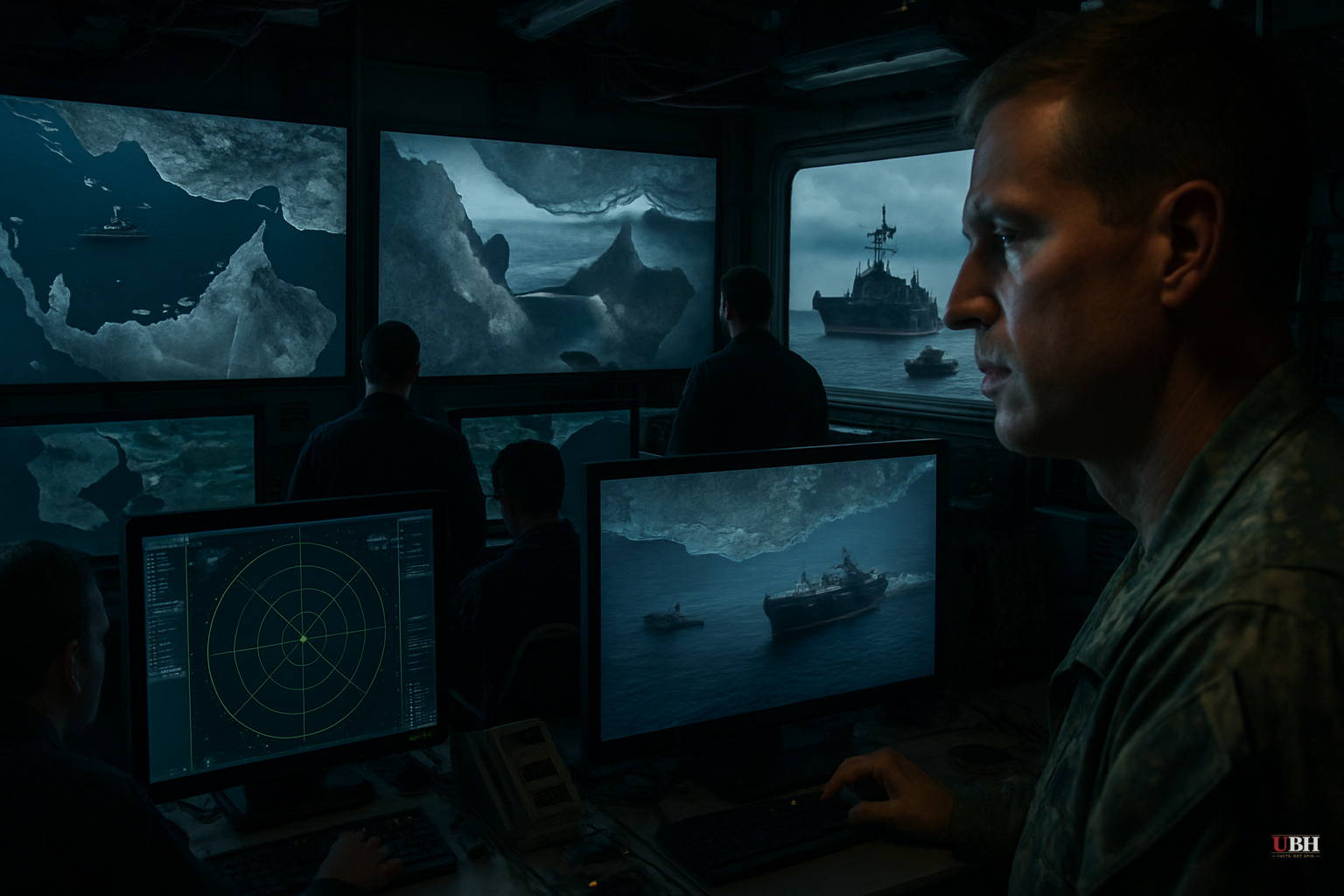
Hormuz Goes Dark: Zero Commercial Ships Thursday Morning, U.S. Sanctions Iran's Toll Authority, and 'Dark' Tankers Run Military Escort
The Numbers Are Brutal
Thursday morning: zero commercial vessels crossing the Strait of Hormuz. Not a slowdown. Not a trickle. Zero.
Wednesday wasn't much better — just six two-way crossings for the entire day, according to ship-tracking data compiled by Bloomberg. One of those was a Turkish Suezmax called the Ottoman Equity, which entered only after disabling its transponder. Ships are moving through an international waterway with their transponders off.
Second Round of U.S. Strikes Triggered the Halt
The near-total shutdown followed a second round of U.S. military strikes against Iranian targets this week, according to Bloomberg and gCaptain. American forces also intercepted Iranian drones aimed at a commercial vessel and destroyed a nearby launch unit.
President Trump made the U.S. position explicit: no single nation controls the Strait of Hormuz.
Treasury Drops the Hammer on Iran's Toll Racket
The U.S. Treasury sanctioned Iran's Persian Gulf Strait Authority — the agency Tehran has been using to extort transit fees from commercial ships. According to gCaptain, Treasury accused the agency of "extorting ships to profit from the region's instability."
Iran set up a toll booth on an international waterway. The U.S. just declared that toll booth a sanctioned entity. It's an economic escalation beyond military strikes — targeting the mechanism of Iranian leverage.
Ships Running Dark, Some With Military Help
The Wall Street Journal reports that a small flow of vessels — including large oil and gas tankers — are making the Hormuz transit in stealth mode: lights off, automatic navigation systems disabled, in some cases with direct assistance from the U.S. military.
Maritime intelligence firm Windward confirmed this pattern independently. Their May 11 report identified nine commercial tanker transits through Hormuz operating under "dark or EMCON conditions" — that's emissions-controlled, meaning they're actively suppressing their electronic signature. Windward also flagged IRGC fast craft operating in swarm formations near commercial corridors, including escort-like behavior shadowing civilian ships.
A low-grade naval war is happening in real time around some of the world's most critical oil infrastructure.
Iran Seized a Tanker. Kharg Island Is Bottlenecked.
Windward's analysis goes further than anything in mainstream coverage.
Iran seized the sanctioned tanker JIN LI in what Windward calls "a strategic signaling operation." The U.S. responded by disabling two additional Iran-linked tankers following earlier interdiction operations against the M/T HASNA.
Meanwhile, Kharg Island — Iran's primary oil export terminal — has seen no confirmed tanker departures since May 7, according to Windward. Large dark tanker queues are building up near Larak, Qeshm, and Chabahar. Iran is staging export capacity it can't move. Iran's oil is stuck.
TotalEnergies CEO: This Threatens the Global Economy
TotalEnergies CEO Patrick Pouyanne told French newspaper Le Figaro that a prolonged blockade "threatens the global economy" and that he does NOT expect free navigation to return soon. TotalEnergies recently freed three of its 11 ships still stranded in the Persian Gulf. Pouyanne said flatly he will NOT pay Iranian tolls — he'll pursue other legal remedies instead.
About 20% of global oil trade moves through Hormuz. When that pipeline clogs, energy prices move everywhere.
Qatar's LNG Just Got Through — Barely
One piece of positive news in the Windward report: Qatar LNG cargo resumed transiting Hormuz for the first time since the February closure. That's the first successful transit in months for one of the world's largest LNG exporters.
How sustainable is that? Unknown. The Windward data shows the strait is increasingly a "fragmented low-visibility operating environment" — their words — where military pressure, covert shipping, and enforcement operations are all running simultaneously.
What Mainstream Coverage Is Getting Wrong
Most outlets are framing this as a diplomatic standoff with shipping disruption as a side effect. The shipping disruption is the central conflict itself. Iran's leverage is its ability to threaten the strait. America's counter-move is making that leverage costly — through military strikes, tanker interdictions, and direct sanctions on the toll collection apparatus. The diplomacy follows from who controls the waterway.
The signal jamming problem deserves attention. Iran claims 26 ships crossed the strait in one day. The U.S. count shows near-zero. Both could be technically true if Iran is counting small coastal vessels, or one side is miscounting. Heavy AIS interference means nobody has clean data right now — a fact that should get more prominent coverage.
What Happens Next
If this strait stays effectively closed, energy markets will feel it. The U.S. military can help tankers sneak through dark. It cannot do that indefinitely for the volume of cargo the world actually needs. Every day without a deal or a clear military resolution is another day the global energy supply chain runs on borrowed time.
Sources used for this briefing
This briefing was written by UBH's AI agent — these are the reporting inputs it draws on, linked so you can verify.


