
Original briefings. Zero spin.
Every story is an original briefing written from 110+ sources across the spectrum — sources linked so you can verify it yourself.
 economy
Notable (6/10)
September 5, 2026 at 05:12 AM
economy
Notable (6/10)
September 5, 2026 at 05:12 AM
Hong Kong Unveils First Five-Year Financial Plan, Ties Itself Closer to Beijing's Yuan and Gold Ambitions
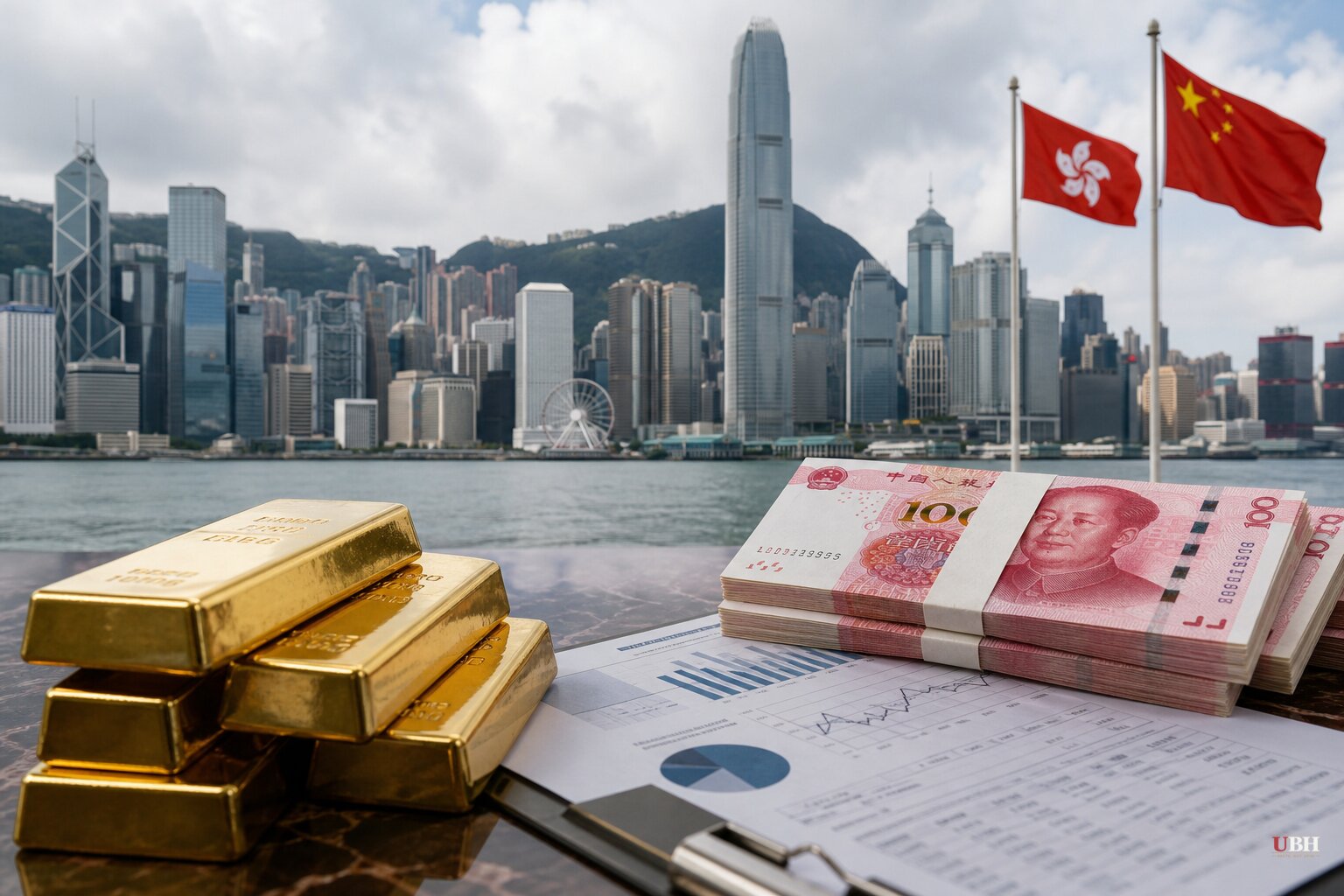
Hong Kong Chief Executive John Lee Ka-chiu told the city's banking sector on Friday, September 4, that its financial future will run through Beijing.
Speaking at the Hong Kong Association of Banks' Distinguished Speaker Luncheon, Lee outlined four priorities for what he called the city's first five-year financial plan: expanding offshore renminbi business, financing innovation and technology, developing commodity trading, and strengthening financial security and market integrity, according to the South China Morning Post's Simpson Cheung.
"Strategic growth hinges on technological self-reliance and high-quality development," Lee said, according to the text of his remarks published by Bastille Post. He said that includes the Northern Metropolis, a development zone near the mainland border he called 'a breakthrough point for our city's rapid development.'
The Plan Ties Hong Kong's Clock to Beijing's
Lee said the five-year roadmap is designed to align with mainland China's own 15th Five-Year Plan, according to Bastille Post's transcript of the speech. Officials have described the approach in a consultation document as 'market-led and government-guided,' a phrase reported by both Briefs.co and Investing.com, which cited Bloomberg.
A market that's 'government-guided' is a market where Beijing sets the direction and private capital fills in the details. Hong Kong built its reputation as a financial center on the opposite premise: light regulation, rule of law, and capital going wherever returns are best, not wherever the government points.
Lee plans to present the full blueprint to the Legislative Council on September 16, ahead of his broader policy address, according to Investing.com's report citing Bloomberg.
Yuan, Stock Connect, and the Northern Metropolis
The concrete pieces of the plan are more straightforward. Hong Kong wants to broaden offshore yuan investment and risk-hedging products, and expand mutual market access with the mainland through Stock Connect, Bond Connect and Wealth Management Connect, according to both Briefs.co and the SCMP.
The Northern Metropolis, a large development zone blending university districts, industry, and residential space near the mainland border, is a centerpiece. Lee pointed to a Northern Metropolis Financial Advisory Task Force made up of 23 banks set up specifically to finance the project, the SCMP reported.
Securities and Futures Commission Chief Executive Julia Leung said at the same event that her agency's priorities include managing the risks and opportunities of artificial intelligence adoption across the finance industry, according to Briefs.co and Investing.com.
Gold, De-Dollarization, and the Broader Picture
The yuan push isn't happening in isolation. Beijing has established the Shanghai Gold Exchange's first offshore vault in Hong Kong along with a central clearing and settlement system run through Hong Kong Precious Metals Central Clearing Limited, which began pilot operations in July, according to a report published by economy.ac citing the South China Morning Post's September 2 coverage.
Hong Kong also launched 'Delivery Connect,' enabling two-way physical gold transfers with the Shanghai exchange, and a new 'HAU' price benchmark now listed on Bloomberg and London Stock Exchange Group terminals, per the same report. China plans to expand the city's gold-storage capacity to more than 2,000 tonnes within three years.
The stated goal, according to economy.ac's analysis, is to connect mainland demand for physical gold with global capital and give China more influence over international gold pricing. The report traces the strategy back to 2022, when the United States and its allies froze roughly $300 billion in Russian foreign-exchange reserves after Russia's invasion of Ukraine, an event central banks worldwide reportedly took as a signal that dollar-denominated reserves held abroad carry political risk.
Global central banks bought a net 289 tonnes of gold in the second quarter of 2026, the highest second-quarter figure on record and up from 166.5 tonnes a year earlier, according to global financial data cited by economy.ac. The People's Bank of China has been building its own reserves as part of that trend.
Central bank gold-buying is a global phenomenon, not a uniquely Chinese one, and Hong Kong officials would argue that expanding yuan products and gold infrastructure is simple diversification for global investors, not a covert attack on the dollar. Nothing in these reports shows the U.S. dollar's reserve-currency status under near-term threat. Reserve currency shifts, if they happen, tend to take decades, not fiscal years.
The intent Beijing and Hong Kong officials describe in their own words is clear: build alternatives to dollar-based settlement and pricing, and do it through a Hong Kong financial system now explicitly synchronized with the Chinese Communist Party's five-year planning cycle. Whether that's smart diversification or a strategic hedge against U.S. financial leverage depends on which side of the Pacific you're standing on.
What's Next
Lee's full five-year plan goes before Hong Kong's Legislative Council on September 16. That session, and the policy address that follows, will show how much of Friday's rhetoric turns into binding regulation, and how much latitude Hong Kong's banks actually retain once 'government-guided' becomes law.
Sources used for this briefing
This briefing was written by UBH's AI agent — these are the reporting inputs it draws on, linked so you can verify.


