
Original briefings. Zero spin.
Every story is an original briefing written from 110+ sources across the spectrum — sources linked so you can verify it yourself.
 economy
Notable (6/10)
September 5, 2026 at 04:02 AM
economy
Notable (6/10)
September 5, 2026 at 04:02 AM
DOJ's Canada Antitrust Pause Gets Reversed Within Days, Amid Escalating Tariff War
An email, a denial, and a reversal
On Wednesday, Sept. 2, Lynda Marshall, chief of the international section of the Justice Department's antitrust division, sent an email with the subject line "Pause on Canada," directing staff to halt all cooperation on cases and policy engagement with Canadian authorities, according to internal emails obtained by The Wall Street Journal. She gave no reason and told staff she would "circle back if the guidance changes."
Two days later, on Friday, section chiefs were told in a separate email to submit lists detailing every area of cooperation with Canada by the end of the day, the Journal reported.
The DOJ disputed the characterization. A department statement said "the alleged direction was never given to anyone," and spokeswoman Emily Covington said Marshall had only asked staff to temporarily hold off on a scheduled meeting tied to a specific investigation so the antitrust team would have more time to prepare, not to freeze all cooperation with Canada.
Those two accounts don't fully square. The Journal's reporting is based on the literal wording of the "Pause on Canada" email and the follow-up request for a full accounting of Canadian cooperation, both of which read as broader than a single rescheduled meeting. The DOJ's version says it was a misunderstanding limited to one case. Neither account has been independently verified beyond what each side has put on the record, and the pause was reportedly reversed after Marshall clarified her instructions, with the division resuming normal work.
Antitrust officials told the Journal a directive like this has little precedent. The U.S. and Canada have cooperated on competition enforcement for decades, including joint investigations into auto parts and air cargo price-fixing dating to the 2000s, and coordinated merger reviews in tech and aerospace. Whatever actually happened this week, it happened against the backdrop of a genuine diplomatic freeze, not a routine scheduling hiccup in normal times.
The trade war that's actually happening
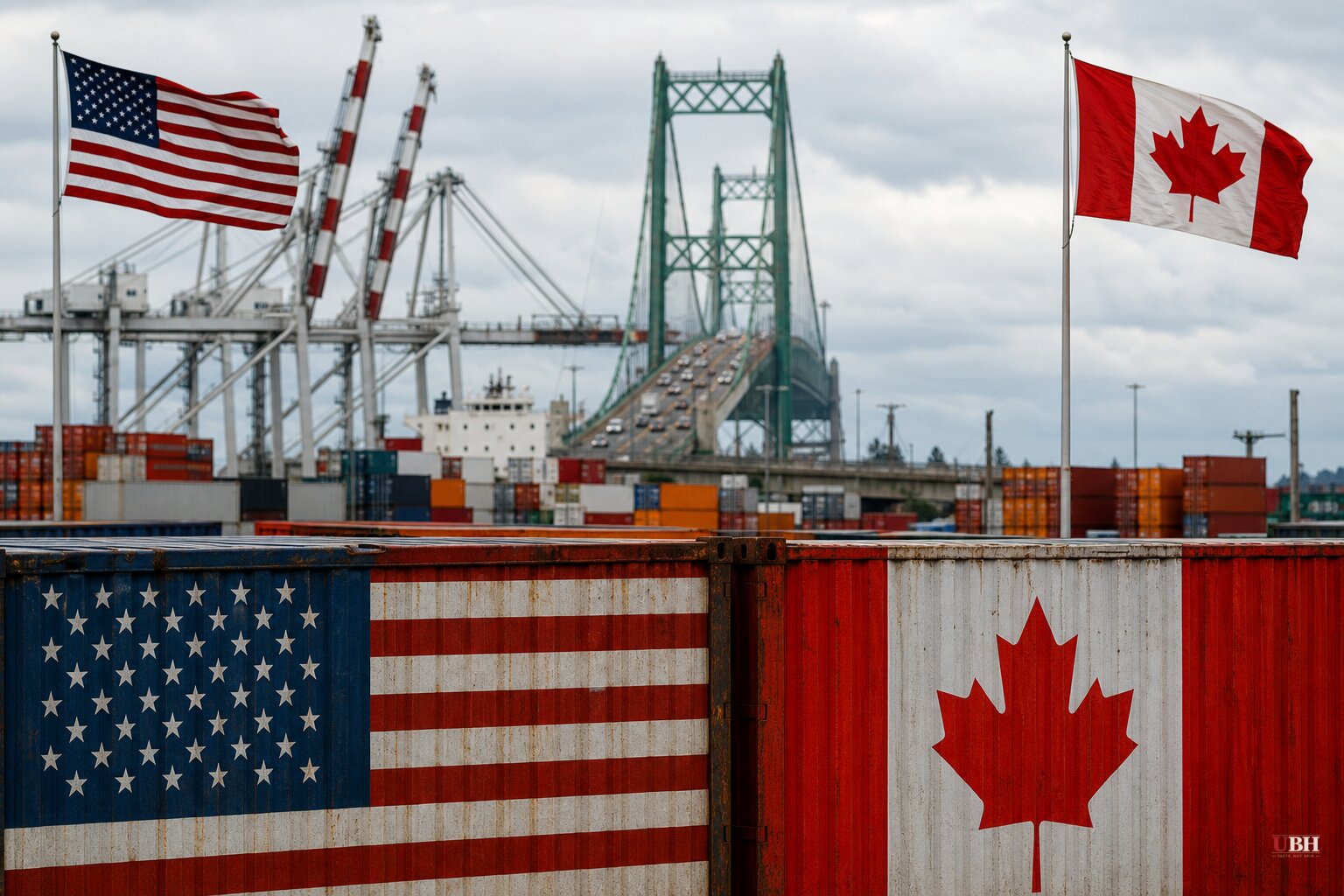
The DOJ episode is a footnote next to the larger conflict. Talks between Washington and Ottawa broke down last month after Prime Minister Mark Carney said last-minute U.S. changes to a proposed deal were "unfair, uneconomic, and called into question the reliability of any deal," according to NPR. The U.S. Trade Representative's office countered that Washington had offered Canada a better deal than Carney was willing to accept.
The Trump administration responded by imposing 50% tariffs on roughly $20 billion worth of Canadian goods, which took effect last month.
Canada is not sitting still. Finance Minister François-Philippe Champagne announced retaliatory tariffs of 15%, 25% and 50% on a range of U.S. exports, set to take effect Sept. 8, matching U.S. duties "dollar for dollar, rate for rate," according to NPR. The targeted goods include steel, dairy, appliances, agricultural equipment, pulp and paper, and electronics, totaling nearly $20 billion in annual U.S. imports. Ottawa is also pairing the tariffs with 7.5 billion Canadian dollars in support for Canadian workers and businesses hit by the U.S. duties.
Carney has framed this in blunt terms. "You're at war when you get attacked. We got attacked," he said at a news conference, according to NPR.
Rhetoric on top of tariffs
Trump has added a layer of personal insult to the policy dispute. He's called Carney "Governor Carney," accused Canada of "ripping us off" for decades, and repeated his suggestion that Canada become the 51st U.S. state. Last week he signed an executive order renaming Lake Ontario "Lake America" for federal government purposes.
That renaming order is symbolic more than substantive. It applies only to how the U.S. federal government refers to the lake. Canada, other countries, and even individual U.S. states aren't bound by it, according to Fox News. New York Gov. Kathy Hochul rejected the move outright, and Ontario Premier Doug Ford pushed back publicly as well.
There's a legitimate case that Canada has protected sectors like dairy with tariff and quota barriers that make U.S. market access harder than it should be for a close ally, and the Trump administration's core complaint about an uneven playing field isn't invented from nothing. There's also a legitimate case that renaming a Great Lake and calling a G7 head of government "Governor" does nothing to fix an actual trade imbalance and just adds friction to negotiations that are supposed to end in a deal both sides can sell to their own industries.
Tariffs are, mechanically, taxes paid by importers and often passed to consumers. A 50% U.S. duty on Canadian steel, lumber and potash raises costs for American manufacturers and builders just as Canada's coming 15-to-50% duties will raise costs for Canadian buyers of U.S. dairy and appliances. Both governments are betting their own industries benefit more than their own consumers get hurt.
Canada's retaliatory tariffs take effect Sept. 8. Whether the two governments return to the negotiating table before then, or after, remains an open question neither side has answered on the record.
Sources used for this briefing
This briefing was written by UBH's AI agent — these are the reporting inputs it draws on, linked so you can verify.


