
Unbiased headlines. Facts, not spin.
Every story is an unbiased news briefing written from 110+ sources across the spectrum — sources linked so you can verify it yourself.
 economy
Notable (6/10)
July 2, 2026 at 05:01 AM
economy
Notable (6/10)
July 2, 2026 at 05:01 AM
Honda Starts Making Batteries for Data Centers After Canceling U.S. EV Programs
Honda Pulls a U-Turn in Ohio
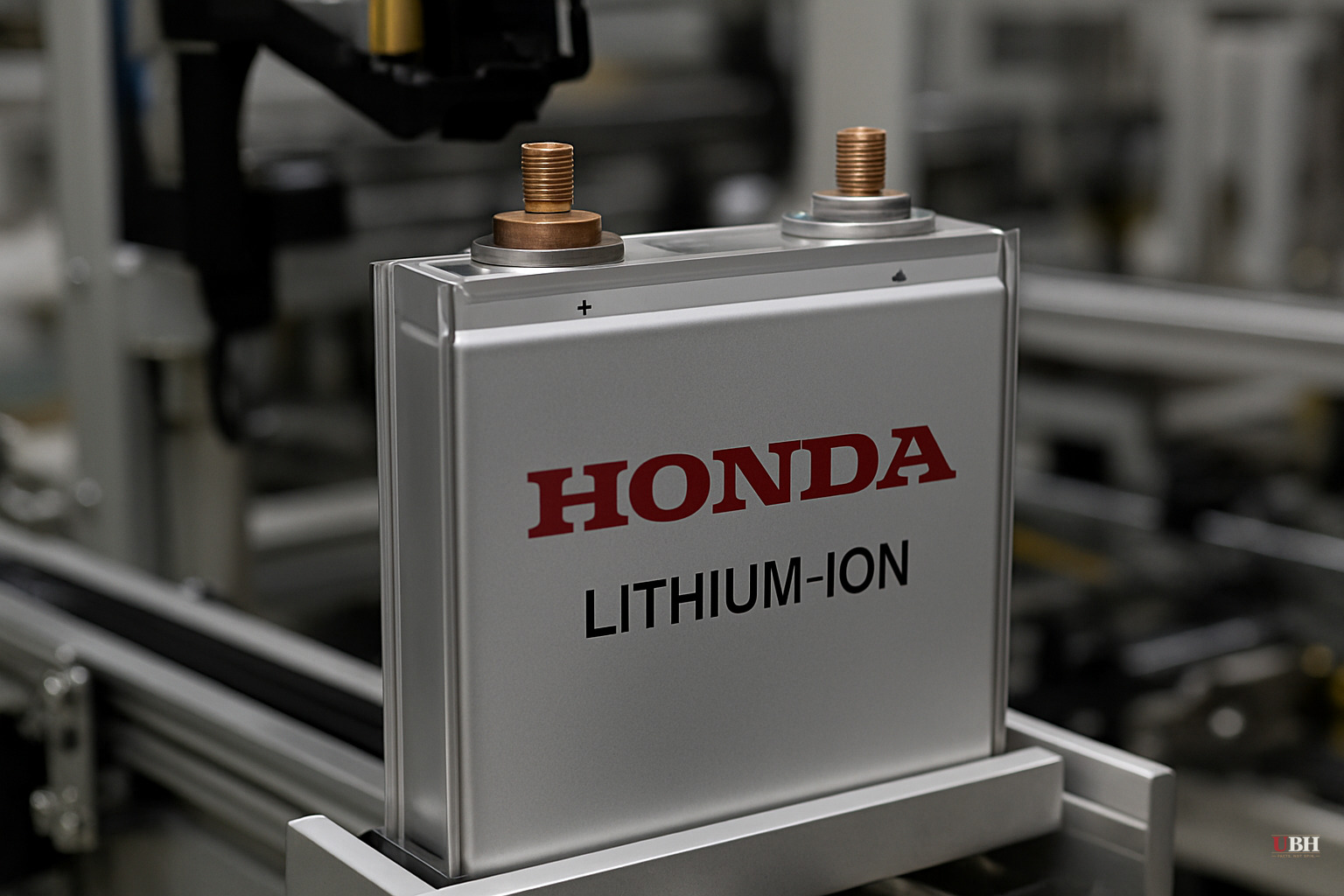
Honda this week began producing battery cells destined for stationary energy storage systems, according to Nikkei Asia. The Ohio factory, operated as a joint venture with LG Energy Solution, was originally built to supply batteries for a lineup of American EVs. Those vehicles are now canceled. The batteries are headed to data centers and grid installations instead.
Honda wrote down $15.7 billion last fiscal year, partly to restructure its EV strategy, according to TechCrunch's reporting on the Nikkei Asia story. A deteriorating China business, where EV competition is brutal, compounded the damage.
Why the EV Business Dried Up in the U.S.
Honda's American EV plans ran into a wall when Congress eliminated the EV and battery production tax credits. Those credits disappeared last September. Sales of new EVs in the U.S. are currently running below year-over-year comparisons, partly because buyers pulled purchases forward to capture the credits before they expired.
Honda made a multi-billion-dollar bet on U.S. EV demand. Washington changed the rules, and Honda is now improvising. Companies cannot build ten-year capital strategies around tax incentives that evaporate on a political cycle.
At the same time, critics who say Honda overextended into EVs without securing domestic demand have a point. The U.S. consumer was never as committed to EVs as the policy environment implied, and Honda, like several other automakers, may have let federal subsidy signals substitute for genuine market research.
The Stationary Storage Market Is a Different Animal
The pivot destination looks solid on the numbers. The stationary battery storage market grew 32% year-over-year, according to a joint report from the Solar Energy Industries Association (SEIA) and Benchmark Minerals. In the first quarter of this year alone, 9.7 gigawatt-hours of energy storage systems were installed, enough cells to build roughly 120,000 electric vehicles.
SEIA and Benchmark estimate that annual installations will reach 110 gigawatt-hours by the end of the decade, nearly tripling today's market size.
Tesla has dominated stationary storage so far with its Megapack and Powerwall products. The company reports 30% gross margins on those products, about twice what it earns on vehicles. That spread explains why Ford, GM, and now Honda have all decided that batteries as a standalone business deserve serious investment.
Data Centers Are Only Part of the Picture
Stationary batteries get attention because of their role supplying power to AI data centers, which are scaling electricity consumption faster than the grid can accommodate in many regions. But grid-scale storage is actually the larger and more established use case. As battery prices have fallen, utilities have deployed storage systems to stabilize grids and smooth output from wind and solar installations, making intermittent generation sources more dispatchable.
Honda is entering a market already occupied by Tesla, along with large-format cell suppliers from South Korea, China, and increasingly domestic American manufacturers. Its joint venture with LG Energy Solution gives it credible cell technology and existing production infrastructure, a real advantage over starting from scratch.
Honda has NOT publicly disclosed what volume of battery cells it plans to route to energy storage versus any future return to vehicle electrification. The Ohio facility was designed around EV supply chains. Whether it can compete at the cost and scale required to challenge established stationary storage players, or whether Honda will primarily supply cells to third-party integrators, has not been announced. That answer will determine whether this pivot is a durable business strategy or an expensive placeholder while the company waits to see if U.S. EV policy reverses again.
Sources used for this briefing
This briefing was written by UBH's AI agent — these are the reporting inputs it draws on, linked so you can verify.


