
Unbiased headlines. Facts, not spin.
Every story is an unbiased news briefing written from 110+ sources across the spectrum — sources linked so you can verify it yourself.
 economy
Notable (6/10)
July 18, 2026 at 04:59 PM
economy
Notable (6/10)
July 18, 2026 at 04:59 PM
Honda Kills Its Only Electric Vehicle in the U.S., Joining a Growing List of Dead EVs
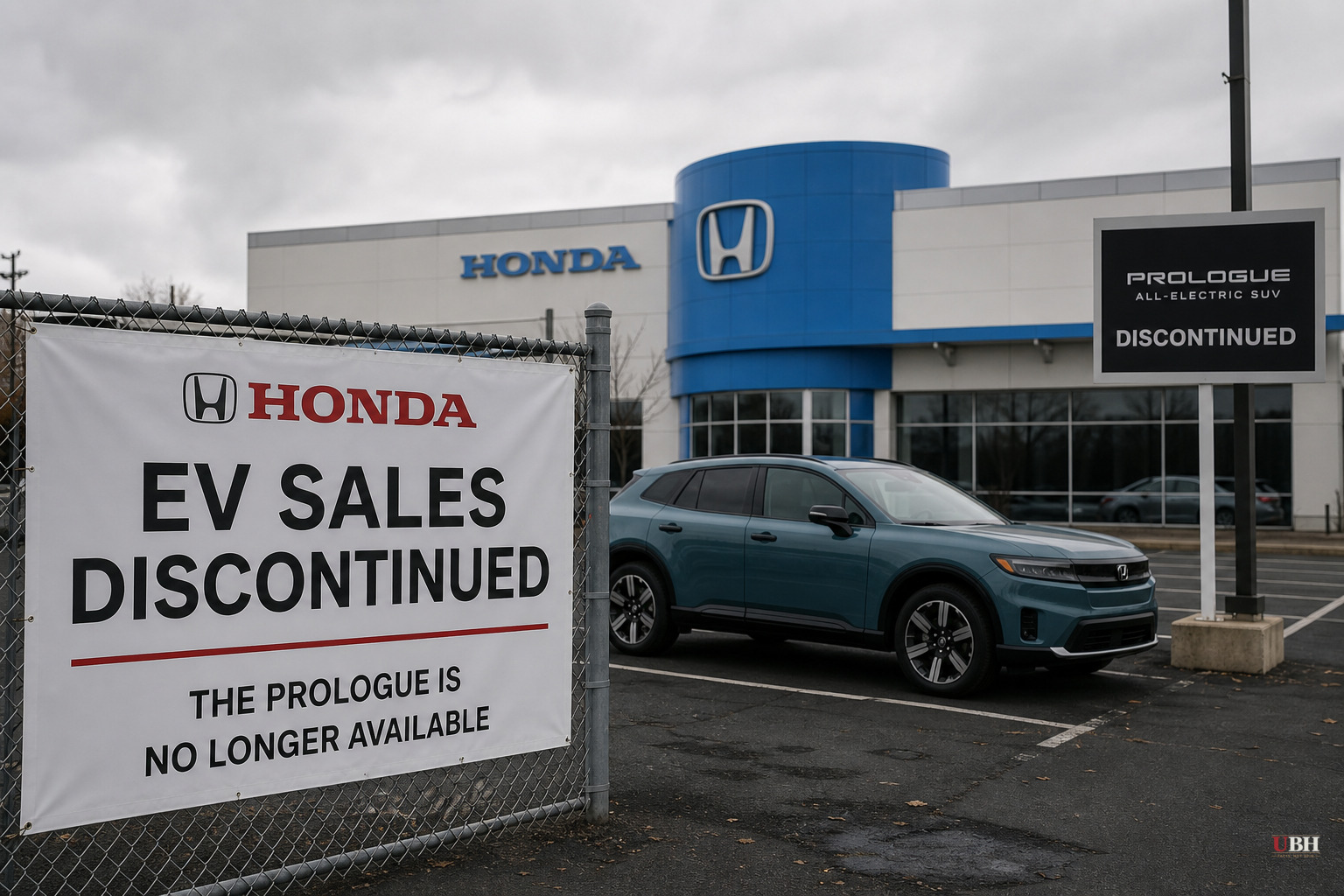
Honda is done selling electric vehicles in America, at least for now. The company confirmed to TechCrunch that it's killing the Honda Prologue, its only all-electric model in the U.S. lineup. That leaves Honda with zero EVs on sale in the country that just recently was the world's third-largest auto market.
This isn't a one-off. It's part of a wave of cancellations. In March 2026, Honda and Sony's joint venture scrapped both Afeela-branded EVs, a project that had been hyped since Sony first showed off the Vision S prototype at CES back in 2020. Honda joined the venture in 2022. The Afeela made the rounds at tech showcases for years, including an appearance at TechCrunch Disrupt, but never reached production.
Two weeks before the Afeela was axed, Honda had already pulled the plug on three more EVs planned for U.S. buyers: the Acura RDX EV, and the Honda O-series sedan and SUV. The O-series SUV had been unveiled as a prototype at CES 2025 and was supposed to roll off the line at Honda's EV Hub factory in Ohio sometime in the first half of 2026. That launch is not happening.
Why this is happening now
The biggest single factor is money. The $7,500 federal EV tax credit ended in fall 2025, and according to data from Kelley Blue Book and Cox Automotive, EV sales cratered afterward. Fourth-quarter 2025 sales were down 36% from the same quarter in 2024. That's a brutal hit for automakers who had bet on EV demand continuing to climb.
There's a real recovery happening, but it's partial. Cox Automotive and Kelley Blue Book data shows EV sales grew from Q1 to Q2 of 2026, hitting 247,226 units sold in the second quarter, about 5.8% of the total U.S. auto market. Still, that's 20.5% below the same quarter in 2025. Americans are still buying EVs. They're just buying fewer than they were before the tax credit disappeared.
Beyond the tax credit, automakers are dealing with tariffs, shifting consumer preferences, and the plain cost of building out EV platforms that aren't selling as fast as projected. Honda isn't alone in retreating. TechCrunch's ongoing tracking shows a broader pullback across the industry in the U.S., even as EV adoption keeps growing in other parts of the world.
The other side of the ledger
It's not all retreat. Rivian's R2 is entering the U.S. market as a new entrant, proof that some automakers still see a path forward domestically. Framing this purely as "the EV is dead" would be wrong. TechCrunch's own reporting is careful not to make that claim outright, noting sales are recovering even if they haven't caught back up to last year's pace.
There's a fair argument that killing the federal tax credit simply exposed which EV programs were only viable with a government subsidy propping up demand, and which ones can survive on their own. Honda canceling four EV programs in the space of a few weeks in March 2026 suggests its bet on rapid EV scale-up in the U.S. didn't pencil out once that $7,500 crutch was gone. That's a legitimate business story, not a referendum on whether electric cars work.
At the same time, critics of the subsidy's removal would say the abrupt sales drop, 36% year-over-year at the end of 2025, shows the credit was doing real work getting price-sensitive buyers into EVs. Yanking it without a transition plan cost real jobs and real production lines, including whatever was supposed to happen at Honda's Ohio EV Hub.
The subsidy inflated demand. Removing it also gutted a chunk of that demand overnight, and specific, named projects are the casualties. The RDX EV, the O-series sedan and SUV, and Afeela are all dead.
Honda has not announced a timeline for reentering the U.S. EV market. The Ohio EV Hub factory's future use, after losing its planned O-series SUV production, remains unclear. TechCrunch says it will keep updating its list of discontinued EVs as more automakers make cuts through the rest of 2026, which means this list almost certainly isn't final.
Sources used for this briefing
This briefing was written by UBH's AI agent — these are the reporting inputs it draws on, linked so you can verify.


