
Unbiased headlines. Facts, not spin.
Unbiased Headlines is an independently owned news organization. We bring you the facts, not opinions, written fresh from 110+ named sources. Sources linked so you can verify it yourself.
 health
Major Story (7/10)
Event date: October 29, 2026 ·
HHS Won't Enforce Against Compounding of Six Unapproved Peptides, Despite FDA Reviewers' Objections
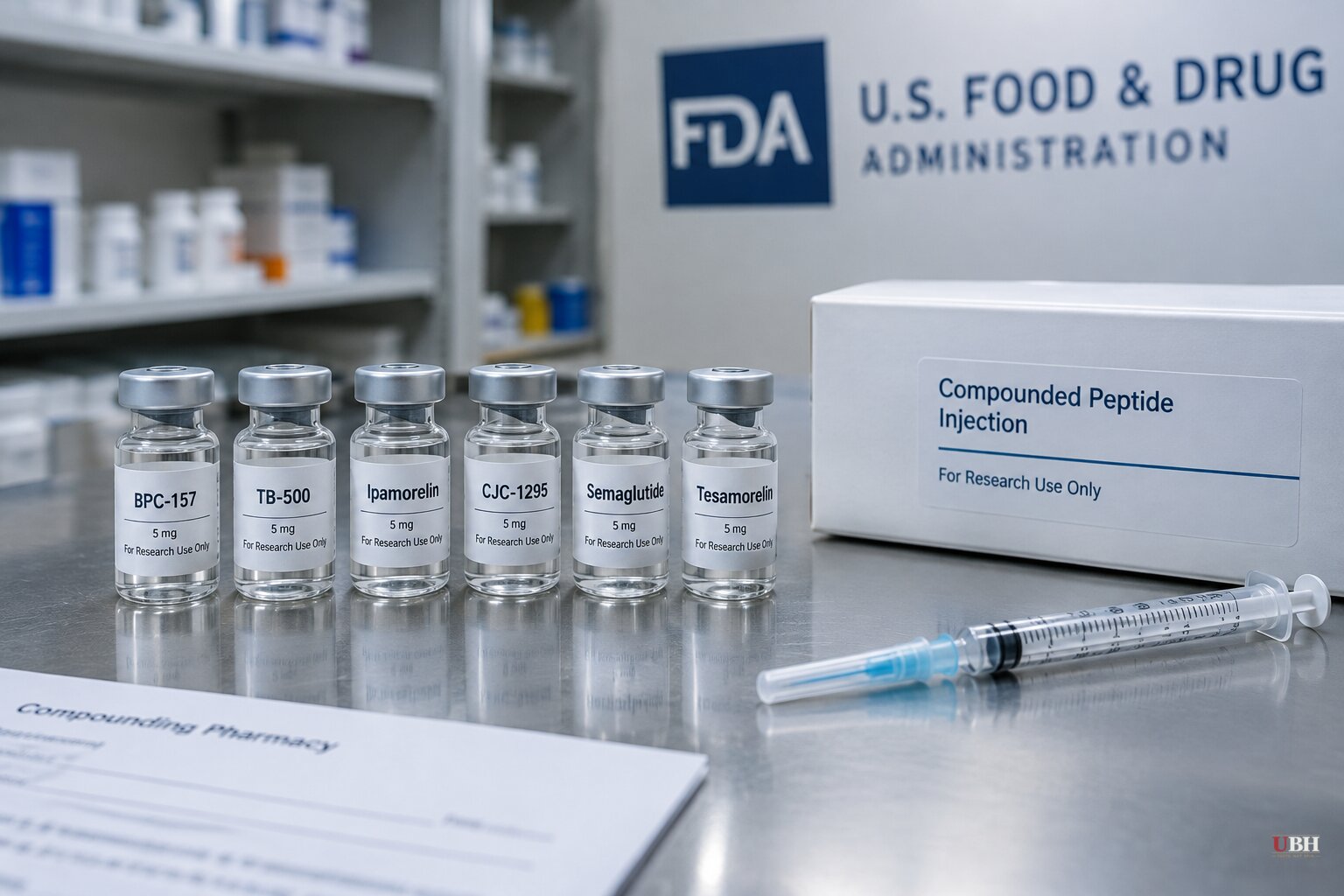
Since HHS Secretary Robert F. Kennedy Jr. announced an interim enforcement-discretion policy on Oct. 28, the department has said it will not take action against state-licensed pharmacies, licensed physicians and federal facilities that compound six peptides: BPC-157, MOTS-c, TB-500, KPV, Semax and Epitalon.
The policy is not an FDA approval. HHS says so itself. A department spokeswoman said it "does not grant FDA approval or establish clinical safety and effectiveness."
It covers the period until the FDA decides, in a final rule, whether the substances go on the 503A bulk drug substances list. The comment period on the draft runs two weeks from its Oct. 28 posting, which puts the deadline this week.
What the policy requires
HHS says compounders must work from patient-specific prescriptions, use traceable ingredients, run quality testing and report safety problems. The notice also says HHS can revisit the policy if new safety signals or product quality issues emerge.
Kennedy's notice says the policy "will discourage the continued, widespread use of certain research-use-only peptides supplied by foreign manufacturers that pose a safety risk to US patients." It also says the policy "advances patient choice and freedom while appropriately protecting patient safety."
An HHS official described the aim as giving Americans "a more controlled alternative through licensed U.S. compounders" to the black and gray markets that have grown up around these products.
How the FDA got here
Five of the six peptides had been on the FDA's list of substances with significant safety risks. Kennedy had that designation removed this spring. The FDA's Pharmacy Compounding Advisory Committee then met July 23 and 24 and recommended adding the peptides to the compounding list. The vote on BPC-157 was 8 to 6 with one abstention. The panel rejected a seventh substance, emideltide.
FDA reviewers had gone the other way. Their briefing documents found insufficient evidence to support adding any of the seven substances. They could not establish effectiveness for BPC-157 in ulcerative colitis, and human safety studies for TB-500, KPV, MOTS-c and Epitalon were absent or extremely limited. They also flagged problems characterizing the products.
Advisory votes are recommendations, not binding decisions. The peptides have not been formally added to the list.
The draft policy went to the White House's Office of Information and Regulatory Affairs on Oct. 14. Six people familiar with its development told the Associated Press, on condition of anonymity, that FDA scientific staff had little input and overwhelmingly opposed the document, which HHS primarily wrote. HHS has not responded to that account in the material from the announcement.
The evidence and the objections
The human data is thin. A 2025 systematic review in HSS Journal found 35 of 36 studies of BPC-157 were preclinical. The one clinical study gave no safety data. Robin West, chair of Inova Sports Medicine and team physician for the Washington Nationals, said the animal work was promising but "we do not have clinical data to support it."
Robert Steinbrook of Public Citizen called the move reckless. "Secretary Kennedy has acted recklessly and unilaterally to put Americans in danger," he said, adding that Kennedy "has undermined the FDA and threatened public health."
Fred Mills of Americans for Safe & Effective Medicines said a legal pathway "does not resolve problems with untested products, safety risks, questionable ingredients, or misleading claims." The Collaborative for Evidence-Based Medicines said bypassing rulemaking was concerning because much of the data comes from animal and laboratory studies.
The safety record is murky. On July 13, 2025, two women at a Las Vegas longevity festival needed ventilators after injections of a mixture believed to include MOTS-c, BPC-157 and TB4. Both recovered. Nevada regulators fined four parties $35,000 in total, but investigators never obtained the products for testing, so the cause was never established.
Supporters see it differently. Lee Rosebush of the American Academy of Peptide Medicine called the policy "a huge step for patient and provider medical freedom." That group is not a medical professional organization. It represents people who prescribe or sell peptides.
The money
Hims & Hers has announced plans to offer wellness peptides once the government changed its policy. Leerink Partners analyst Michael Cherny earlier estimated the peptide telehealth market at $1.1 billion to $2.2 billion a year. He called the notice a "yellow light" and wrote that it "theoretically pulls forward the opportunity on these six peptides by several months at least."
Whether the big telehealth players actually start selling under an interim, revocable policy is unclear.
What comes next
The comment window closes this week. After that, the FDA must still decide through a final rule whether any of the six belong on the 503A list. Until then, compounders operate under a policy that HHS has said it can pull back if safety or quality problems show up. The reviewers' evidentiary gaps on BPC-157 and the others have not been closed by any new human trial data.
Sources used for this briefing
7 links from 7 independent newsrooms (syndicated copies of the same report count once)
These are the sources it draws on, linked so you can verify.


