
Unbiased headlines. Facts, not spin.
Unbiased Headlines is an independently owned news organization. We bring you the facts, not opinions, written fresh from 110+ named sources. Sources linked so you can verify it yourself.
 health
Major Story (8/10)
CDC Counts 5,182 U.S. Measles Cases in 2026, the Most Since 1991
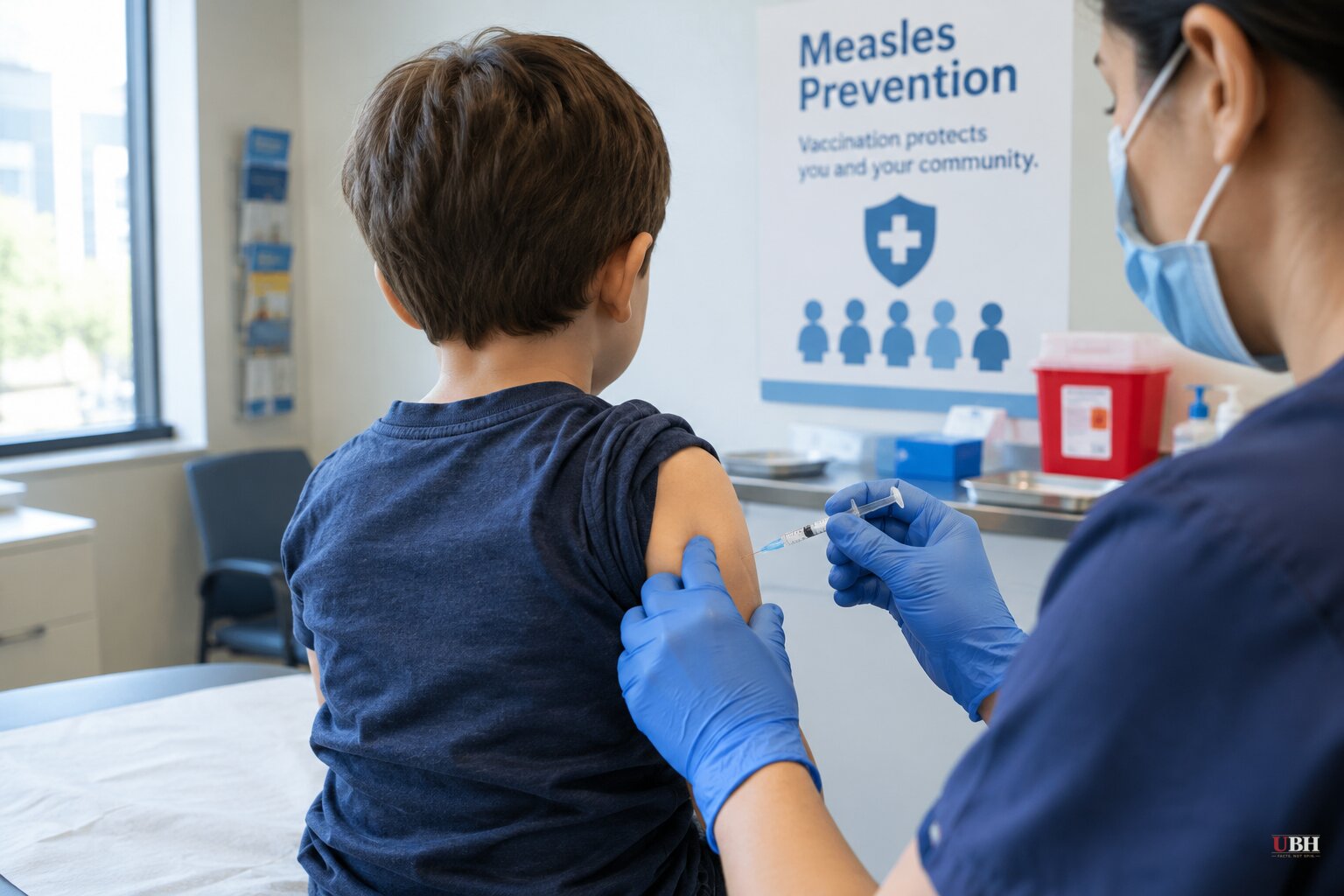
The Centers for Disease Control and Prevention has confirmed 5,182 measles cases in the United States so far in 2026. That is the highest annual total since 1991 and more than double last year's count.
Of those infected, 96% were either unvaccinated or had an unknown vaccination status. Hospitalizations total 562, about 11% of all cases.
Who is getting sick
Children and teenagers make up nearly 60% of cases. About 41% of patients are aged 5 to 19, and 18% are under 5. Adults 20 and older account for the remaining 41%.
Two doses of the MMR vaccine are roughly 97% effective at preventing measles, according to public health officials.
The coverage gap
Kindergarten vaccination coverage has slid from 95.2% in the 2019-2020 school year to 92.4% in 2025-2026. Measles control in a community generally requires 95% or higher. A growing number of counties have dropped below that line.
The number of kindergartners whose parents opt them out has climbed for at least a decade. States set their own rules for exemptions, whether medical, religious or personal belief.
NBC News's Vaccine Divide investigation says the country is on the verge of losing its measles-free status. The U.S. declared the virus eliminated more than two decades ago.
A fight over counting the dead
The CDC reports four measles deaths this year. Pennsylvania's Department of Health reports six deaths among 1,487 cases in that state alone.
The gap comes from a dispute between Pennsylvania Gov. Josh Shapiro and HHS Secretary Robert F. Kennedy Jr. Pennsylvania counts a death as "measles-associated" when a person with confirmed measles dies within 30 days of symptom onset, unless an unrelated event caused it.
In August, Pennsylvania reported that two unvaccinated people had died of measles. The CDC first added those deaths to its national tally, then removed them after Kennedy questioned whether measles had caused or contributed to the fatalities.
The CDC says it is working with the Council of State and Territorial Epidemiologists to set a standardized definition. Until it does, the federal number runs below what state officials report.
Other states have announced deaths as well. Officials in New York said a seven-month-old who had not been vaccinated died, and Wisconsin officials announced an infant death. Both were the first measles deaths in those states in three decades. Pennsylvania also announced the death of a postpartum woman.
The federal data deserves scrutiny either way. A national tally that changes after a political appointee raises questions, and so does a national tally that undercounts what state health departments are documenting. Taxpayers fund both systems, and both need a clear, published definition.
An advisory committee that is not operating
Kennedy replaced the members of the Advisory Committee on Immunization Practices, which recommends vaccine policy to the CDC, with his own picks. A federal judge then halted the committee's work, finding the Trump administration had failed to constitute it properly.
Four former advisers told The Guardian that the lapse has left recommendations frozen during a historic outbreak. Yvonne "Bonnie" Maldonado, a Stanford Medicine pediatric infectious disease chief and former ACIP member, said: "We don't have an ACIP. That's going to impact disease and deaths in the US."
The former advisers said a functioning committee would likely be weighing vaccination of adults, earlier MMR doses for children in affected areas, and targeted campaigns by geography. Babies normally receive a first MMR shot at one year. In outbreaks, infants as young as six months can get one. The former advisers say that guidance is getting less attention than usual.
The CDC is now taking nominations for a new committee. Noel Brewer, a UNC Gillings School of Global Public Health professor and former ACIP member, said new recommendations typically take 12 to 18 months from the start of consideration to adoption.
Kennedy's priorities
Kennedy has opened a vaccine injury research center at the National Institutes of Health. HHS also plans financial incentives for doctors who report vaccine injuries, according to a Health Policy Watch analysis.
In a September address to Children's Health Defense, the nonprofit he founded, Kennedy focused on vaccine harms and repeated claims tying vaccines to autism, according to the same analysis. Critics of his approach, including the former ACIP members, argue that his agency should be pressing immunization while measles spreads. Kennedy's questioning of the Pennsylvania death classifications shows he has a different view of what the data supports.
Parents have the legal right to decide whether their kids get vaccinated, and the exemption laws in most states reflect that. The consequence is visible in the county-level data: coverage below the 95% threshold, and a disease the U.S. declared eliminated more than two decades ago now at a 35-year high.
Two questions remain open. Will the CDC and state epidemiologists agree on a single definition of a measles death, and will a new vaccine advisory committee be seated before the outbreak outruns the 12-to-18-month timeline Brewer describes?
Sources used for this briefing
5 links from 5 independent newsrooms (syndicated copies of the same report count once)
These are the sources it draws on, linked so you can verify.


