
Unbiased headlines. Facts, not spin.
Unbiased Headlines is an independently owned news organization. We bring you the facts, not opinions, written fresh from 110+ named sources. Sources linked so you can verify it yourself.
 health
Major Story (7/10)
FDA Approves Bayer's Sunharbo, First Factor XIa Inhibitor, to Reduce Repeat Stroke Risk
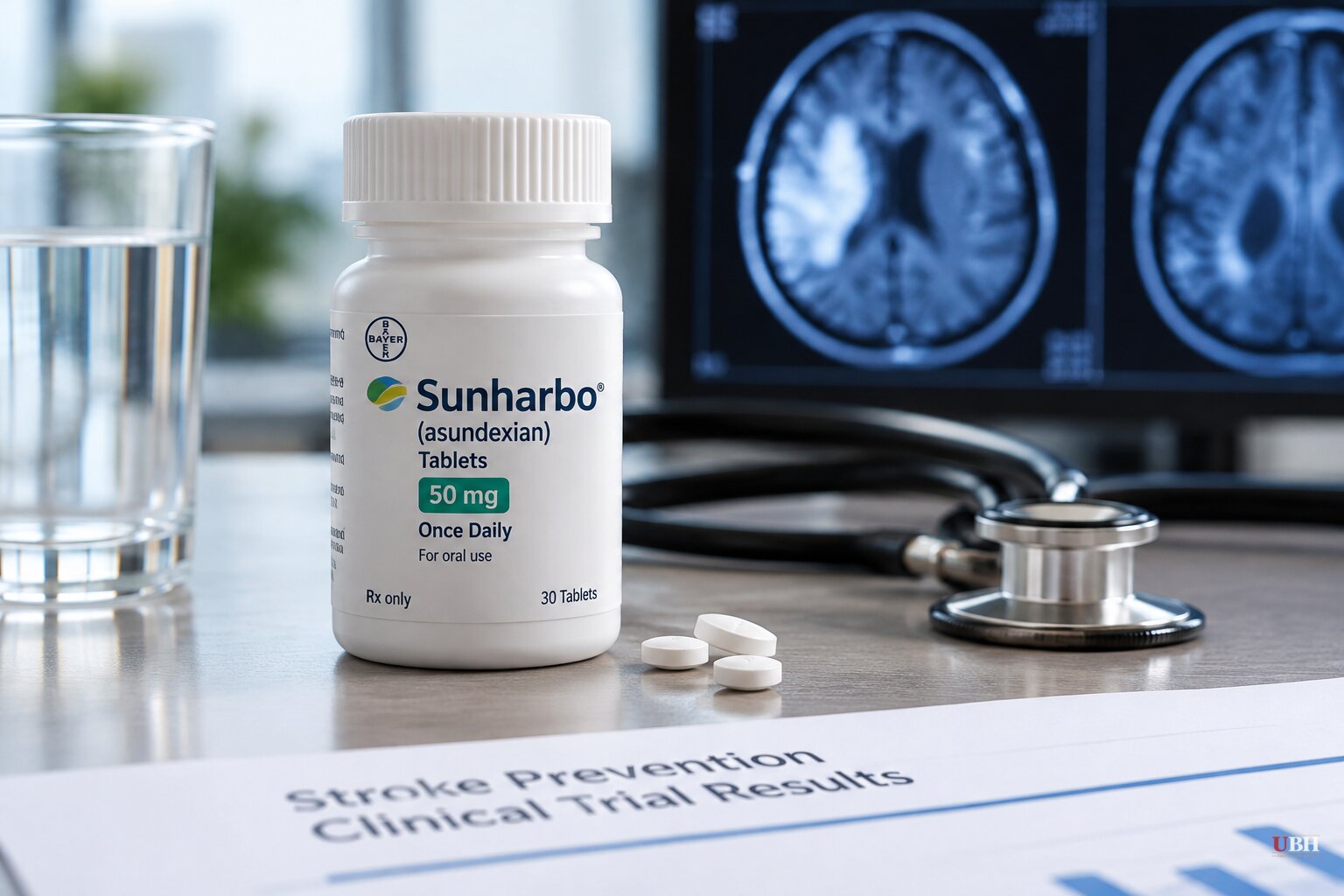
The U.S. Food and Drug Administration on Monday, Nov. 9, approved Bayer's Sunharbo (asundexian), the first factor XIa inhibitor cleared in the United States. The 50 mg once-daily pill is approved alongside antiplatelet therapy to reduce stroke risk in adults after a recent mild-to-moderate non-cardioembolic ischemic stroke or a high-risk transient ischemic attack (TIA).
That means a stroke caused by a clot that did not start in the heart. Sunharbo is NOT approved for people with atrial fibrillation.
What the trial showed
Approval rests on OCEANIC-STROKE, a randomized, double-blind, placebo-controlled Phase 3 trial of 12,327 adults. Patients were enrolled within 72 hours of symptoms, and everyone also received antiplatelet therapy.
Over a median treatment period of 14.2 months, Sunharbo reduced the risk of ischemic stroke by 26% compared with placebo, the FDA said. The trial data put the rates at 6.2% for Sunharbo patients versus 8.4% for placebo (hazard ratio 0.74, 95% confidence interval 0.65-0.84). In absolute terms, that is a gap of about 2.2 percentage points.
The results were presented in February at the International Stroke Conference and published in April in the New England Journal of Medicine.
The bleeding question
Blood thinners cut clots by weakening the body's ability to stop bleeding. Sunharbo targets factor XIa, a protein that plays a minor role in sealing injured vessels but helps clots grow.
Overall major bleeding was similar between groups: 1.9% on Sunharbo versus 1.7% on placebo (hazard ratio 1.10, 95% confidence interval 0.85-1.44). The FDA's release adds caveats. Major bleeding was increased with Sunharbo in patients older than 75 and during the first 90 days of treatment. Gastrointestinal bleeding occurred more often than with placebo.
Diarrhea was the most common adverse reaction, reported by 3% or more of Sunharbo patients.
The label also warns against combining the drug with medicines that are combined P-gp and strong CYP3A4 inducers, such as carbamazepine, which may weaken its effect. It is not recommended in moderate or severe hepatic impairment. It should be withheld at least 24 hours before elective surgery or invasive procedures, and at least 24 hours after thrombolysis for acute ischemic stroke.
Why a new option matters
Health authorities estimate more than 795,000 Americans have a stroke each year, and about a quarter have had one before. Despite current prevention, an estimated 5.1% of ischemic stroke or TIA patients have another stroke within a year, according to figures cited in the Phase 3 literature. About 22% of those who survive a minor stroke or TIA are dead or disabled five years later.
Dual antiplatelet therapy is recommended for 21 to 90 days after a minor stroke or TIA. Longer use brings more major hemorrhage than a single antiplatelet drug without a lower stroke risk.
"Stroke is a leading cause of disability and death in the United States, and survivors are at risk of having another stroke," said Hylton Joffe, director of the Office of Cardiology, Hematology, Endocrinology, and Nephrology in the FDA's Center for Drug Evaluation and Research. He called the approval "a meaningful advance for patients and health care providers seeking a new option for secondary stroke prevention." The agency granted Sunharbo Fast Track and Priority Review designations.
Price, launch and the race with milvexian
Bayer says Sunharbo will launch in mid-November. A 30-day supply carries a list price of $748.50, which works out to roughly $9,000 a year before any insurance or discounts. What patients actually pay will depend on coverage.
Bayer executives say access is the main hurdle. Stefan Oelrich, head of Bayer's pharmaceuticals division, said on an August earnings call that doctors should "broadly welcome" the drug and that if the launch has a "limiting factor," it will be access. Sebastian Guth, Bayer U.S. president and Bayer Pharmaceuticals' chief operating officer, said stroke neurologists will be a "very important part" of the early rollout, with primary care physicians a bigger focus over time. Bayer has described its patient support program as "very robust."
Bayer's lead may not last. Bristol Myers Squibb and Johnson & Johnson are developing milvexian, another factor XIa inhibitor, with Phase 3 secondary stroke prevention data expected by the end of this year. Milvexian is also in development for atrial fibrillation, a larger market where Sunharbo failed. Its OCEANIC-AF trial was stopped early for lack of efficacy.
Leerink Partners analyst David Risinger wrote in an October research note that milvexian's twice-daily dosing is less convenient. In his view, it will need to show stroke risk reduction of 30% or more to justify adoption against Sunharbo's 26%.
China approved Sunharbo in late October, according to Bloomberg. Bayer shares rose as much as 2% in early Frankfurt trading on Tuesday.
The approval comes from a single pivotal trial, and the FDA's own announcement gives limited detail on secondary outcomes. The open questions are how Sunharbo's older-patient and early-treatment bleeding signals play out in real-world use, and whether milvexian's results due by year-end beat the 26% reduction Bayer has put on the board.
Sources used for this briefing
7 links from 7 independent newsrooms (syndicated copies of the same report count once)
These are the sources it draws on, linked so you can verify.


