
Unbiased headlines. Facts, not spin.
Unbiased Headlines is an independently owned news organization. We bring you the facts, not opinions, written fresh from 110+ named sources. Sources linked so you can verify it yourself.
 health
Notable (6/10)
Event date: October 27, 2026 ·
HHS Launches Vaccine Injury Initiative With New NIH Clinic as Johns Hopkins Researcher Proposes Independent Safety Board
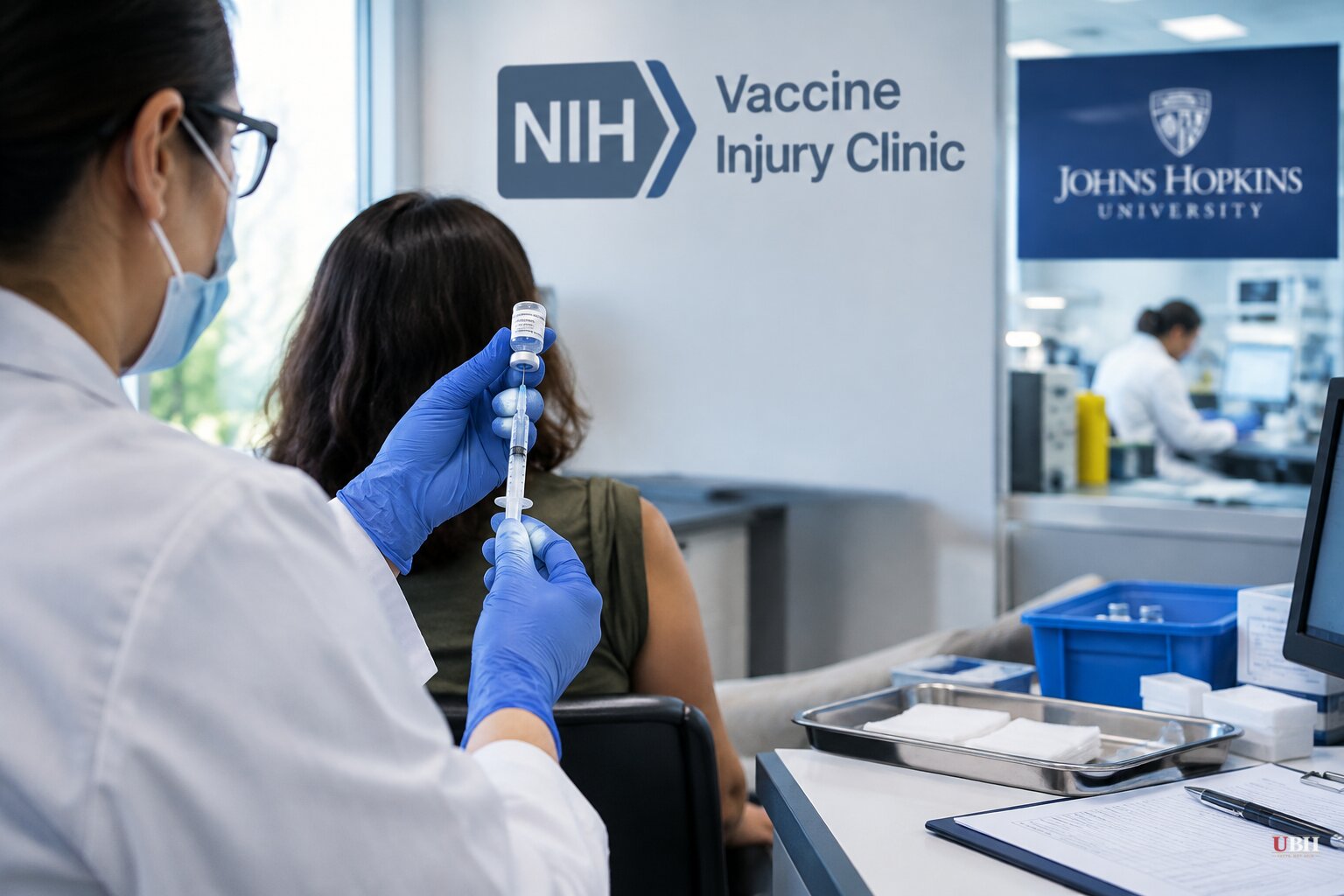
The Department of Health and Human Services announced a broad initiative in October aimed at identifying, documenting and investigating potential adverse effects from vaccines.
The package has three main parts. HHS is opening a new National Institutes of Health clinic in Bethesda, Maryland, to study and care for patients who develop health problems after vaccination. It will reimburse doctors for reporting suspected adverse events to the Vaccine Adverse Event Reporting System, or VAERS. And it will require electronic health records to capture vaccine-related injuries.
VAERS was established in 1990. Anyone can submit a report to it, which is part of why a report alone does not establish that a vaccine caused a problem.
HHS Secretary Robert F. Kennedy Jr. said in a statement that the agency is taking these steps to "earn back trust in our public health institutions."
NIH hospital board objects
Not everyone inside the federal research apparatus is on board. The board that oversees the NIH's research hospital in Bethesda voted unanimously on Oct. 16 to support a statement saying the initiative would weaken public trust in vaccination, the New York Times reported.
Kennedy's critics point to his record at HHS. In June 2025 he removed all members of a CDC committee that helps set vaccine policy and replaced nearly half of them with people who have publicly criticized vaccines. In January 2026, the CDC dropped several routine vaccinations from the national childhood schedule.
Those critics also tie rising vaccine skepticism to this year's measles cases, which are straining health workers and raising costs in states with high infection rates, including Utah and Pennsylvania. No one has established how much, if any, of that rise traces to the October initiative, which is only weeks old.
Existing safety systems
John Gräbenstein, co-chair of the Expert Vaccine Analysis Team at Georgetown University, says the country already has substantial infrastructure for this work. He points to the CDC's Clinical Immunization Safety Assessment Project, created in 2001 to research vaccine safety and adverse events.
"We have extremely safe vaccines in the United States. Is it possible that there are rare events that are not fully understood, or that could be understood better? Yes, certainly," Gräbenstein said.
He does not dismiss the HHS plan outright. Some proposals "could be good," he said, but they are not brand new or the only effort out there. Everyone in the vaccine delivery system wants thorough review and better workups, he said, and "that's part of confidence building."
A separate proposal: an NTSB for vaccines
A different answer to the same trust problem comes from Daniel Salmon, PhD, MPH, of the Johns Hopkins Bloomberg School of Public Health. In an invited perspective in the Journal of Infectious Diseases, Salmon and colleagues proposed a National Vaccine Safety Board modeled on the National Transportation Safety Board.
Salmon is blunt that routinely used vaccines in the U.S. are very safe. He also says questions about adverse events still call for thorough, credible investigation.
The idea dates back about 25 years, he says, to his time at the CDC under Dr. Bob Chen, who ran the agency's vaccine safety work and raised the NTSB as an analogy. Salmon's main reason for liking the model: the NTSB is "an incredibly trusted organization."
Under the NTSB's "party system," the board leads an investigation while agencies and companies with relevant data and expertise take part. For vaccines, CDC, FDA and manufacturers would keep their own data and use it for their own purposes. The board would lead the joint effort, with leadership that is independent and "insulated from other pressures."
Salmon also wants the board to have authority to spend money quickly when a safety signal appears. "It's an unusual situation where the speed of spending money is important," he said. His commentary also argues that separating scientific assessments from policy decisions could improve public confidence.
Same goal, different design
The two efforts share a stated aim. Kennedy wants to rebuild trust through the NIH clinic and expanded reporting, run from inside HHS. Salmon wants trust built through an investigative body kept apart from the agencies that also set vaccine policy.
The open question is whether findings from a clinic housed in the NIH will be credited by the public and the medical community, given the unanimous objection from the board overseeing the NIH's own hospital. HHS has not said how it will respond to that vote.
Salmon's board remains a proposal in a journal commentary, not an announced federal program.
Sources used for this briefing
2 links from 2 independent newsrooms (syndicated copies of the same report count once)
These are the sources it draws on, linked so you can verify.


