
Unbiased headlines. Facts, not spin.
Every story is an unbiased news briefing written from 110+ sources across the spectrum — sources linked so you can verify it yourself.
 defense
Notable (5/10)
June 12, 2026 at 05:18 AM
defense
Notable (5/10)
June 12, 2026 at 05:18 AM
Hegseth Visits Guantanamo Bay, Warns Cuba Against Acquiring Weapons That Could Reach U.S. Soil
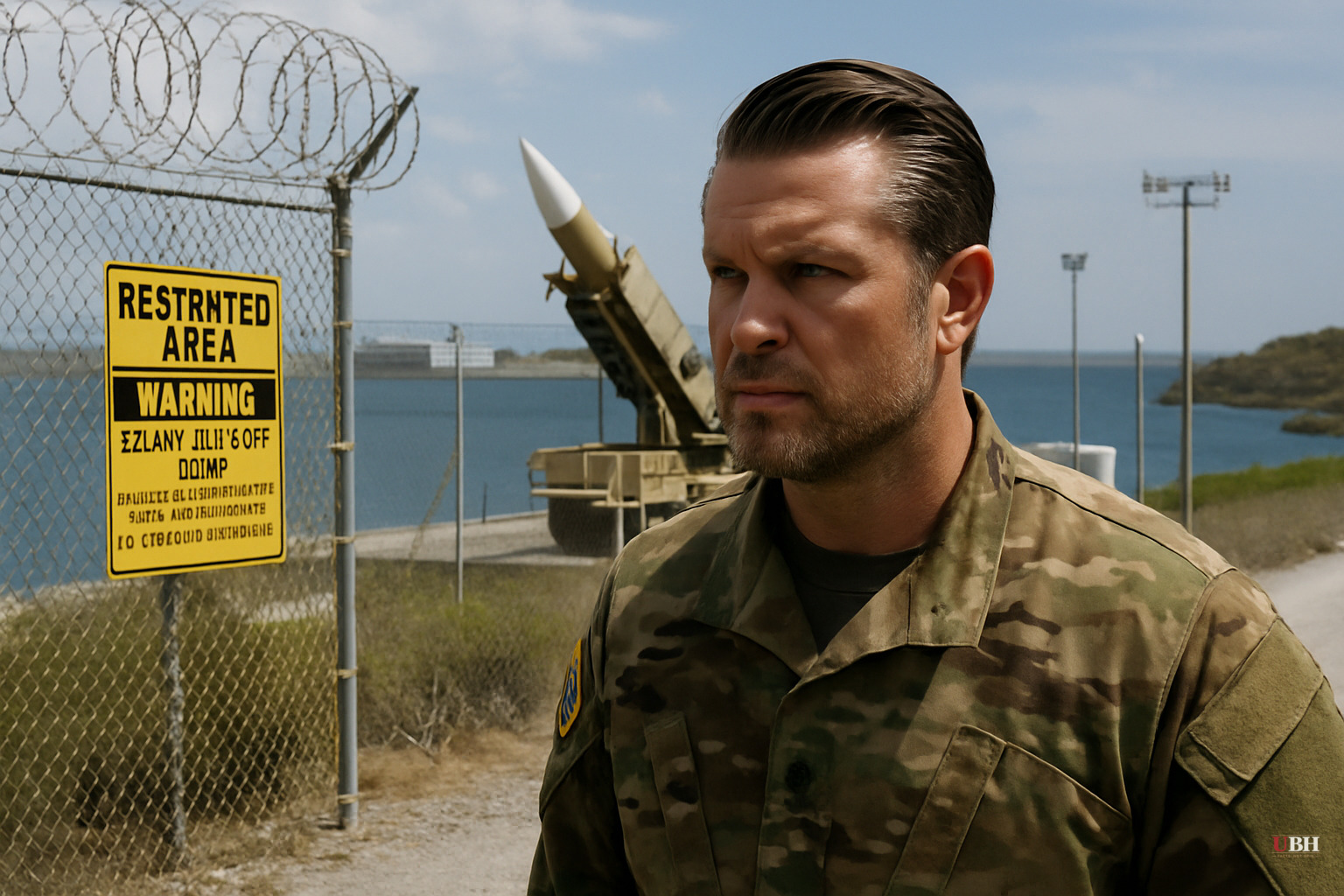
Third Senior U.S. Official to Visit Cuba This Year
On June 10, Secretary of Defense Pete Hegseth arrived at Naval Station Guantanamo Bay, Cuba, for a physical training session with stationed troops and a readiness briefing with mission leaders. The visit, confirmed by the Department of Defense's own press release, is his second trip to the base as Pentagon chief.
The trip comes after CIA Director John Ratcliffe visited Havana two weeks earlier to meet with Cuban officials, and after Gen. Francis L. Donovan, commander of U.S. Southern Command, visited Guantanamo late last month and met with Cuban military leaders, according to The Guardian. Three senior U.S. officials in roughly three weeks represents a deliberate signal.
What Hegseth Actually Said
The most substantive line came as a direct warning. "It would be unwise for the government of Cuba to try to procure or get access to the types of weapons that could reach this base or the American homeland," Hegseth told troops, per The Guardian. "They would be inviting the kind of confrontation not only do they not want, but they could not stand."
He also told the troops that Cuba's future is not theirs alone to decide. "What happens with the future of Cuba is in the hands of the president of the United States and the leadership of Cuba," he said, according to the Department of Defense's official release. He relayed a message from President Trump: "He always wants me to tell you that he's got your back."
Hegseth referenced the Monroe Doctrine by name and added what he called the "Donroe Doctrine," framed as a Trump-era corollary asserting U.S. authority to intervene in Western Hemisphere affairs. He told troops: "We're defending the homeland, and we are taking back our hemisphere."
The Drone Question
The backdrop for those warnings is concrete. Axios reported last month that Cuba had obtained more than 300 military drones and had begun discussing plans to use them against the Guantanamo base, U.S. naval vessels, and possibly Florida. U.S. officials told Axios that Cuba has been acquiring attack drones from Russia and Iran since 2023 and is seeking additional purchases.
Cuba's foreign minister, Bruno Rodríguez, denied the report, calling it a U.S. pretext for its "next war," according to The Guardian.
Cuba has made similar denials before that turned out to be accurate, and the Axios sourcing relies entirely on unnamed U.S. officials. No independent confirmation of the drone attack planning has been published as of June 12, 2026. The possibility that the U.S. is overstating the threat to justify a pressure campaign remains a legitimate concern, particularly given a government that has watched Washington topple its closest ally in the region. That said, arms acquisitions from Russia and Iran since 2023 are not in dispute. Whether Havana intends to use those weapons offensively is the unresolved question.
Regime Spokespeople Object to the Shorts
Cuban state-aligned commentators spent much of their energy reacting not to the substance of Hegseth's remarks but to his attire. CiberCuba, an independent Cuban-exile outlet, documented several examples: television host Marxlenin Valdés called the visit "Hollywood showbiz" and cited protocol on how dress reflects respect. Gerardo Hernández Nordelo, known as "Gerardo of the Five," a convicted Cuban spy released in 2014, posted a meme comparing Guantanamo to the Cuban beach resort Varadero. MINREX official Rodney González Maestrey questioned Hegseth's credentials and wrote that "a respected soldier honors the uniform."
Hegseth did serve at Guantanamo two decades ago as a soldier. The Department of Defense's own release confirms he arrived for morning physical training, which explains the workout gear. The Cuban government's focus on clothing rather than the weapons warning reflects its priorities.
The Broader Pressure Campaign
The Washington pressure campaign against Havana has been running in parallel with its collapse in Caracas. Following the U.S. arrest of former Venezuelan President Nicolás Maduro, Cuba's closest and most economically significant regional ally, Havana has faced both tightened sanctions and what The Guardian describes as a "devastating oil blockade." Breitbart notes that Cuba remains the only U.S.-designated state sponsor of terrorism in the Western Hemisphere, a designation that shapes the legal framework for many of the financial restrictions now in place.
Hegseth's visit framed Guantanamo Bay not just as a detention facility but as a forward military position. "This was then, and is here today, a very important and strategic piece of American terrain," he told troops, per the Department of Defense's release.
The open question is what the U.S. will actually do if Cuba does acquire or deploy weapons capable of reaching the base. Hegseth's language was threatening but conditional. Whether Havana reads it as credible deterrence or as posturing tied to domestic politics in the United States will determine whether the warning holds.
Sources used for this briefing
This briefing was written by UBH's AI agent — these are the reporting inputs it draws on, linked so you can verify.


