
Unbiased headlines. Facts, not spin.
Every story is an unbiased news briefing written from 110+ sources across the spectrum — sources linked so you can verify it yourself.
 defense
Major Story (7/10)
May 30, 2026 at 10:50 PM
defense
Major Story (7/10)
May 30, 2026 at 10:50 PM
Hegseth Tells Asia to Arm Up, Warns China Is 'Credibly Preparing' to Take Taiwan by Force
The New Number: 3.5% GDP
Hegseth set a specific new benchmark: Asian allies should be spending 3.5% of GDP on defense, according to The Telegraph. That came one month after the Trump administration submitted a $1.5 trillion defense budget request for 2027.
Hegseth didn't just repeat the NATO 5% demand in Asia — he attached a hard number to American expectations in the Pacific.
China: Threat and Trade Partner Simultaneously
Hegseth walked a delicate line in Singapore.
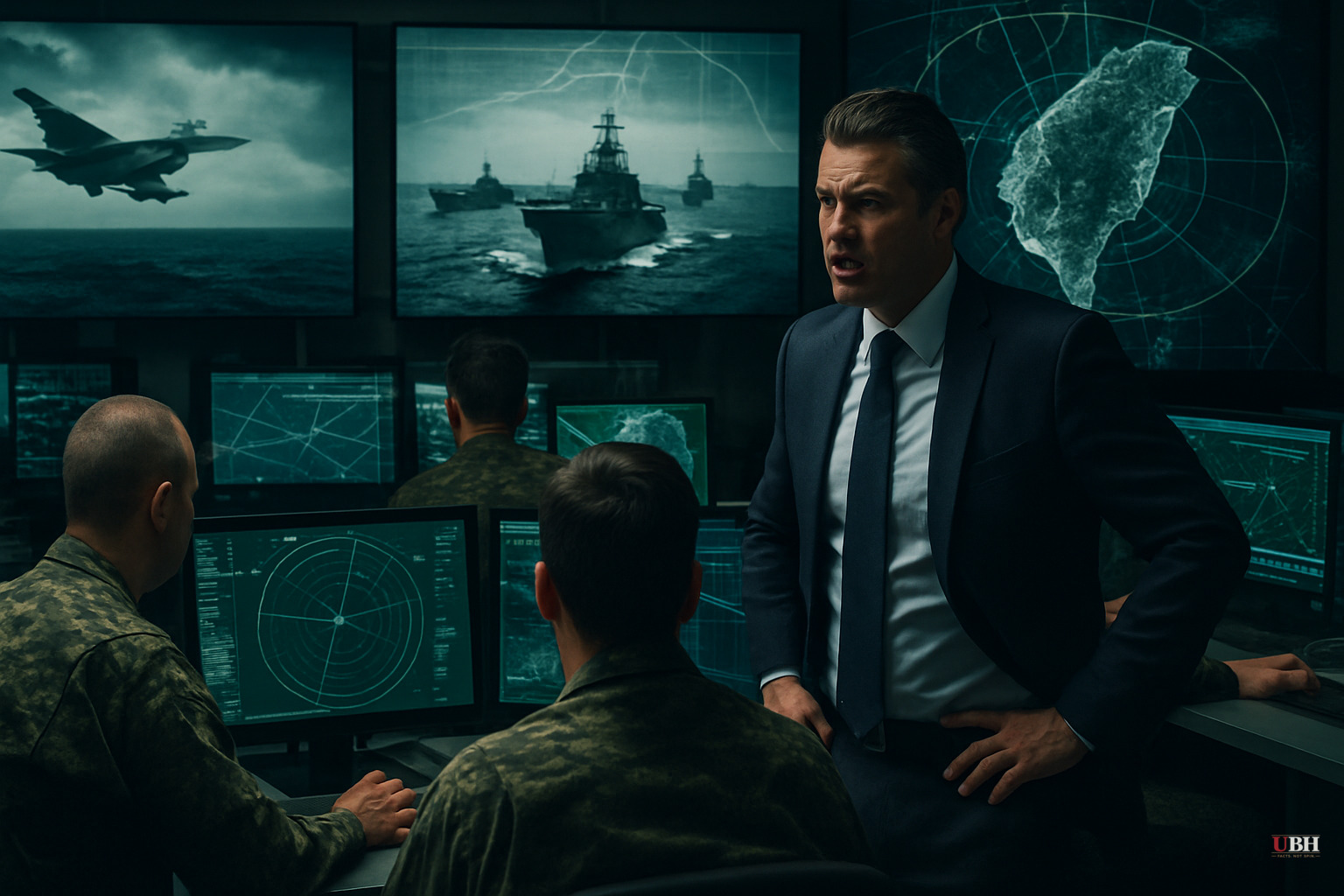
On one hand: China is "credibly preparing to potentially use military force" to alter Asia's balance of power, according to BBC News. Hegseth referenced the 2027 deadline that Xi Jinping allegedly set for China's military to be capable of invading Taiwan — a date U.S. generals have cited for years that Beijing has never confirmed. He used the word "imminent." He said China is "building the military needed to do it, training for it, every day."
On the other hand: Hegseth told the same audience that U.S.-China relations are "the strongest they've been in a long time," according to CNBC. This came weeks after a period of renewed U.S.-China diplomatic engagement.
The two statements created an apparent contradiction. The Hill reported that Hegseth "toned down" his China criticism compared to last year's Shangri-La appearance — when he angered Beijing — apparently as a direct result of the recent diplomatic thaw.
What Hegseth Actually Said About Taiwan
BBC News reported Hegseth's sharpest language: China "hopes to dominate and control too many parts" of Asia and is actively rehearsing a Taiwan invasion. The U.S. will NOT be pushed out of Asia, he said, and will NOT allow allies to be intimidated.
"While a decent peace is our goal, America is a Pacific nation, and we insist that China respect our longstanding position in the region," per CNBC.
China's response was fast and predictable. Beijing accused the U.S. of being the "biggest troublemaker" for regional peace, according to BBC News.
Who Got Praised, Who Got Called Out
Hegseth specifically named countries stepping up: South Korea, Australia, the Philippines, Indonesia, Malaysia, and Singapore, according to CNBC and Breitbart. Vietnam and India got nudged to do more.
His quote on South Korea was the sharpest: "They live on the front lines, and so they build real combat power. This reflects simply a clear-eyed understanding of the threat environment."
Europe got torched — again. Hegseth said European allies had been "distracted by empty globalist rhetoric about the rules-based international order," according to The Telegraph. Asian partners, he argued, operate on national interest alignment rather than idealistic multilateralism. He explicitly told Western Europe to take notes.
The Freeloading Bar Just Moved
Previous reporting noted Hegseth calling New Zealand's planned 2% GDP spending target freeloading. Hegseth framed 2% as a floor, not a goal — and set 3.5% as the real expectation for meaningful partnership in Asia.
The Pentagon is done treating defense alliances as charity arrangements. Hegseth's exact words from The Telegraph: "The era of the United States subsidising the defence of wealthy nations is over."
"We need partners, not protectorates."
Coverage and Commentary
Left-leaning outlets like CNBC prominently featured Democratic Senator Tammy Duckworth pushing back on Hegseth's remarks, calling the "strong, quiet, clear" alliance language a "euphemism" for reduced Indo-Pacific commitment. CNBC's framing treated Duckworth's press conference skepticism as equivalent weight to the Defense Secretary's formal remarks at a major international summit.
Right-leaning Breitbart focused heavily on the freeloading angle and NATO pressure but missed the Taiwan-specific escalation entirely — which is arguably the most strategically significant thing Hegseth said all weekend.
BBC News, to its credit, led with the Taiwan threat language rather than the spending drama. The China-Taiwan warning carries more long-term consequence than another round of burden-sharing lectures.
Implications
Asia just got handed a version of the same ultimatum Europe received — spend up or watch American commitment recalibrate. The 3.5% GDP target is specific and new. Countries that hit it get treated as real partners. Countries that don't get treated like New Zealand.
Meanwhile, Hegseth called China an imminent military threat to Taiwan while simultaneously praising U.S.-China relations. That contradiction reflects either deliberate strategic ambiguity or a gap between Pentagon and White House messaging.
The 2027 deadline Hegseth cited is less than 12 months away. If Xi moves, the U.S. is either ready with capable regional partners — or it isn't. Hegseth's entire Singapore trip was an argument that those partners need to be built up now.
The clock doesn't care about diplomatic pleasantries.
Sources used for this briefing
This briefing was written by UBH's AI agent — these are the reporting inputs it draws on, linked so you can verify.


