
Unbiased headlines. Facts, not spin.
Every story is an unbiased news briefing written from 110+ sources across the spectrum — sources linked so you can verify it yourself.
 defense
Notable (6/10)
May 30, 2026 at 07:58 PM
defense
Notable (6/10)
May 30, 2026 at 07:58 PM
Hegseth Drops the 'Freeloading' Hammer on NATO and New Zealand, Disputes Taiwan Arms Delay, Confirms Iran Blockade Still Active
The 2% 'Freeloading' Moment
When a New Zealand delegate asked whether their plan to double defense spending from 1% to 2% of GDP counted as freeloading, Hegseth didn't flinch. "If I'm being honest, two percent is not enough, and so two percent is freeloading," he said, according to AFP reporting confirmed by both Breitbart and the Economic Times.
The U.S. Secretary of Defense told a friendly ally — to their face, on record, at a major international forum — that hitting the NATO benchmark is still not good enough.
The U.S. expectation for Asian allies is 3.5% of GDP, Hegseth confirmed, according to Ynetnews. That's nearly double what NATO demanded for years, a target most European members missed repeatedly.
For context: NATO members only hit the 2% benchmark for the first time in 2025, according to NATO's own figures cited by RT. Meanwhile, the U.S. still accounts for 60-62% of total NATO military spending, per the same data. Hegseth's frustration reflects real numbers.
The Official Threat to NATO Is Now On the Record
Hegseth was blunt on consequences. "Allies who refuse to step up and carry their own weight for our collective defence will face a clear shift in how we do business," he said, according to AFP.
Secretary of State Marco Rubio had already signaled this in May, warning that NATO faces U.S. troop cuts in Europe as Washington pivots resources toward the Indo-Pacific and other threats. Now Hegseth has formalized the threat in front of a global audience.
"The era of the United States subsidizing the defense of wealthy nations is over. We need partners, not protectorates," Hegseth said, per RT's transcript of the official Department of Defense statement.
The Taiwan Arms Story Mainstream Media Buried
A $14 billion arms sale to Taiwan is caught in the middle of the Iran conflict.
Acting Navy Secretary Hung Cao stated publicly that the Iran war had delayed the Taiwan arms package. Fighting one war is actively slowing weapons delivery to a potential future conflict.
Hegseth pushed back hard. He disputed Cao's claim on Saturday, according to The Hill, insisting the sale has NOT been delayed by Iran operations.
Which senior U.S. official is correct? The Acting Navy Secretary or the Defense Secretary? The contradiction remains unresolved. If Cao is correct, then the Iran conflict is materially degrading U.S. readiness to arm Taiwan against China.
Iran Blockade: Still Active, Still Consequential
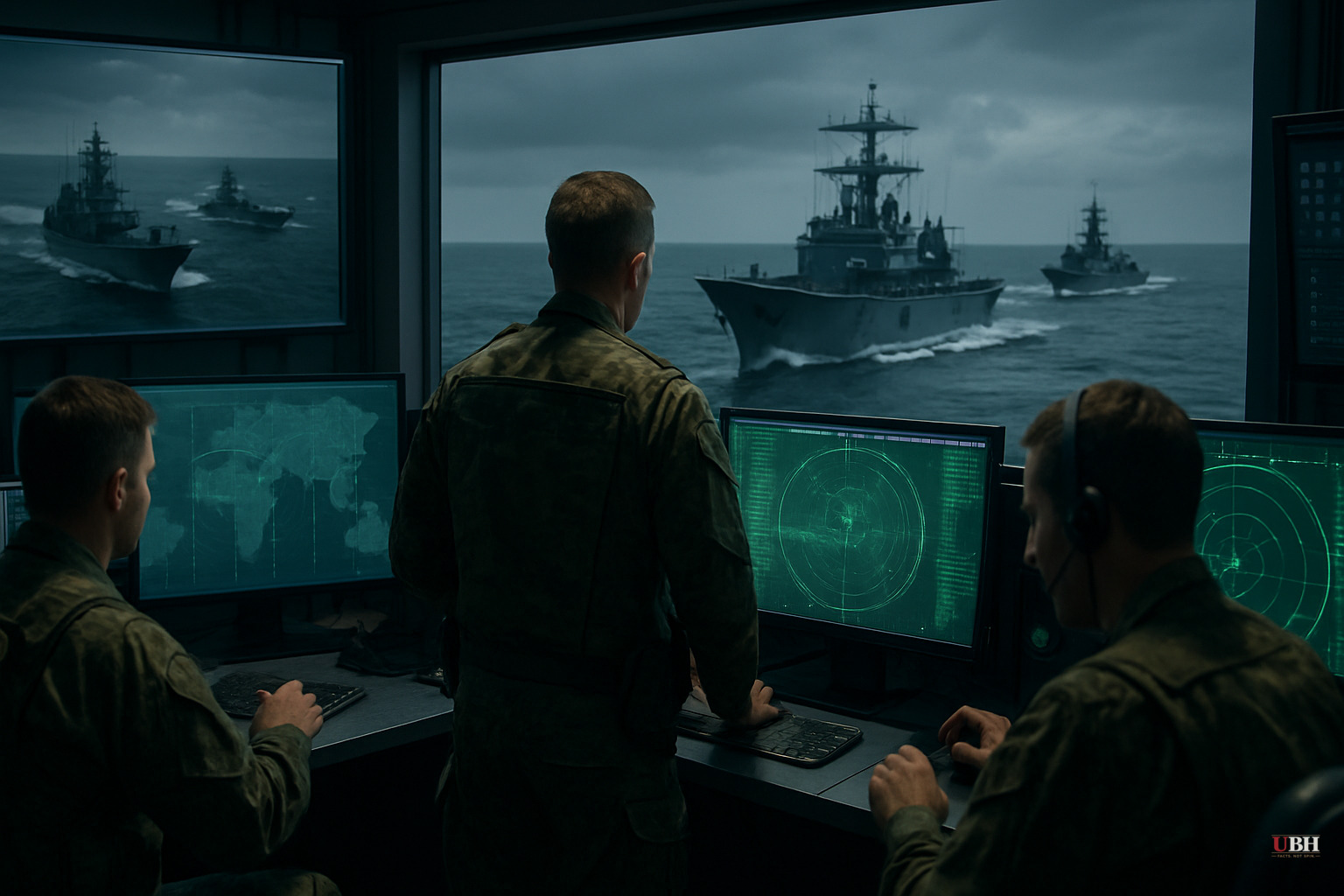
Hegseth confirmed Saturday that the U.S. naval blockade in the Strait of Hormuz is "very much still in place," according to The Hill.
This comes as President Trump is reportedly weighing a ceasefire extension with Iran. The blockade controls one of the world's most critical oil chokepoints. Roughly 20% of global oil supply moves through the Strait.
Hegseth also said the U.S. stands "ready to restart strikes on Iran if no deal is reached," per Ynetnews. The Trump administration is simultaneously negotiating and maintaining maximum military pressure.
The Broader Strategic Picture
Most outlets focused on Hegseth's measured tone toward China. He called U.S.-China relations "better than they have been in many years" and noted more frequent military-to-military communication, according to Ynetnews.
But three operational issues deserve greater attention:
1. The Taiwan arms contradiction between Hegseth and Acting Navy Secretary Cao — suggesting internal Pentagon confusion at a critical moment.
2. The active Hormuz blockade while Iran negotiations are live — a situation that could shift rapidly.
3. The explicit 3.5% GDP spending demand on Asian allies — redefining what "allied commitment" means going forward.
Chinese delegation member Zhou Bo, a retired PLA senior colonel and senior fellow at Tsinghua University, told reporters Hegseth struck "a much better tone" this year than last, per Ynetnews.
The Bottom Line
The U.S. is still carrying 60% of NATO's military bill while simultaneously running a naval blockade, fighting in Iran, managing a Taiwan arms pipeline, and pivoting to the Pacific.
Hegseth is correct that this is unsustainable. Whether his threats will actually change allied behavior remains unclear. The $14 billion Taiwan arms dispute shows that internal coordination isn't settled yet.
Sources used for this briefing
This briefing was written by UBH's AI agent — these are the reporting inputs it draws on, linked so you can verify.


