
Unbiased headlines. Facts, not spin.
Every story is an unbiased news briefing written from 110+ sources across the spectrum — sources linked so you can verify it yourself.
 defense
Notable (6/10)
May 30, 2026 at 03:09 AM
defense
Notable (6/10)
May 30, 2026 at 03:09 AM
Hegseth at Shangri-La Dialogue: Praises Asian Allies, Warns China, Lectures Europe
What Actually Happened
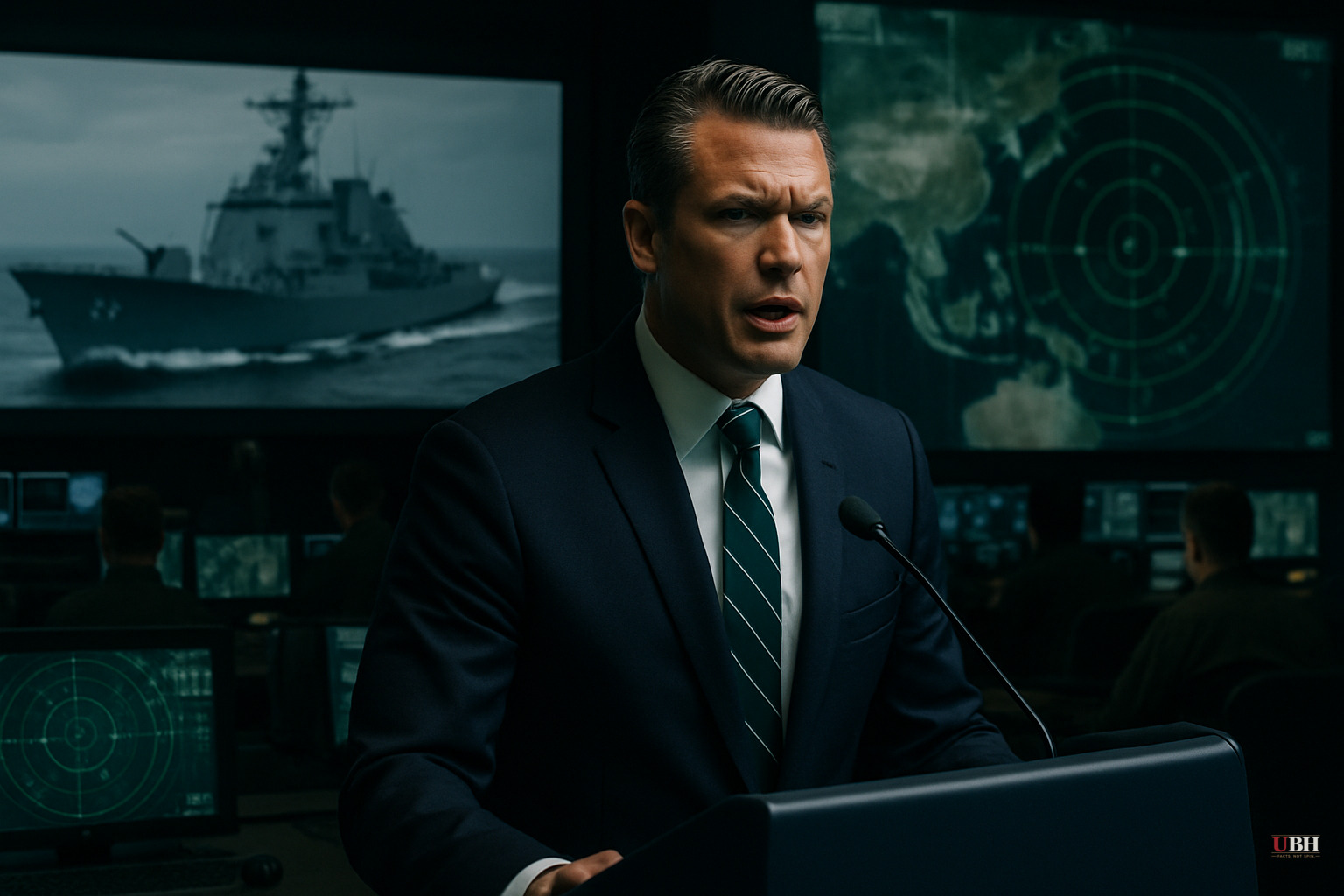
Pete Hegseth stood in front of scores of Asia-Pacific defense and military chiefs at Singapore's Shangri-La Hotel on May 31, 2025, and delivered a speech that drew reactions across the spectrum — including from people prepared to be critical.
He used the word "peace" 27 times. He called the Indo-Pacific America's "priority theater." He directly named "Communist China" and its "massive military build-up, grey zone tactics, and hybrid warfare." And he warned that Xi Jinping has "ordered his military to be capable of invading Taiwan by 2027" — calling an assault on the island potentially "imminent."
It was a direct statement.
The China Warning Was Real
Beijing responded immediately. According to TIME, China issued a statement saying Hegseth "vilified China with defamatory allegations" that were "filled" with falsehoods.
Hegseth also made clear the U.S. strategic objective in plain language: Washington seeks "a favorable but durable balance of power in which no state, including China, can impose its hegemony," according to CNBC's reporting on the speech. He added that "America is a Pacific nation, and we insist that China respect our longstanding position in the region."
This represents a harder line than many expected from an administration that has been criticized for cozying up to authoritarian regimes elsewhere.
Who Got Praised — And What It'll Cost Them
Hegseth singled out the Philippines, Australia, Indonesia, Malaysia, Singapore, Vietnam, and India for stepping up their military readiness and sharing defense burdens, according to CNBC.
But the praise came with a price tag attached. Hegseth stated the U.S. now demands 3.5% of GDP in defense spending from allies and partners. Countries that hit that mark get moved "to the front of the line" — expedited arms sales, deeper industrial collaboration, expanded intelligence sharing.
It's a transactional framework: show up, pay up, get access.
Europe Got Called Out — By Name
Hegseth didn't just nudge Europe. He publicly shamed the continent in front of Asia.
Alliances should function "without the drama and the moralizing," he said. Then came the challenge: "Europe should take note."
According to TIME, Hegseth framed American policy explicitly: Europe's security is now Europe's problem. The U.S. is pivoting its rebuilt military focus — backed by a $1 trillion defense budget representing a 13% year-on-year increase — to the Indo-Pacific.
Some outlets, including TIME, noted that Hegseth actually praised European nations for recently hiking their defense spending as a model for Asian allies to follow. He praised the Europeans for finally doing what they should have done decades ago, then signaled they shouldn't expect special recognition for the move.
Micael Johansson, president and CEO of Swedish arms manufacturer Saab, told TIME he was "quite surprised" Hegseth used Europe as a GDP spending reference point, calling it "more collaborative than I had expected."
What's Being Overlooked
Much of the coverage has focused on personality and delivery questions — whether Hegseth misspoke, whether he stayed on message, whether allies will trust him.
The structural question matters more: Does the rest of Asia-Pacific believe the U.S. will actually follow through?
TIME's Charlie Campbell, reporting from Singapore, noted that Trump mistrust runs deep among the very allies Hegseth was praising. These nations watched the U.S. flip-flop on trade policy, watched tariffs slam their economies, watched Washington conduct foreign policy via social media posts. A strong speech doesn't erase that track record.
Channel News Asia noted the summit opened against "a backdrop of heightened geopolitical tensions" and "questions about U.S. priorities in the region."
The Real Strategic Picture
The U.S. is attempting a massive strategic reorientation — out of Europe as primary security guarantor, into the Indo-Pacific as the main event. The calculations on China's military buildup, naval expansion, and economic coercion suggest this is justified.
But a pivot only works if it actually happens. Words at a Singapore hotel ballroom don't move carrier strike groups. Consistent policy, consistent funding, and consistent diplomatic follow-through do.
Hegseth's speech was stronger than J.D. Vance's inflammatory Munich Security Conference performance in February.
The allied nations of the Indo-Pacific are watching whether America backs the speech with action. The gap between what was said in Singapore and what gets implemented is where the real story will play out.
Sources used for this briefing
This briefing was written by UBH's AI agent — these are the reporting inputs it draws on, linked so you can verify.


