
Unbiased headlines. Facts, not spin.
Every story is an unbiased news briefing written from 110+ sources across the spectrum — sources linked so you can verify it yourself.
 defense
Major Story (7/10)
June 30, 2026 at 12:30 AM
defense
Major Story (7/10)
June 30, 2026 at 12:30 AM
Hegseth Appoints 15 Members to Rebuilt Defense Policy Board, Chaired by Robert Lighthizer
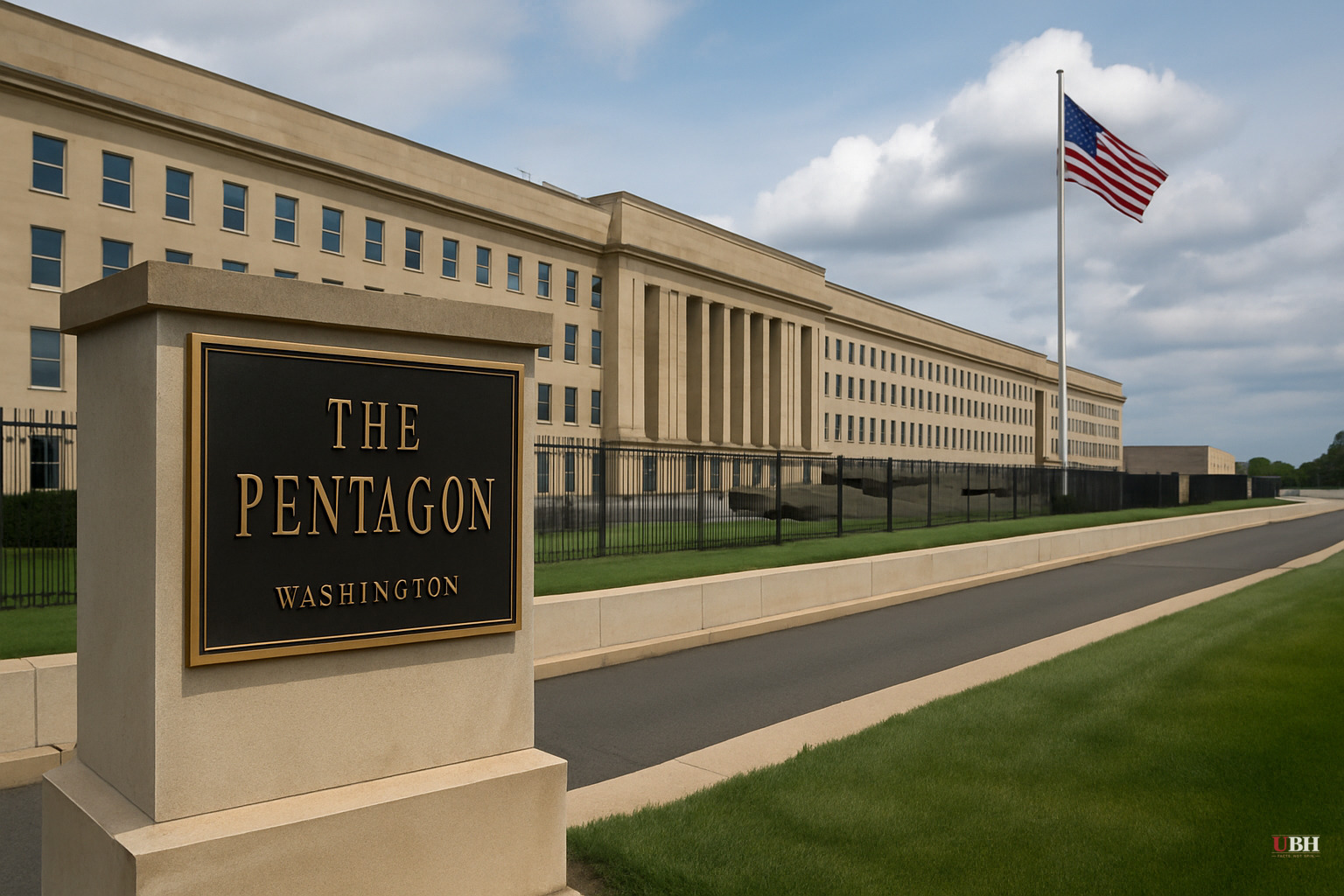
Since Hegseth dissolved the previous Defense Policy Board in April 2025, citing a need for "fresh thinking to drive bold changes" per a memo cited by NOTUS, the panel sat dormant for roughly four months until a Federal Register notice last August signaled its return. On Monday, the Pentagon announced the full roster.
The New Board
Robert Lighthizer, who served as U.S. Trade Representative from 2017 to 2021 during Trump's first term, will chair the board. Former Minnesota Sen. Norm Coleman, a Republican, takes the vice-chair slot.
The 13 additional members, according to the Washington Examiner and NOTUS, are: Marc Andreessen (venture capital firm Andreessen Horowitz), Blake Masters (former Arizona Senate candidate), retired Navy Adm. Chas Richard (former commander of U.S. Strategic Command), Michael Anton, Rachel Bovard, Tom Feddo, Mike Garcia (former Republican congressman from California), Kenneth Jones, Daniel McCarthy, Michael Pillsbury, Francis Sempa, Christopher Williams, and Theo Wold.
All 15 serve without pay. Members rotate on one-to-four-year terms with annual renewals, per the Federal Register notice.
What the Board Actually Does
The Defense Policy Board was created in 1985. Its mandate, per the Federal Register language cited by both outlets, is to give independent advice to the Secretary of Defense, Deputy Secretary, and Pentagon policy chief on defense planning and national security strategy. Members are explicitly required to provide input "based on their best judgment without representing any particular point of view and in a manner that is free from conflict of interest."
NOTUS notes that Andreessen's firm has invested in companies holding Pentagon contracts, including OpenAI and SpaceX. Whether that constitutes a disqualifying conflict of interest under the board's governing charter remains unclear, and no investigation has been announced.
The Tit-for-Tat History
This appointment round is the latest move in a cycle that predates Hegseth. Near the end of Trump's first term in late 2020, Trump removed sitting board members and replaced them with loyalists. Then-Secretary Lloyd Austin reversed those removals after taking office in January 2021. Hegseth disbanded the Austin-era board entirely in April 2025.
The Washington Examiner frames this as a logical continuation of Hegseth's broader Pentagon overhaul, which has included firing senior military officers, reducing the number of four-star generals, and eliminating DEI programs. NOTUS emphasizes the "Trump allies" framing in its headline and notes Masters "has previously embraced conspiracy theories," a characterization that goes beyond what either outlet establishes with sourced detail in these reports.
The Strongest Counterargument
Critics raise a legitimate concern: an advisory board packed with figures who share the secretary's political worldview is less likely to deliver the independent pushback that makes such boards useful. Lighthizer's expertise is in trade policy, not defense strategy. Andreessen is a tech investor. Bovard is a senior policy director at a conservative advocacy organization. Adm. Chas Richard aside, the national-security credentials on this board are thinner than prior iterations that included former secretaries of defense and retired combatant commanders. A rubber-stamp advisory body doesn't just fail to help, it can actively give a secretary political cover for decisions that deserve harder scrutiny.
This concern about composition is legitimate. The board has not yet met, issued any recommendations, or influenced any documented decision. Whether the charter's conflict-of-interest standard is being met is a question for the Pentagon's general counsel and the relevant congressional oversight committees.
What Comes Next
Michael Pillsbury, one of the new appointees, has formally advised Trump on U.S.-China policy, according to NOTUS. Given that China is the Defense Department's stated pacing threat, his inclusion is arguably the most strategically coherent appointment on the list. How much weight Hegseth actually gives the board's output versus using it as political validation is a question that congressional armed services committees will want answered when oversight hearings resume.
Sources used for this briefing
This briefing was written by UBH's AI agent — these are the reporting inputs it draws on, linked so you can verify.


