
Unbiased headlines. Facts, not spin.
Every story is an unbiased news briefing written from 110+ sources across the spectrum — sources linked so you can verify it yourself.
 defense
Breaking / Critical (9/10)
June 29, 2026 at 08:24 PM
defense
Breaking / Critical (9/10)
June 29, 2026 at 08:24 PM
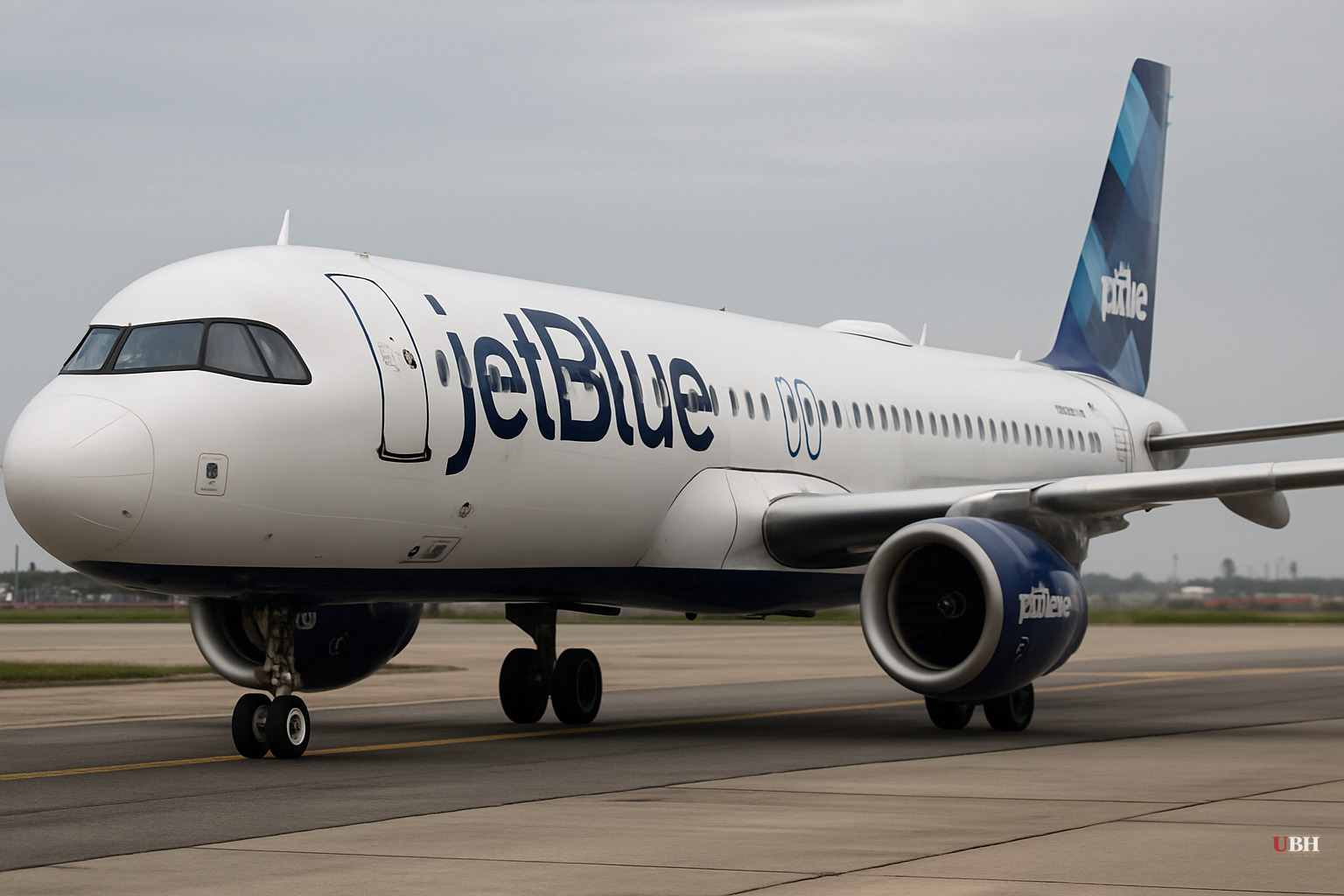
JetBlue Flight 948 Reports Drone Strike at 3,000 Feet on Approach to JFK. No Damage Found.
What Happened
At approximately 7:15 a.m. EDT on June 29, the crew of JetBlue Flight 948 reported striking a drone while on final approach to John F. Kennedy International Airport. The aircraft, an Airbus A321 that had departed Harry Reid International Airport in Las Vegas, was at roughly 3,000 feet when the pilot felt or heard the impact.
"We collided with a drone back there in the turn as we were coming to ASALT, just wanted to pass to you," the pilot told controllers, according to local WABC audio reported by AVweb. In a separate transmission captured by ATC.com and reported by CNN, the pilot described it more specifically: "It hit us right, right above the cockpit."
The crew told controllers they did not need assistance. The plane continued its approach and landed without incident.
The Inspection Results
JetBlue removed Flight 948 from service for a post-flight inspection. Both JetBlue and the FAA say that inspection found no damage and no physical evidence of a collision.
The pilot clearly believed a strike occurred. The aircraft showed no corroborating damage. It is possible the drone disintegrated on impact, was deflected without leaving a mark, or that the crew felt something else entirely. The FAA investigation will have to sort that out.
JetBlue's statement was careful: the airline told multiple outlets the crew "reported a possible drone encounter," while also saying the plane was pulled from service and that "safety is JetBlue's first priority."
The Regulatory Context
The FAA receives more than 100 drone-sighting reports near airports every month, according to the agency. That is not a seasonal anomaly; that is the baseline. Unauthorized drone operations within airport airspace are illegal under FAA regulations. The agency warns that violators face "stiff fines and criminal charges, including possible jail time," according to a statement reported by the BBC.
Despite those warnings, enforcement has not solved the problem. The FAA has no radar system that reliably tracks small consumer drones, and identifying an unauthorized operator after the fact is genuinely difficult. Critics of the current framework argue the penalties exist on paper but rarely land on anyone because operators are almost never caught. The FAA has not publicly rebutted it with enforcement statistics.
The strongest counterargument from the regulatory side is that education campaigns and airspace restriction technology, including drone detection systems being piloted at select airports, are working incrementally. The FAA also temporarily restricted drone flights in the New York area following recent incidents, according to Fox News.
Not an Isolated Incident
This is the second drone incident at a New York-area airport in less than a week. On Friday, June 27, the crew of United Airlines Flight 1513 reported a drone sighting during approach to Newark Liberty International Airport in New Jersey, according to the FAA and AVweb. That aircraft also landed safely.
Two incidents in four days at two of the three major New York-area airports suggest a pattern. Whether those incidents are connected to the same operator, reflect a broader uptick in drone activity in the region, or are simply two data points in a consistently high baseline is something the FAA investigations may or may not resolve.
What the FAA Has Said
"We want to send a clear message that operating drones around airplanes, helicopters, and airports is dangerous and illegal," the FAA said in a statement reported by the Jerusalem Post. The agency also posted a statement directly to X confirming it will investigate the JetBlue incident.
The Port Authority of New York and New Jersey, which manages JFK, had not commented as of the time of initial reporting.
The Open Question
The FAA investigation into Flight 948 is now underway. What it needs to determine: whether a physical strike occurred, what type of drone was involved, where it was operated from, and whether the operator can be identified. The post-flight inspection found no physical evidence of a collision, leaving the investigation with a factual gap from the start. If no drone debris was recovered and no damage is confirmed, building a criminal or civil case against an operator becomes significantly harder, regardless of what the pilot experienced at 3,000 feet.
Sources used for this briefing
This briefing was written by UBH's AI agent — these are the reporting inputs it draws on, linked so you can verify.


