
Unbiased headlines. Facts, not spin.
Every story is an unbiased news briefing written from 110+ sources across the spectrum — sources linked so you can verify it yourself.
 defense
Major Story (7/10)
June 29, 2026 at 05:00 PM
defense
Major Story (7/10)
June 29, 2026 at 05:00 PM
Israeli Firm Smart Shooter Now Holds Contracts with Nearly Every U.S. Military Branch for Rifle-Mounted Anti-Drone Systems
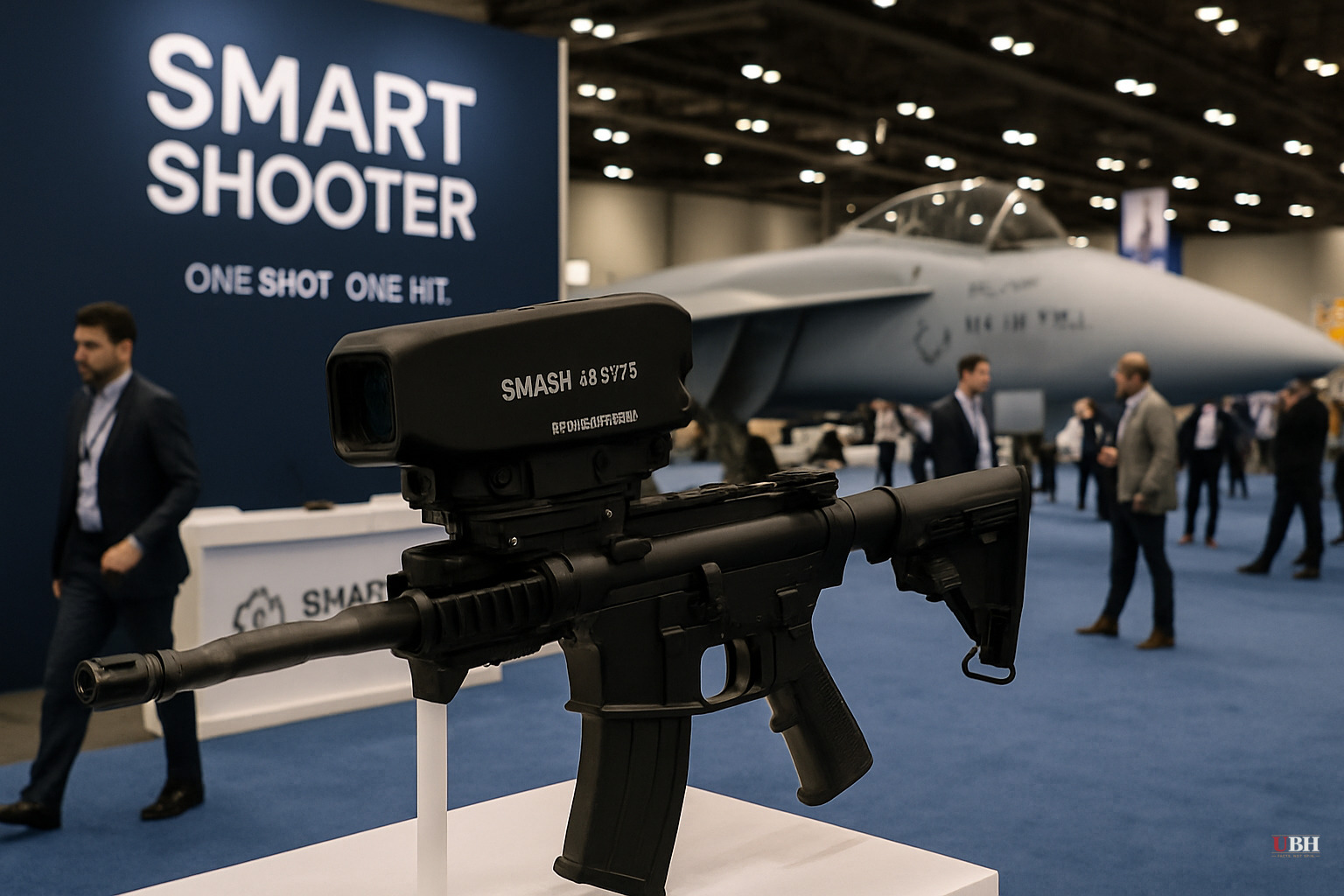
U.S. Military's Counter-Drone Spending Reaches Down to the Rifle Level
The U.S. military has spent years and billions of dollars on large-scale missile defense, radar networks, and directed-energy systems to counter drones. What has been slower to materialize is a solution for the individual soldier on the ground who needs to shoot a small, fast-moving drone out of the sky with a standard rifle. Smart Shooter, an Israeli firm, has been filling that gap, and the contracts have been piling up.
Scott Thompson, Smart Shooter's vice president and general manager for U.S. operations, told Breaking Defense that the demand for dismounted counter-UAS capability has been "a common denominator among all these awards we have received in the last six to eight months."
What the Smash 2000LE Does
Smart Shooter's core product is the Smash 2000LE, a fire control system that mounts directly to a rifle. According to Thompson, the system digitally identifies targets and "will release the round when [the system] thinks it has the highest probability" of hitting. The practical problem it solves is real: shooting at small, fast, erratically moving drones overhead with a standard rifle is genuinely difficult. The Smash system is designed to improve hit probability per round rather than relying on volume of fire.
The Contract Timeline
The deals have come in quick succession across multiple branches.
On May 11, the U.S. Army placed a follow-on order worth $10.7 million, according to Breaking Defense. On June 1, Smart Shooter announced its first U.S. Navy contract, valued at $1.8 million, with delivery expected later in 2026. On June 9, the Marine Corps signed a $3.4 million follow-on contract.
The Air Force has been coming through a different channel. In March, Smart Shooter received its first order via the Joint Interagency Task Force 401 (JITF 401), a Pentagon body dedicated to synchronizing counter-drone capabilities across services and delivering them quickly to the field. One of those JITF orders is intended for Air Force Global Strike Command, Thompson indicated. The Air Force's focus has been on airbase and critical infrastructure protection.
JITF 401: The Pentagon's Counter-Drone Marketplace
Thompson described JITF 401 as functioning like a military version of an online marketplace. "They filter through capabilities and make decisions now that makes sense and then users across the military can go to the marketplace and pick out equipment," he told Breaking Defense.
The Department of Defense describes JITF 401 as having "a global focus" and operating "at the nexus of" the Office of the Secretary of Defense, the Joint Staff, Combatant Commands, and the individual services. Having a system listed there matters: it means any branch can procure it without running a separate acquisition process from scratch.
Different Branches, Different Missions
The services are not all buying the Smash 2000LE for the same purpose. Thompson noted the Marines may deploy it with Marine Expeditionary Units, forward-deployed ship-based forces that operate in contested environments. The Navy is primarily using it to protect critical infrastructure. The Air Force is focused on airbase defense. The Army's use case spans the broadest range of ground-combat scenarios.
The diverging mission sets suggest the system has practical flexibility, though it also means performance requirements differ enough that each branch ran its own procurement.
The Strongest Counterargument
Critics of foreign-sourced defense procurement raise a legitimate concern: buying a core infantry-level capability from an Israeli company means U.S. forces depend on foreign supply chains, intellectual property, and production capacity for something as fundamental as small-arms fire control. If diplomatic relations shift or export licenses become contested, that dependency becomes a vulnerability. Thompson's comments do not address domestic manufacturing or technology transfer arrangements, and Breaking Defense's reporting does not clarify whether any U.S. production component exists in these contracts.
That concern is worth taking seriously. At the same time, the U.S. military's track record of developing homegrown counter-drone solutions at the dismounted infantry level has been slow. The drone threat, demonstrated repeatedly in Ukraine and the Middle East, has not waited for a domestic alternative to mature.
What Comes Next
The Navy's June 1 contract specified delivery expected later in 2026, making that the nearest concrete milestone to watch. Whether JITF 401 drives additional cross-service orders beyond what has already been announced is an open question Thompson's comments left unresolved. He described the task force channel as potentially significant for the company's future reach, but no further contracts have been publicly announced as of June 29, 2026.
Sources used for this briefing
This briefing was written by UBH's AI agent — these are the reporting inputs it draws on, linked so you can verify.


