
Unbiased headlines. Facts, not spin.
Every story is an unbiased news briefing written from 110+ sources across the spectrum — sources linked so you can verify it yourself.
 defense
Major Story (7/10)
June 29, 2026 at 06:32 PM
defense
Major Story (7/10)
June 29, 2026 at 06:32 PM
U.S. Commits Over $300 Million to Venezuela Earthquake Response, Calls It the Largest Disaster Deployment in American History
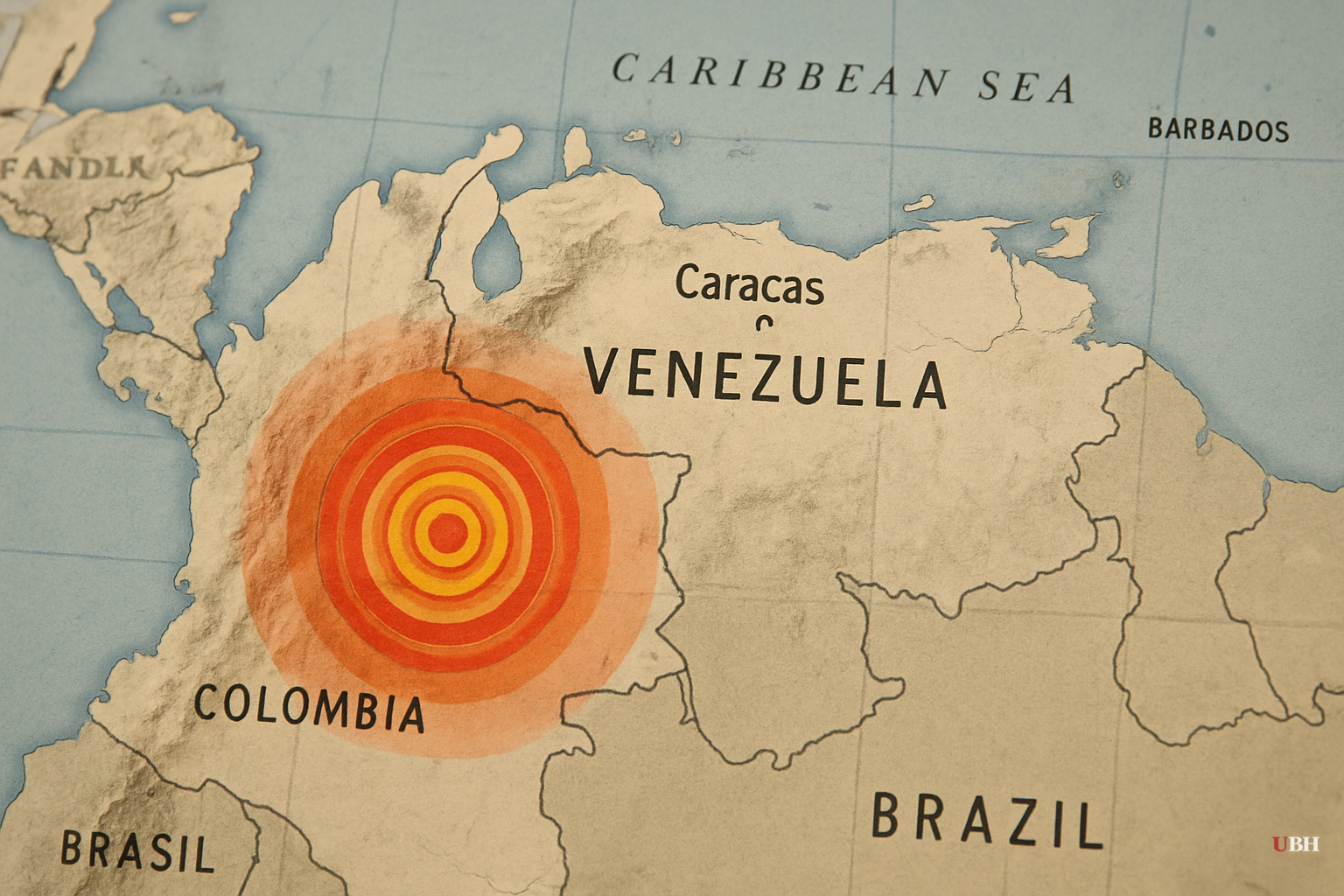
Since the June 24 twin earthquakes struck Venezuela, the death toll has reached at least 1,450, with 3,150 injured and an independent monitoring platform reporting 50,000 people still missing as of June 29.
The U.S. State Department announced Monday that total American assistance has surpassed $300 million. The itemized components disclosed include $100 million in bilateral funding, $100 million channeled through UNOCHA's country pooled fund, and an additional $50 million committed Monday for critical partner organization operations — accounting for $250 million of that total — according to the State Department statement reported by Anadolu Agency.
A senior Trump administration official told reporters Monday: "I think this is by really any estimate at this point the largest response to any natural disaster the United States has mounted in terms of personnel on the ground, money out the door, speed." More than 300 search-and-rescue personnel have been deployed. The State Department confirmed three American citizens have died and 12 remain missing.
What the Response Looks Like on the Ground
U.S. helicopters have been ferrying aid into the hard-hit coastal state of La Guaira. An additional 230 U.S. military personnel arrived Sunday to expand airport capacity and reopen a key seaport for relief logistics, according to U.S. Southern Command as reported by The Guardian. French Civil Security teams are working alongside American rescuers at collapse sites in Caraballeda.
On Sunday, French and American teams pulled a father and his teenage son alive from the rubble in Caraballeda, nearly four days after the quakes. Interim President Delcy Rodríguez called it proof that rescue efforts must continue. "Today we have rescued people who are still alive, and therefore these efforts will not be suspended. We always hold on to hope," she said, according to The Guardian.
A 4.6-magnitude aftershock rattled Caracas early Monday morning. More than 100 aftershocks have been recorded since the main events, according to The Atlantic.
The situation in La Guaira has deteriorated beyond search-and-rescue. Looting broke out across the port city, with pharmacies, supermarkets, and businesses ransacked. Residents cited slow and insufficient government aid. One man shouted at soldiers in Tanaguarena: "The country needs you. Put down your weapon," per The Guardian.
A Mission Complicated by History and Ideology
The political backdrop here is impossible to ignore. The Trump administration conducted a special forces raid in January that removed Nicolás Maduro and brought him to the U.S. to face narco-terrorism charges. His successor, Delcy Rodríguez, has been more cooperative with Washington. Trump said Friday that the U.S. has "a great relationship with Venezuela" since Maduro's capture and called Venezuela "a happy country again."
That context shapes the stakes of this operation. Trump restructured foreign disaster response by dismantling USAID and moving its functions to the State Department, laying off thousands of aid workers in the process. Susan Reichle, a former USAID counsellor who worked the 2010 Haiti earthquake response, told The Guardian that the U.S. foreign assistance unit in Colombia had 144 staff before the USAID cuts and now has 14. She called Venezuela "their first real test, because of the magnitude of the disaster."
The strongest version of the concern about USAID cuts is straightforward: the institutional knowledge, pre-positioned relationships, and standing field capacity that USAID built over decades don't reconstitute overnight. When a 7.5-magnitude earthquake hits a country with 774 badly damaged buildings and tens of thousands missing, the difference between a functional pre-existing logistics network and one being rebuilt from scratch matters in hours, not weeks.
The administration's counter-argument, implicit in the response itself, is that speed and money are what actually move the needle. A $300 million commitment announced within days, 300-plus personnel on the ground, a humanitarian logistics hub in Miami—these are not the outputs of a hollowed-out system. Whether the restructured State Department apparatus can sustain and coordinate an operation of this scale as the acute rescue phase gives way to longer-term recovery is the question that won't be answered this week.
The Structural Question Under the Rubble
ZeroHedge highlighted video circulating on social media showing that many of the collapsed buildings in La Guaira were part of Venezuela's Misión Vivienda program, constructed using expanded polystyrene panels with a thin concrete coating. That construction method, used under the Chávez and Maduro governments to rapidly build public housing, appears to have performed catastrophically in the quake. Nearly 200 buildings were completely destroyed; 774 were badly damaged, per National Assembly president Jorge Rodríguez. The full structural audit of what failed and why has not been completed.
With 50,000 people still unaccounted for and the critical 72-hour survival window now closed, the operation is shifting in real time from rescue to recovery. Whether a State Department-led humanitarian architecture, assembled largely without USAID's institutional infrastructure, can manage that transition across a country of 28 million people where millions lack basic sanitation remains unclear.
Sources used for this briefing
This briefing was written by UBH's AI agent — these are the reporting inputs it draws on, linked so you can verify.


