
Unbiased headlines. Facts, not spin.
Every story is an unbiased news briefing written from 110+ sources across the spectrum — sources linked so you can verify it yourself.
 defense
Major Story (8/10)
June 29, 2026 at 05:39 PM
defense
Major Story (8/10)
June 29, 2026 at 05:39 PM
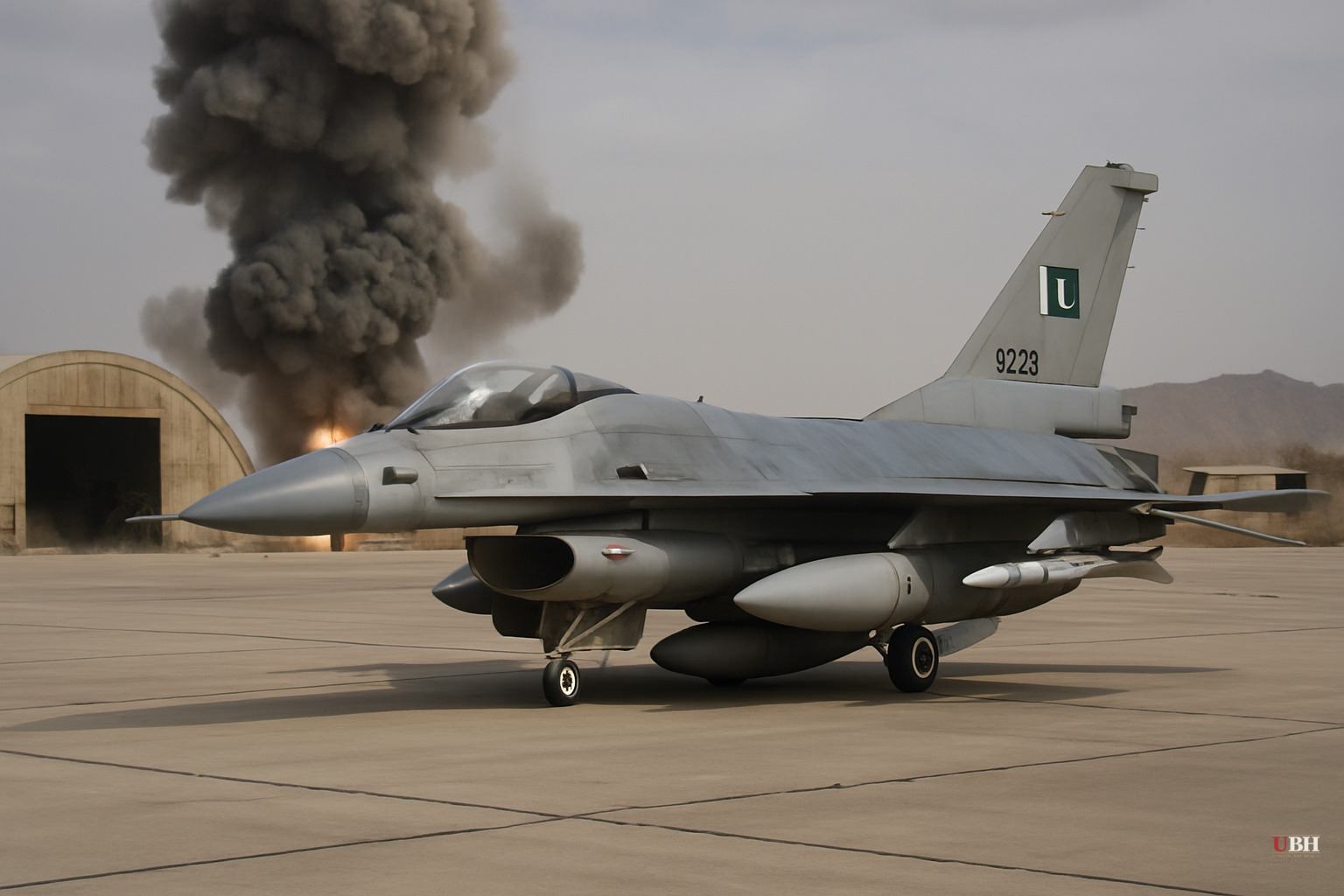
Pakistan Launches Airstrikes Into Afghanistan After Karachi Attack Kills Three Security Personnel
What Happened
Pakistan's military conducted cross-border airstrikes into eastern Afghanistan, targeting what Islamabad described as terrorist hideouts and safe havens. The operation followed a Saturday attack on the Pakistan Rangers' regional headquarters in Karachi that killed three Pakistani security personnel.
Pakistan's Information Minister Attaullah Tarar said the military ran an "intelligence-based ground operation" before the airstrikes were launched along the Afghanistan-Pakistan border. Pakistani security forces killed three of the Karachi attackers and arrested a fourth suspect, whom the military identified as an Afghan national, according to Tarar.
Jamaat-ul-Ahrar, a breakaway faction of the Pakistani Taliban (Tehreek-e-Taliban Pakistan, or TTP), later claimed responsibility for the Karachi attack. Pakistan's government has blamed the TTP and allied groups for a sustained campaign of violence against its police and security forces.
The Taliban's Account
Afghanistan's Taliban government flatly rejected Pakistan's framing. Taliban spokesman Hamdullah Fitrat said Pakistani strikes hit residential areas across three eastern provinces: Paktia, Paktika, and Kunar.
Fitrat said a strike on a home in Paktia province killed an older man and a child. The same area was reportedly struck a second time, killing 28 villagers and wounding 158. In Paktika province, Fitrat said six people, most of them women and children, were killed when another home was hit. A strike in Kunar province reportedly killed livestock but caused no human casualties.
By the Taliban's count, 36 civilians were killed and 163 wounded in total. Taliban spokesman Zabihullah Mujahid called the operation a "cowardly act of aggression."
Neither side's account has been independently verified. Journalists do not have unimpeded access to Afghanistan's eastern provinces, and both governments have strong incentives to shape the narrative: Pakistan to justify the strikes, the Taliban to delegitimize them.
The Broader Context
Pakistan-Afghanistan relations have deteriorated steadily since the Taliban retook Kabul in August 2021. Islamabad has repeatedly accused the Taliban government of allowing militant groups, particularly the TTP, to use Afghan territory as a staging ground for attacks inside Pakistan. Kabul has consistently denied those accusations.
The TTP and the Afghan Taliban are separate organizations, though they maintain an alliance. Pakistan's government refers to the TTP as "Fitna al-Khawarij," a derogatory religious label meant to delegitimize the group. The two countries attempted a ceasefire earlier, but that arrangement has clearly broken down.
The Civilian Casualty Dispute
The sharpest point of contention is whether Pakistan hit legitimate militant targets or civilian homes. Tarar's statement that Pakistan "shall not compromise on the safety and security of our citizens" does not address the Taliban's specific claims about which structures were struck or who was inside them.
If Pakistani airstrikes repeatedly hit residential buildings in a province where independent verification is impossible, there is no mechanism to establish accountability. The Taliban have every reason to inflate civilian casualty numbers. Pakistan has every reason to undercount them. Without on-the-ground access, neither number, Pakistan's zero acknowledged civilian deaths or the Taliban's 36, can be confirmed.
Pakistan's position is legally and strategically coherent: a government has the right to strike non-state actors attacking its citizens when the host country is unable or unwilling to act. But that legal framework does not settle the factual question of whether the targets struck were actually militant infrastructure.
What Comes Next
The ceasefire between the two countries that reportedly was reached earlier this year has now been overtaken by events. The unresolved question going forward is whether Pakistan's strikes will produce any lasting reduction in cross-border militant activity, or whether they will hand the Taliban a propaganda advantage that ultimately recruits more fighters than the strikes eliminated. Pakistan has conducted similar cross-border operations before without fundamentally altering the TTP's operational capacity, according to the established pattern of the past several years.
Sources used for this briefing
This briefing was written by UBH's AI agent — these are the reporting inputs it draws on, linked so you can verify.


