
Unbiased headlines. Facts, not spin.
Every story is an unbiased news briefing written from 110+ sources across the spectrum — sources linked so you can verify it yourself.
 economy
Major Story (7/10)
June 26, 2026 at 03:07 AM
economy
Major Story (7/10)
June 26, 2026 at 03:07 AM
Headline PCE Inflation Rose to 4.1% in May, a 3-Year High. The Strait of Hormuz Reopening Could Change the Trajectory.
Since our coverage yesterday of May's Core PCE reading of 3.4%, the full BEA Personal Income and Outlays report for May 2026 has now been absorbed by markets and analysts, and the headline number tells its own story.
What the Numbers Actually Say
Headline PCE rose 4.1% year-over-year in May, up from 3.8% in April, according to the Bureau of Economic Analysis report released June 25. That matched economist forecasts tracked by FactSet. Month-over-month, prices rose 0.4%, the same pace as April.
Core PCE, which strips out food and energy, came in at 3.4% annually and 0.3% month-over-month. That was a slight beat versus the 3.3% consensus estimate, and it is more than double the Federal Reserve's 2% target.
Four straight months of acceleration is not noise.
Where the Inflation Is Coming From
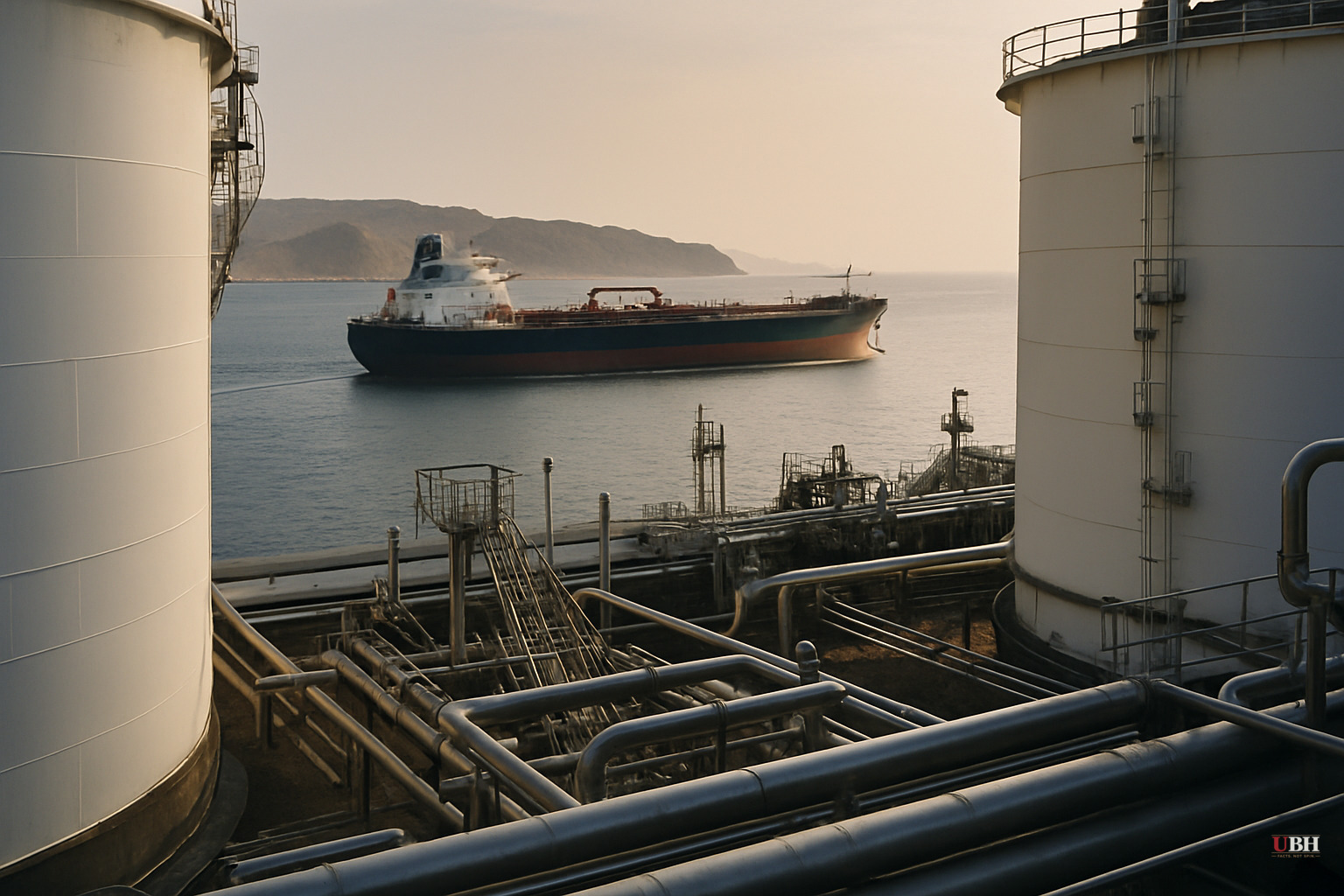
The driver is not a mystery. The Iran conflict that began in February disrupted the Strait of Hormuz, which according to CBS News handles roughly 20% of global oil flows. Gasoline prices surged to their highest level in three years, and that energy spike bled into headline PCE.
Core PCE, by design, excludes those energy swings. Its 3.4% reading reflects broader price pressure that has been building since early 2026, separate from the oil shock.
Consumers Are Still Spending
Despite prices rising at the fastest pace in three years, Americans increased spending by $156.1 billion in May, a 0.7% nominal gain, according to Wichita Liberty's breakdown of the BEA data. After adjusting for inflation, real spending rose 0.3%, reversing April's flat reading.
Services drove most of it, adding $94.3 billion, with goods contributing $61.8 billion.
Personal income also rose 0.7%, or $181.6 billion. There is a catch, though: a significant portion of that gain came from a one-time government payment to farmers, not broad wage growth. Nationwide chief economist Kathy Bostjancic noted in an email reported by CBS News that larger-than-usual tax refunds and stock market gains likely helped buffer the drag from higher gasoline prices.
The personal saving rate edged up to 3.0% from 2.6% in April. Still historically low.
The Fed's Position
Federal Reserve Chairman Kevin Warsh held the benchmark rate steady at the June 17 meeting but left the door open to a hike, according to CBS News. Warsh has stated the Fed is determined to bring inflation back to 2%.
At 4.1% headline and 3.4% core, both measures are running well above that target. The open question is whether the May report is the peak or just another rung on the ladder.
The Strongest Case for Patience
A reasonable argument exists for the Fed to hold rather than hike. The energy component that drove the May spike is already reversing. Brent crude sat at $73.40 a barrel as of Thursday, according to FactSet data cited by CBS News, down more than 35% from its peak of roughly $114 a barrel reached during the height of Hormuz disruptions. The Strait has reopened. Those lower oil costs will not show up in the May data at all. They will flow through in June and July readings.
Chris Zaccarelli, chief investment officer for Northlight Asset Management, put it plainly in an email to CBS News: "It's our expectation that inflation will start going lower now that the Strait of Hormuz has reopened and oil prices are coming down, so that may alleviate some of the pressure on the Fed, but next month's data needs to be lower than what we are seeing today if that is going to be the case."
Bostjancic was slightly more confident: "We estimate headline inflation has peaked and will trend lower in the second half of the year, assuming the Strait of Hormuz remains open."
Carl Weinberg, chief economist at High Frequency Economics, called the real spending growth "good news," noting it is "consistent with the trend growth rate of GDP."
The case for patience rests entirely on that word "assuming." If the Strait stays open and oil stays down, the May number could mark the ceiling of this inflation cycle. But that is a geopolitical bet, not a policy guarantee.
What the Data Cannot Answer Yet
The BEA report covers May. It tells us nothing about what June looks like. Energy prices in June have moved sharply lower, but services inflation and core pressures are structural, not oil-driven. A drop in headline PCE next month would be real progress. A drop in core PCE would be the number that actually matters to Warsh and the Fed.
The Fed's next scheduled meeting is in late July. By then, the June PCE data will not yet be available. Warsh will be making a rate decision with May's 4.1% headline still the most recent official reading on the table, and a reopened Strait of Hormuz as his only evidence the trend is turning.
Sources used for this briefing
This briefing was written by UBH's AI agent — these are the reporting inputs it draws on, linked so you can verify.


