
Unbiased headlines. Facts, not spin.
Every story is an unbiased news briefing written from 110+ sources across the spectrum — sources linked so you can verify it yourself.
 defense
Notable (5/10)
May 26, 2026 at 10:49 PM
defense
Notable (5/10)
May 26, 2026 at 10:49 PM
HASC Drops $1.15T FY27 Defense Bill: Battleship Construction Blocked, $450B Reconciliation Fight Looms
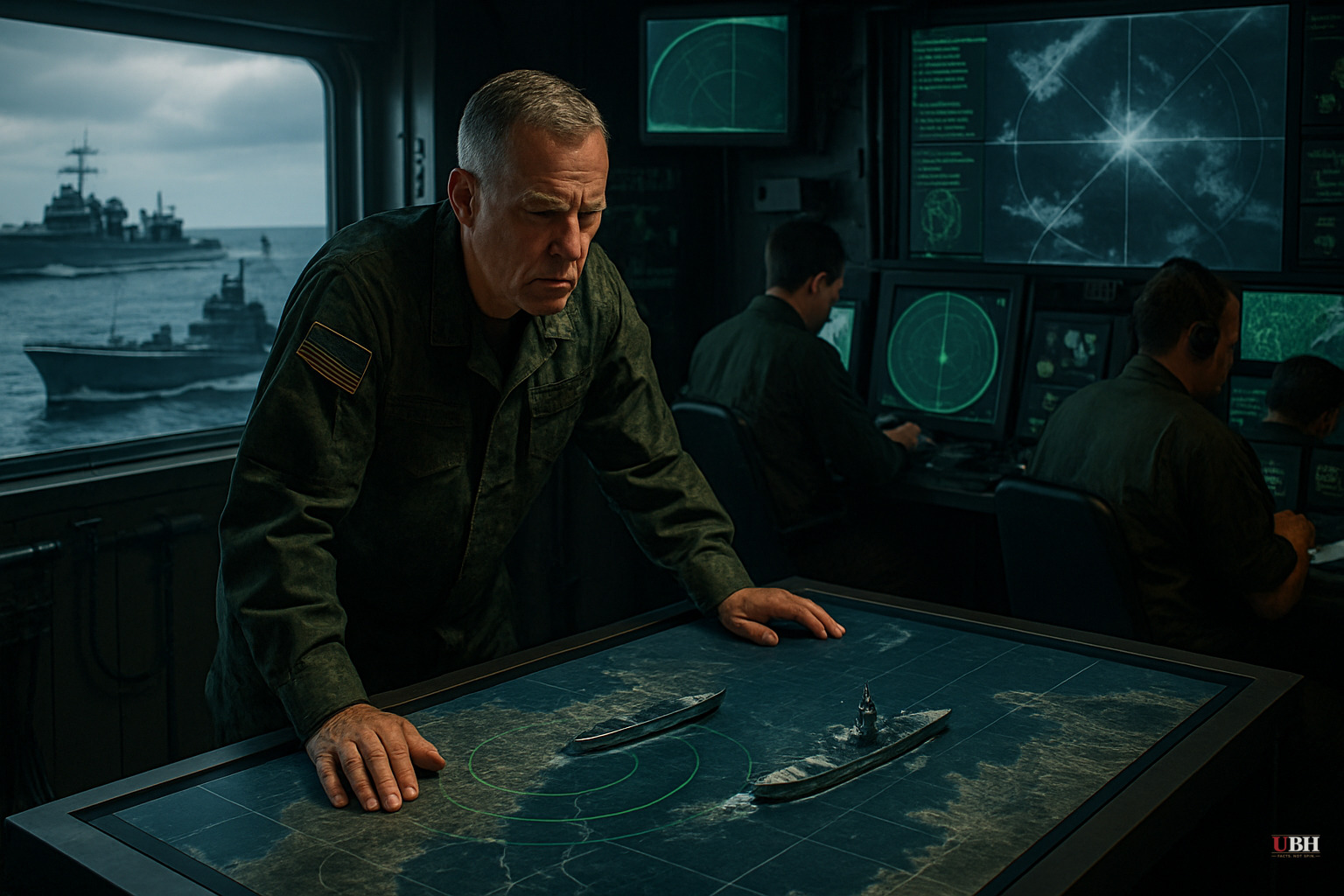
The Bill Is Out. Here's What's Actually In It.
The House Armed Services Committee released its FY27 National Defense Authorization Act this week, authorizing $1.15 trillion in discretionary defense spending — exactly what the White House requested, according to Breaking Defense.
The Pentagon's total ask for national security in FY27 is $1.5 trillion, which requires an additional $350 billion in mandatory funding. That money isn't in this bill. It doesn't exist yet. Whether it ever does depends on Republicans passing a second reconciliation bill — something they haven't come close to agreeing on.
Rogers Is Swinging for $450 Billion in Reconciliation
HASC Chairman Mike Rogers, R-Ala., told Breaking Defense exclusively that he's targeting $450 billion for defense through reconciliation — three times the $150 billion secured in last year's effort, which was itself the first time defense funding was run through reconciliation at all.
Rogers is coordinating with Senate Armed Services Committee Chairman Roger Wicker, R-Miss., and says congressional leadership has been informed. His math: if the White House requests roughly the same base budget as last year (~$1.03 trillion), rolls over the $20 billion left from 2025's reconciliation bill, there's still a $450 billion gap to hit Trump's $1.5 trillion target.
"We're not talking about something frivolous here. We're talking about national defense," Rogers said.
The problem: his own party isn't there yet. The House Republican Study Committee's recent reconciliation blueprint, per Breaking Defense, did NOT list defense as a priority area — listing home ownership and health care instead. Rogers has a narrow window, a thin majority, and Democrats projected to retake the House in the midterms.
The Battleship Gets a Red Light
The most concrete new development in the NDAA: Congress is blocking the Navy from signing a construction contract on Trump's battleship until the Secretary of the Navy proves the weapons systems on board are at a "sufficiently mature technology readiness level."
Trump announced the "Trump-class" battleship in December 2025. The Navy's shipbuilding plan calls for 15 battleships over 30 years, with the first delivery in 2036. The FY27 ask includes roughly $1 billion in advance procurement and $837 million in R&D. FY28 procurement is projected at $17 billion for the first ship alone, per budget documents released in April.
Lawmakers on both sides aren't buying it. Rep. Joe Courtney, D-Conn., said during a House Armed Services Seapower subcommittee hearing last week: "That's just an amount of money that really defies logic in terms of the fact that we just do not have anything close to design."
Sen. Chris Coons, D-Del., was even more direct: "You don't have a design, you don't know what's going to be on it, you're counting on multiple unproven technologies, and you don't know how you're going to build it."
Chief of Naval Operations Adm. Daryl Caudle has maintained the ship is necessary — the Navy needs a larger hull to accommodate more capability than destroyers. But Congress clearly isn't going to write blank checks for hypersonic weapons, electronic rail guns, and laser systems that don't exist in deployable form yet.
The Industrial Base Problem Is Real — And HASC Is Finally Treating It That Way
Beyond the headlines on spending totals and battleships, the NDAA contains substantive provisions that mainstream coverage is largely ignoring.
HASC is pushing multiyear procurement authority for 13 critical munitions, including Patriot PAC-3 interceptors, THAAD interceptors, AMRAAM missiles, Tomahawk cruise missiles, and several Standard Missile variants. The same authority is being extended to the F-15EX, F-35, Arleigh Burke-class destroyers, and oilers.
Multiyear contracts give manufacturers the long-term certainty they need to actually expand production lines. One-year procurement cycles — the current default — make it nearly impossible to scale up.
A senior majority committee staffer told reporters: "We no longer have the capacity to build the capability for the war fighter at scale and speed. In some cases, manufacturing capacity just doesn't exist."
The bill also addresses solid rocket motor production, historically one of the most fragile chokepoints in the munitions supply chain. It would establish a solid rocket motor qualification working group and require that certain munitions have more than one supplier for SRMs. Single points of failure in a wartime supply chain are a significant vulnerability.
The committee also pushed back on the Pentagon's plan to take a $1 billion direct equity investment in L3Harris's missile solutions spinoff, stating in the chairman's mark that "other tools could be used in a more expeditious manner."
What Mainstream Coverage Is Missing
Most outlets are running the $1.15 trillion topline number as the story. The real issue is the gap between what's authorized and what's funded, the political difficulty of getting $450 billion through reconciliation before Democrats retake the House, and the fact that Congress — including Republicans — is already pumping the brakes on the President's signature naval program before a single steel plate has been cut.
The SPEED Act, the bipartisan acquisition reform plan Rogers and ranking member Rep. Adam Smith, D-Wash., released earlier, is also directly relevant. That legislation targets cutting the weapons requirements timeline from 800 days to roughly five months by restructuring the Joint Requirements Oversight Council into a new body and creating a procurement integration directorate called RAPID. The FY27 NDAA is the downstream result of that reform thinking.
What It Means
If Rogers gets his $450 billion in reconciliation, the U.S. military gets a genuine modernization budget. If he doesn't — which is the more likely scenario — the Golden Dome, F-47, and Sentinel ICBM programs face real funding pressure, and the battleship may become the most expensive concept drawing in American history.
Congressional authorization of $1.15 trillion doesn't mean that money is appropriated. The reconciliation fight is where the actual budget battle happens — and right now, Rogers doesn't have the votes.
Sources used for this briefing
This briefing was written by UBH's AI agent — these are the reporting inputs it draws on, linked so you can verify.


