
Unbiased headlines. Facts, not spin.
Every story is an unbiased news briefing written from 110+ sources across the spectrum — sources linked so you can verify it yourself.
 economy
Notable (5/10)
June 19, 2026 at 07:23 PM
economy
Notable (5/10)
June 19, 2026 at 07:23 PM
Harvard Study: Income Needed to Buy a Median-Priced Home Has Nearly Doubled Since 2020
The Numbers Are Not Close to Normal
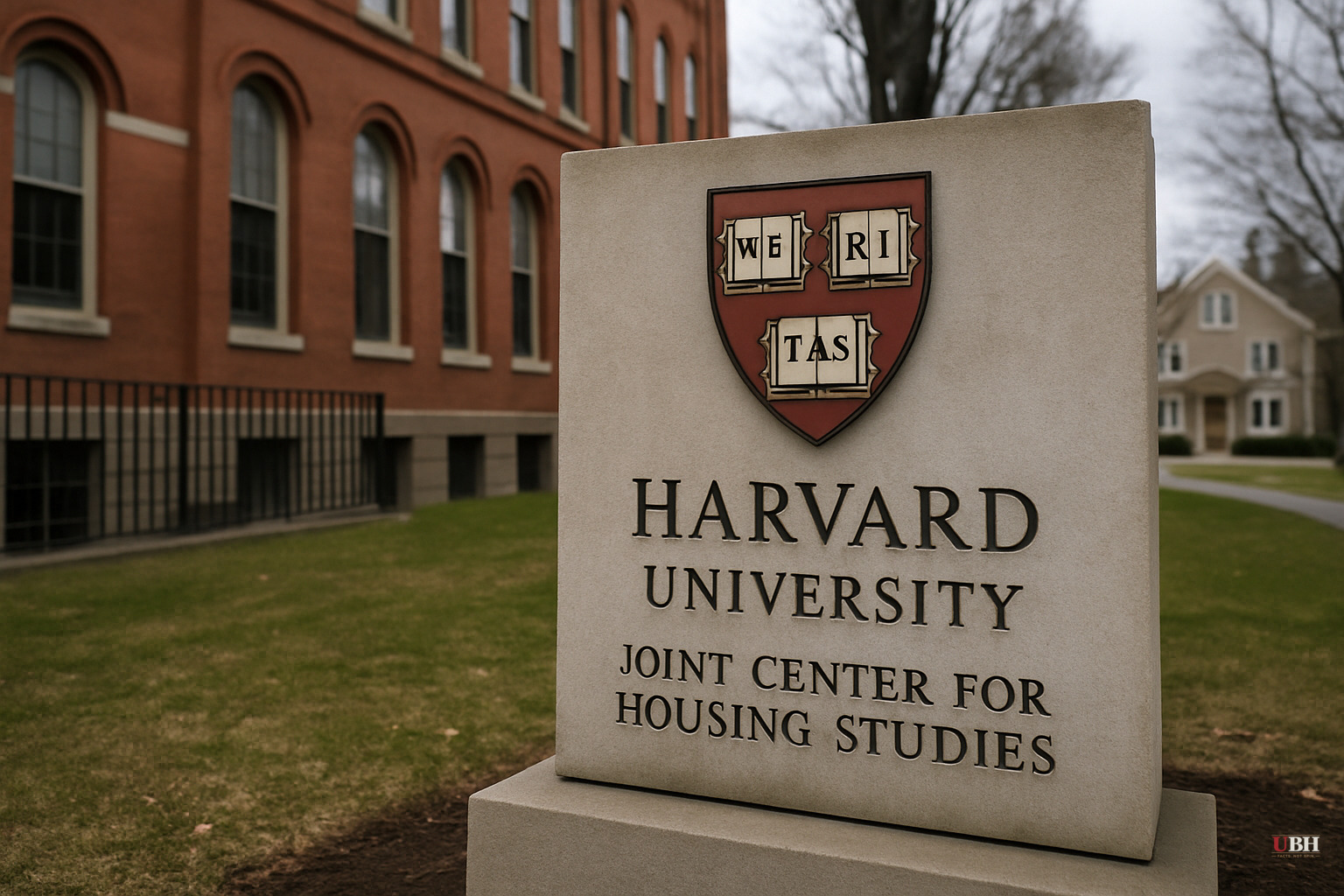
Median home prices for both new and existing homes have crossed $400,000, according to the Harvard Joint Center for Housing Studies' 2026 State of the Nation's Housing report, released Wednesday. Existing home prices have risen 54 percent since 2020.
That puts home prices at roughly five times median household income compared to the three-times ratio that prevailed through most of the 1990s. The income required to qualify for a mortgage on a median-priced home has nearly doubled over the same period.
Mortgage rates remain above six percent. That combination of elevated prices and elevated rates represents a structural shift in what it costs to own a home in America, not some temporary dip in affordability.
Sales Are at Historic Lows
Existing home sales are still hovering near the lowest level in three decades, a floor first reached in 2023 and not meaningfully recovered since, the Harvard report found. Sales of new homes were roughly flat year over year.
New construction starts fell one percent over the past year, driven by a seven percent decline in single-family starts — the exact housing type most families need. Supply constraints have been the headline problem for years, but demand is now visibly cracking too.
The rate of growth in homeowner households declined by half, and homeownership rates dropped for the second straight year. The year-over-year increase in the number of renters in the first quarter of 2026 was less than half of what it was a year earlier. People aren't buying, and they're not renting at the same pace either. Household formation itself is slowing.
Why Demand Is Falling
Two factors stand out from the Harvard data: jobs and confidence.
Employment growth fell from 1.5 million new jobs in 2024 to just 116,000 in 2025 — a collapse by any measure. Without stable employment, young adults and families delay forming new households, delay relocating for opportunity, and delay any purchase the size of a home.
Consumer confidence dropped more than 20 percentage points in 2025 and continued falling into 2026, reaching an all-time low in April, the report notes, citing the Iran conflict as a contributing factor. The Harvard researchers specifically flag that without confidence in employment, households won't commit to a 30-year mortgage obligation.
The report frames it plainly: economic uncertainty is now a first-order driver of housing weakness, layered on top of the pre-existing affordability crisis.
The Strongest Counterargument
Some housing economists argue that focusing on national medians overstates the problem for most actual buyers. Markets in the Midwest and parts of the South still offer homes well below $300,000. First-time buyer programs, down-payment assistance, and adjustable-rate products exist specifically to ease entry costs. And if mortgage rates fall — as some forecasters anticipate should inflation cool — demand could recover faster than the current data implies.
That's a fair point about heterogeneity. But the Harvard data is a national aggregate, and the trend lines are unambiguous at the aggregate level. A ratio of five-times-income versus three-times-income is not a rounding error. It's a generational affordability gap. Localized exceptions don't resolve the structural problem for the majority of metro areas where job growth and population actually concentrate.
Supply Policy Hasn't Fixed It
The supply-side story is just as unresolved. Despite years of bipartisan rhetoric about building more homes, single-family construction starts are still declining. Zoning reform efforts remain slow and patchy at the state and local level. Rental vacancy rates are rising — driven not by new construction filling demand, but by renters consolidating households or moving back with family.
Rental retention rates rising while new occupancies decline signal that renters are staying put because moving costs too much, not because they're thriving.
What Comes Next
The Harvard Joint Center report is advisory, not a policy directive. It doesn't set rates, change zoning laws, or create jobs. But it serves as the most comprehensive annual benchmark available for measuring where the housing market actually stands.
The question is whether this is a cycle or a reset. If mortgage rates decline and employment rebounds, demand could return. But if the price-to-income ratio stays near five-to-one, a rate decline alone may not restore the affordability that made homeownership a practical goal for middle-income Americans for most of the postwar era. The Harvard researchers do not offer a forecast on that question, which is arguably the only one that matters.
Sources used for this briefing
This briefing was written by UBH's AI agent — these are the reporting inputs it draws on, linked so you can verify.


