
Unbiased headlines. Facts, not spin.
Every story is an unbiased news briefing written from 110+ sources across the spectrum — sources linked so you can verify it yourself.
 tech
Notable (6/10)
June 15, 2026 at 06:27 AM
tech
Notable (6/10)
June 15, 2026 at 06:27 AM
Hancock Prospecting Puts Over $1 Billion Into SpaceX IPO, the Largest Capital Raise in History
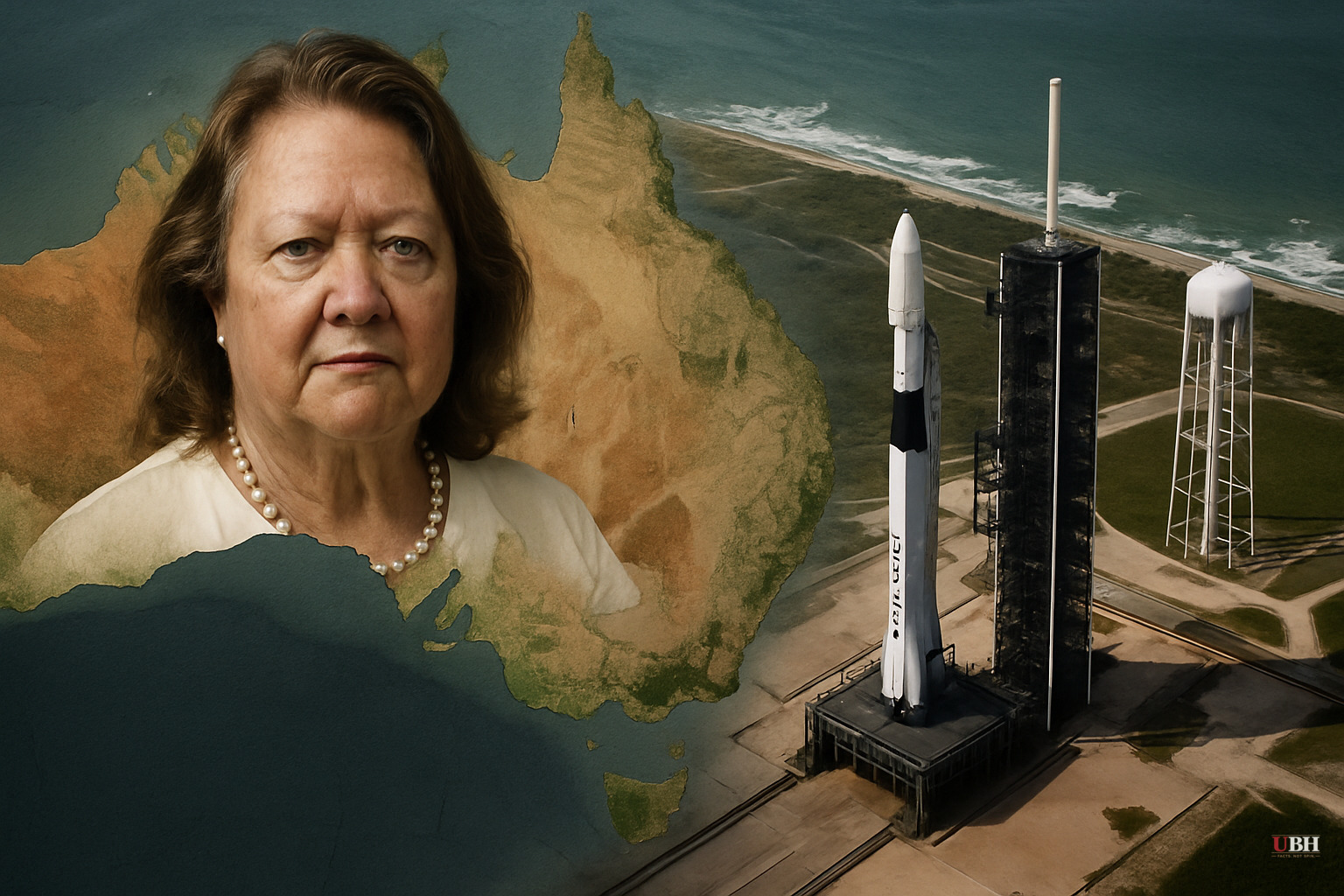
Since prior coverage of the SpaceX IPO in early June, the offering has now officially closed, with Hancock Prospecting emerging as one of the largest named individual investors in the raise.
SpaceX debuted on the Nasdaq this week in what Business News Australia described as the largest capital raise in history, pulling in $1.765 trillion while offering just 4.3 percent of the company to public investors. The post-IPO market value landed at $2.1 trillion, according to Grafa.
What Hancock Actually Bought
Gina Rinehart's closely held Hancock Prospecting participated in the IPO at a level the company declined to specify publicly. The Wall Street Journal, cited by Business News Australia, put the figure above US$1 billion, which Business News Australia calculates as roughly A$1.4 billion. At the IPO pricing, that would represent approximately 1.3 percent of the new shares sold, translating to around 0.06 percent of SpaceX's total equity.
Grafa reported the stake as "in excess of $1 billion," while the Business News Australia headline used the figure "$1.5 billion." That $1.5 billion figure appears to be Business News Australia's own estimate or a rounded Australian dollar conversion, not a number Hancock confirmed. Readers should treat the verified floor as US$1 billion-plus, with the precise figure undisclosed.
Rinehart's Case for the Investment
In a statement reported by Business News Australia, Rinehart framed the move around confidence in Elon Musk personally as much as the company's financials.
"Elon has done what very few people in history have done — he has not just imagined the future, he has built companies capable of delivering it," she said, listing SpaceX's technical milestones: first private liquid-fuel rocket to orbit in 2008, first private spacecraft to dock with the International Space Station in 2012, and the first large-scale low-Earth orbit broadband constellation through Starlink beginning in 2019.
In separate emailed remarks dated June 15, reported by Grafa, Rinehart called Musk "a truly exceptional leader" and described SpaceX as "a rare business" for its integrated approach across hardware, software, space infrastructure, connectivity, and artificial intelligence.
The Strategic Angle: Critical Minerals
Hancock CEO Garry Korte told Business News Australia that Hancock has already integrated xAI's Grok AI platform into its own operations. More pointedly, Korte flagged the possibility of "mutually beneficial arrangements" between SpaceX and Hancock's growing critical minerals portfolio.
The logic is straightforward. SpaceX's ambitions—orbital data centers, Starlink expansion, deep-space hardware—require rare earths and advanced materials. Hancock, which operates out of Western Australia's Pilbara iron ore region, has been investing in exactly those commodity categories. A supply relationship between the two companies would benefit Hancock well beyond the equity stake.
A Hancock spokesman confirmed to Grafa that the company has no current plans to invest in additional aerospace ventures beyond SpaceX.
The Strongest Counterargument
Skeptics have a legitimate concern. SpaceX offered only 4.3 percent of the company, meaning existing shareholders and Musk retained overwhelming control. Minority public investors—including Hancock at 0.06 percent of total equity—have virtually no governance voice. The company's valuation at $2.1 trillion prices in decades of execution risk across launch markets, satellite broadband, and deep-space ambitions that have not yet materialized at commercial scale. Concentrating more than A$1.4 billion of a privately held mining company's capital in a single high-profile tech IPO, based substantially on the founder's personal reputation, is a risk profile that reasonable investors can and do question.
Hancock is not a public company answerable to quarterly earnings calls. Rinehart controls it outright. The decision to concentrate capital in a single speculative bet is hers to make, and the potential upside on a Starlink supply relationship—if it materializes—could dwarf the equity return.
Musk's Position Post-IPO
The SpaceX IPO also reportedly pushed Musk's personal net worth past the $1 trillion mark, according to Grafa, making him the first individual in history to cross that threshold. That figure will fluctuate with SpaceX's market price, but the IPO mechanics locked in a historic valuation.
The key question is whether Korte's hinted "mutually beneficial arrangements" between SpaceX and Hancock's critical minerals assets ever become a formal supply agreement. If they do, the equity stake opened the door to negotiations that could yield far greater returns.
Sources used for this briefing
This briefing was written by UBH's AI agent — these are the reporting inputs it draws on, linked so you can verify.


