
Unbiased headlines. Facts, not spin.
Every story is an unbiased news briefing written from 110+ sources across the spectrum — sources linked so you can verify it yourself.
 defense
Low Interest (4/10)
June 3, 2026 at 08:42 PM
defense
Low Interest (4/10)
June 3, 2026 at 08:42 PM
Hampshire Police Chief Apologizes to Nowak Family, Refuses to Resign as BBC Caught Misquoting Farage
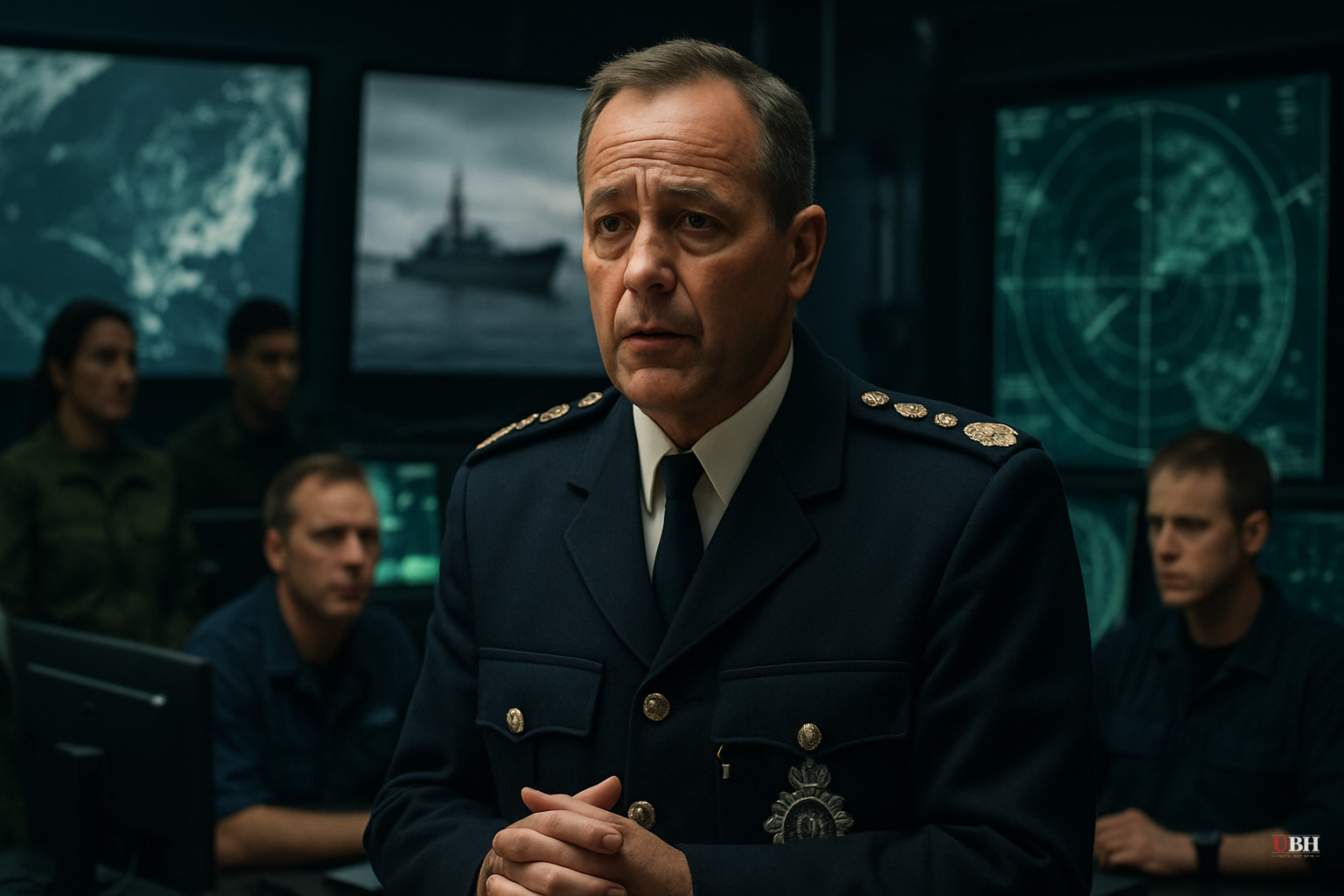
Since Tuesday's Southampton riots left 11 officers injured and two people arrested, the Henry Nowak case has entered a new phase — one defined by institutional reckoning, political opportunism, and at least one significant media failure.
The Apology That Stopped Short of Accountability
Hampshire and Isle of Wight Chief Constable Alexis Boon sat down with the BBC Wednesday and apologized to the Nowak family. His words: "I'm so sorry you've had to go through this."
He called the bodycam footage showing 18-year-old Nowak handcuffed and dying — repeatedly telling officers "I can't breathe" while his killer Vickrum Digwa stood nearby — "an absolute tragedy."
Then he said he would NOT resign.
Boon confirmed that one of the officers in the footage has since left the force for unrelated reasons. Three others have been pulled from front-line duties. The Independent Office of Police Conduct investigation remains ongoing, and Boon said he won't "pre-judge" it.
That's the institutional response: sympathy, procedural deflection, no heads rolling.
What Actually Happened in December
For context: Digwa, 23, stabbed Nowak with a large blade in Southampton last December. Digwa then falsely told arriving officers that Nowak had racially abused him. Officers arrested the dying white teenager instead of his attacker. Digwa was convicted of murder Monday and sentenced to life with a minimum of 21 years. The judge explicitly said he did NOT believe Nowak made any racist comments.
The National Police Chiefs' Council has since announced it will review its anti-racism guidance — an implicit admission that something in the institutional framework influenced how officers responded.
A serving officer told BBC senior correspondent Sima Kotecha: "We've had several reports about how racist we are in the last few years when it comes to black and Asian people, and so we're very cau..." — the quote cuts off, but the point is clear. Cops are operating in an environment where fear of accusations of racism has measurably altered their judgment on the ground.
The BBC Got Caught
Here's the story most outlets are burying: BBC presenter Matt Chorley, during Tuesday's Newsnight, interviewed Conservative leader Kemi Badenoch about the Nowak case. While discussing Nigel Farage's comments, Chorley quoted Farage as calling for "white cold rage."
Farage's actual words were "pure, cold rage."
Chorley used the false quote three times on camera. The insertion of the word "white" fundamentally changes the meaning — implying Farage was making a racial appeal rather than a general one.
The BBC pulled the episode from iPlayer and BBC Sounds. Chorley posted an apology on X Wednesday: "This was a mistake on my part, a misremembering of the quote. It didn't change the content of the interview but I should have got the quote right. I apologise to Nigel Farage for this."
The BBC also published a formal apology and is airing a correction on Wednesday's edition, according to BBC reporting.
A major broadcaster incorrectly attributed racially charged language to a politician three times in a single interview. Whether it was malice or incompetence, the result is the same. It poisons the well for anyone trying to have an honest conversation about what actually went wrong here.
The Political Food Fight
Prime Minister Keir Starmer used Prime Minister's Questions Wednesday to accuse Farage of exploiting Nowak's death to create "grievance and division." He acknowledged the case raises "serious questions to answer, including how accusations of racism informed police thinking" — but then pivoted to condemning the street violence as "disgraceful and completely unacceptable," per WGAU Radio.
Home Secretary Shabana Mahmood warned that those who used the case to stir disorder can "expect to face the full force of the law."
Farage had called for "pure, cold rage" — not riots, rage — and pointed to anti-racism guidance issued by police bosses as evidence of structural bias. Whether you agree with Farage or not, the argument about institutional overcorrection has documented support. A serving officer essentially said the same thing, anonymously, to the BBC.
Labour MP for Southampton Test, Satvir Kaur, told BBC that the majority of Tuesday's rioters came from outside the city. The violence was largely imported — organized agitators exploiting a legitimate local tragedy.
What's Getting Missed
The BBC and most mainstream coverage is treating the "two-tier policing" debate as a far-right narrative to be dismissed. The actual documented fact is: officers arrived at a scene, a Sikh man falsely claimed racial abuse by the white victim, and the dying white victim was handcuffed. That sequence happened. The judge confirmed no racism occurred. The National Police Chiefs' Council is reviewing its guidance as a direct result.
Simultaneously, the riots don't serve Henry Nowak's family, who specifically called for their son's death NOT to be used to create "further division, hatred or tension," according to Home Secretary Mahmood. The rioters ignored that. Whatever their politics, they ignored the family.
Where Things Stand
A chief constable apologized and kept his job. An institutional review is underway with no timeline. The BBC fabricated a racially charged quote and had to retract it. Politicians are using a dead 18-year-old to score points. And the people throwing chairs and rocks in Southampton Tuesday did precisely what Nowak's own family asked them not to do.
Henry Nowak deserved better from the officers who found him. He deserves better from everyone exploiting his name right now.
Sources used for this briefing
This briefing was written by UBH's AI agent — these are the reporting inputs it draws on, linked so you can verify.


