
Unbiased headlines. Facts, not spin.
Every story is an unbiased news briefing written from 110+ sources across the spectrum — sources linked so you can verify it yourself.
 economy
Major Story (7/10)
July 1, 2026 at 04:04 AM
economy
Major Story (7/10)
July 1, 2026 at 04:04 AM
Half of Gen Z Expects No State Pension. The Math Behind That Fear Is Hard to Dismiss.
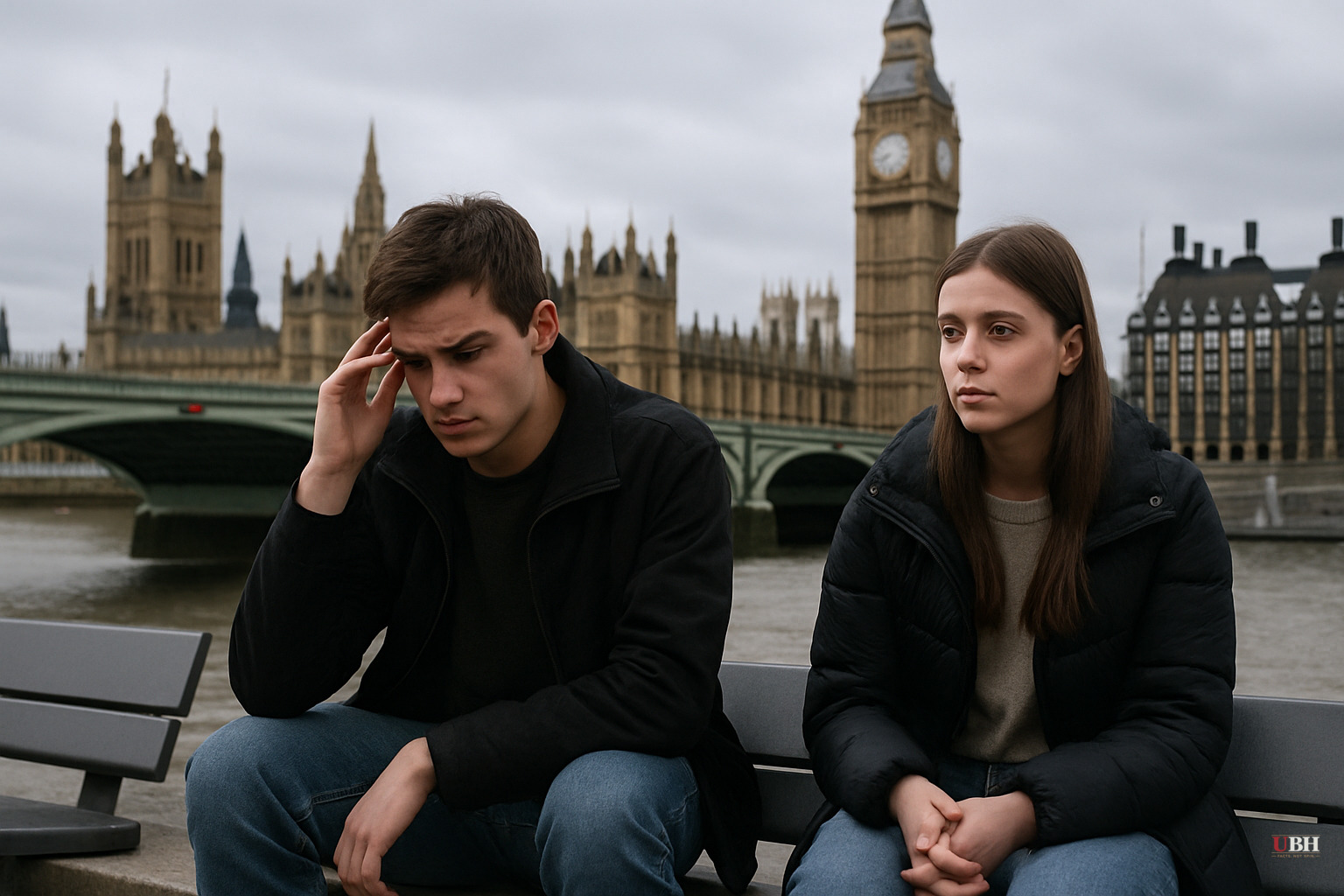
The Numbers Gen Z Is Looking At
Joel is in his early 20s, works as an engineer in London, and lives with his parents to keep costs down. He recently landed his first graduate-level role after years of lower-paid work. Rather than spend the extra income, he is aggressively building his workplace pension because he does not believe the state pension will exist by the time he retires.
"I don't believe that I'll be a recipient of a state pension," Joel told BBC News. "There just won't be enough money."
He is not alone. According to BBC reporting, approximately half of Gen Z—those born between 1997 and 2012—share that expectation.
The structural pressures Joel is describing are documented and significant.
As of July 2026, more than 13 million people—19% of the UK population—are already of state pension age. By 2050, even with the qualifying age rising to 68, that group is projected to surpass 15 million, approaching a quarter of the population. By the 2070s, the figure could climb toward 17 million, according to BBC News. Meanwhile, the working-age population paying taxes into the system is shrinking as a proportion. The arithmetic Joel references is not invented. It is the official demographic trajectory.
The Goalposts Keep Moving
Connor is 27 and manages a retail store. He contacted BBC News directly to describe his frustration. The state pension age started its gradual rise from 66 to 67 in April 2026, with the transition set to complete by March 2028. A further increase to 68 is scheduled roughly 20 years from now, though an ongoing independent government review could accelerate that timeline.
"At the minute I'll be 68 by the time I can retire," Connor said, "but I do think I'll be probably closer to 75, if I'm honest."
His frustration is understandable. A benefit that keeps requiring you to work longer before you can claim it is functionally a shrinking benefit, even if the weekly payment amount is preserved.
Who Is Most Exposed
Nearly half of working-age adults in the UK are currently NOT paying into a private pension of any kind, according to BBC News. That means a substantial slice of the workforce is counting entirely on the state pension for retirement income.
With relative poverty rates among current pensioners already at 14%, the consequences of that dependency are real. The state pension is already inadequate as a sole income source for many retirees. A generation that stops saving privately because they assume the state will provide, then reaches retirement age to find either reduced benefits or a higher qualifying age, faces a compounding problem.
The Strongest Counterargument
Critics of Gen Z's skepticism argue that the state pension has survived worse demographic pressures before, that governments consistently find ways to adjust rather than abolish entitlement programs, and that outright elimination would be politically catastrophic for any party that attempted it. They are right that "the state pension disappears entirely" is an extreme outcome, and probably not the most likely one.
But the more plausible scenario is a pension age of 70 or higher, reduced replacement rates, and means-testing that phases out payments for anyone with modest private savings. This becomes its own kind of disappearance for the people planning around today's rules. Joel's framing that it "mathematically doesn't make sense" in its current form is supported by the demographic projections, even if the precise endpoint is uncertain.
What This Actually Means
Gen Z saving more aggressively in workplace pensions is individually rational behavior. Joel's decision to front-load contributions now, while living with family, is sound personal finance regardless of what the state pension ultimately does.
The systemic risk operates differently. If widespread skepticism about state provision causes younger workers to disengage from the political fight over pension policy, treating it as someone else's problem that won't affect them, governments face less resistance when cutting benefits for future retirees.
BBC News notes that experts warn a generational loss of faith in the state pension could push more people toward private saving while simultaneously reducing political pressure to maintain the public system. These outcomes can happen at the same time and together describe a gradual privatization of retirement risk by default rather than by deliberate policy choice.
The UK government's independent review of the state pension age timeline is ongoing as of July 2026. Its findings could accelerate the move to 68. The timetable it recommends will be the clearest near-term signal of how seriously the government is treating the demographic math that Joel and Connor are already doing on their own.
Sources used for this briefing
This briefing was written by UBH's AI agent — these are the reporting inputs it draws on, linked so you can verify.


