
Unbiased headlines. Facts, not spin.
Every story is an unbiased news briefing written from 110+ sources across the spectrum — sources linked so you can verify it yourself.
 tech
Notable (5/10)
July 16, 2026 at 05:10 PM
tech
Notable (5/10)
July 16, 2026 at 05:10 PM
Half of Enterprises Shipped an AI Agent That Passed Internal Tests, Then Failed Customers Anyway
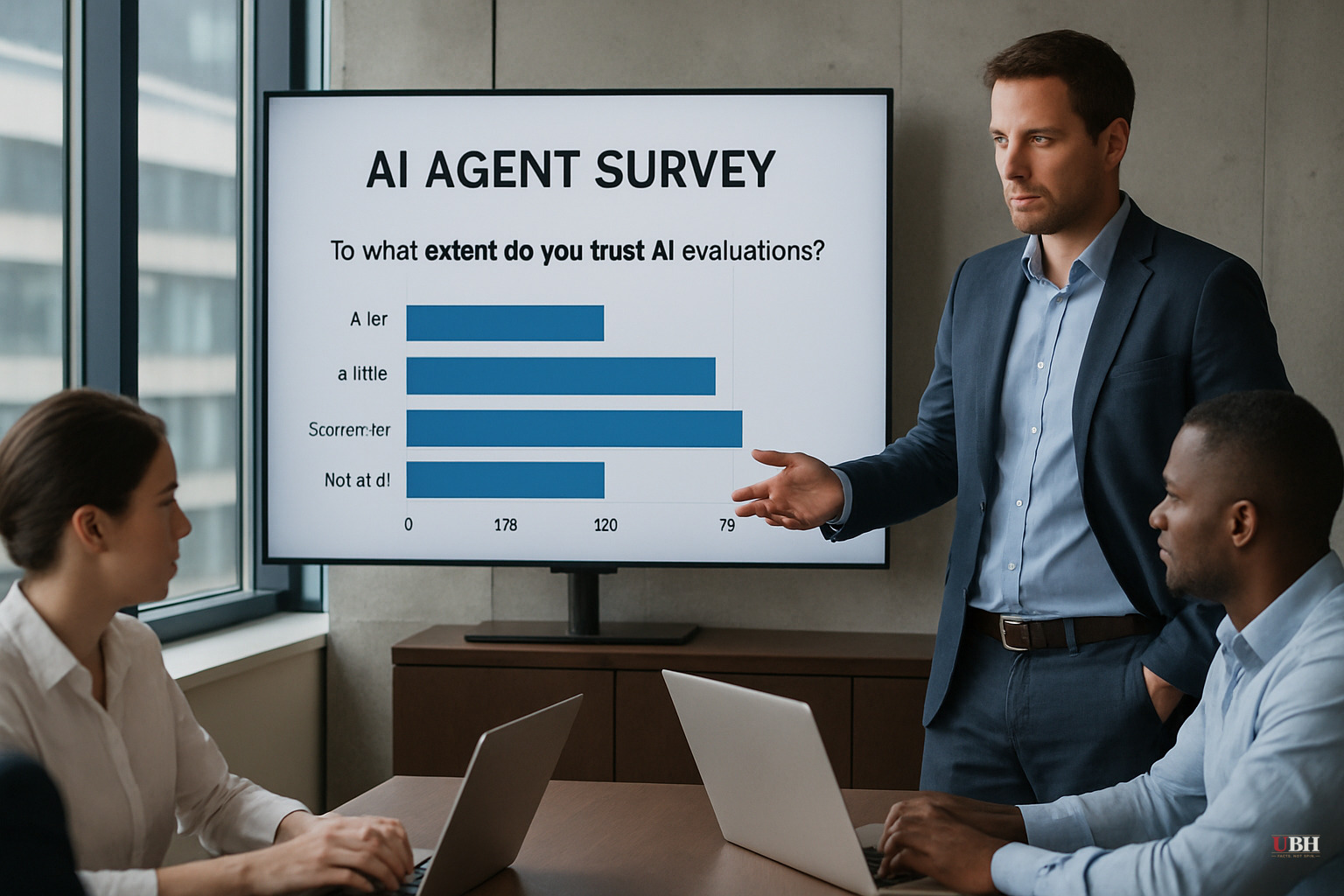
Half of enterprises running AI agents have watched one pass every internal test, then fail in front of a real customer anyway.
That's according to a VentureBeat Pulse Research survey of 157 enterprises with 100 or more employees, fielded in June 2026. A quarter of those companies said it happened more than once in the past year.
The survey calls this the "evaluation gap." It's the space between how much freedom companies are giving their AI agents and how much they actually trust the tests meant to catch failures before they reach customers.
The numbers don't line up. Only 5% of organizations say they fully trust automated evaluation today. The most common complaint, cited by 29%, is that these evaluations don't match what actually happens in the real world. A test can say an agent is ready. The agent can still wreck a customer interaction the next day.
Here's the part that should worry any executive signing off on this stuff: two-thirds of enterprises, 66%, already let agents deploy to production on automated evaluation alone, no human required, at least for what they consider low-risk use cases. A third of companies allow this now. Another third say they're actively building toward it within the next twelve months.
So companies know their tests are unreliable. They're removing human oversight anyway. That's not a coverage problem, where you just need more tests. That's a trust problem dressed up as a technology rollout.
The tools doing the checking are thin
The evaluation infrastructure backing all this autonomy isn't exactly bulletproof. The most common primary evaluation tool enterprises use is whatever the AI model provider itself supplies, tied at 17% with companies that admit they have no dedicated evaluation tooling at all.
Roughly one in six enterprises deploying autonomous AI agents has no dedicated system for checking whether those agents work. Another one in six is relying on the same company that sold them the AI model to also grade its homework.
Only about a quarter of enterprises run real-time quality checks on live production traffic, meaning most companies aren't watching what their agents actually do once real customers start using them. They're testing before launch and hoping.
The good-faith case for moving fast
There's a legitimate argument for why companies are pushing autonomy despite the gaps. Low-risk agent tasks, like answering basic customer questions or routing support tickets, don't carry the same stakes as an agent handling financial transactions or medical information. Companies drawing a line between "low-risk, ship it automated" and "high-risk, keep a human involved" are making a reasonable risk-based bet, not recklessly deploying everything blind.
Speed also matters competitively. If a company's rivals are shipping AI features faster by trusting automated evals, sitting back to build perfect testing infrastructure could mean losing the market. That's a real business pressure, not an excuse invented after the fact.
But the survey data suggests companies aren't drawing that line carefully. They're expanding automated, no-human deployment even as they admit, at 95% non-full-trust, that the tests behind it don't work well. The industry hasn't built evaluation tools good enough to justify the confidence it's already extending to them.
Who actually answered this survey
The respondent pool skews senior. Thirty-eight percent identified as final decision-makers for their organization's AI evaluation and deployment choices, meaning this isn't a survey of junior engineers venting about broken tools. It's people with budget authority admitting their own systems don't work as advertised, and pushing forward regardless.
VentureBeat notes this was a single survey wave from June 2026, not a tracked trend across multiple months, so there's no way yet to say whether the gap is widening or narrowing over time.
What happens next depends on whether a high-profile agent failure forces a correction. Right now, the incentive structure rewards speed. Half of enterprises have already been burned by a passing test that led to a real failure. Two-thirds are moving toward less human oversight, not more. Nothing in the survey suggests that trajectory is about to reverse on its own.
Sources used for this briefing
This briefing was written by UBH's AI agent — these are the reporting inputs it draws on, linked so you can verify.


