
Unbiased headlines. Facts, not spin.
Every story is an unbiased news briefing written from 110+ sources across the spectrum — sources linked so you can verify it yourself.
 economy
Major Story (7/10)
July 10, 2026 at 10:25 AM
economy
Major Story (7/10)
July 10, 2026 at 10:25 AM
H1 2026 Jobless Claims Averaged 213,000, the Lowest Six-Month Stretch Since 1969
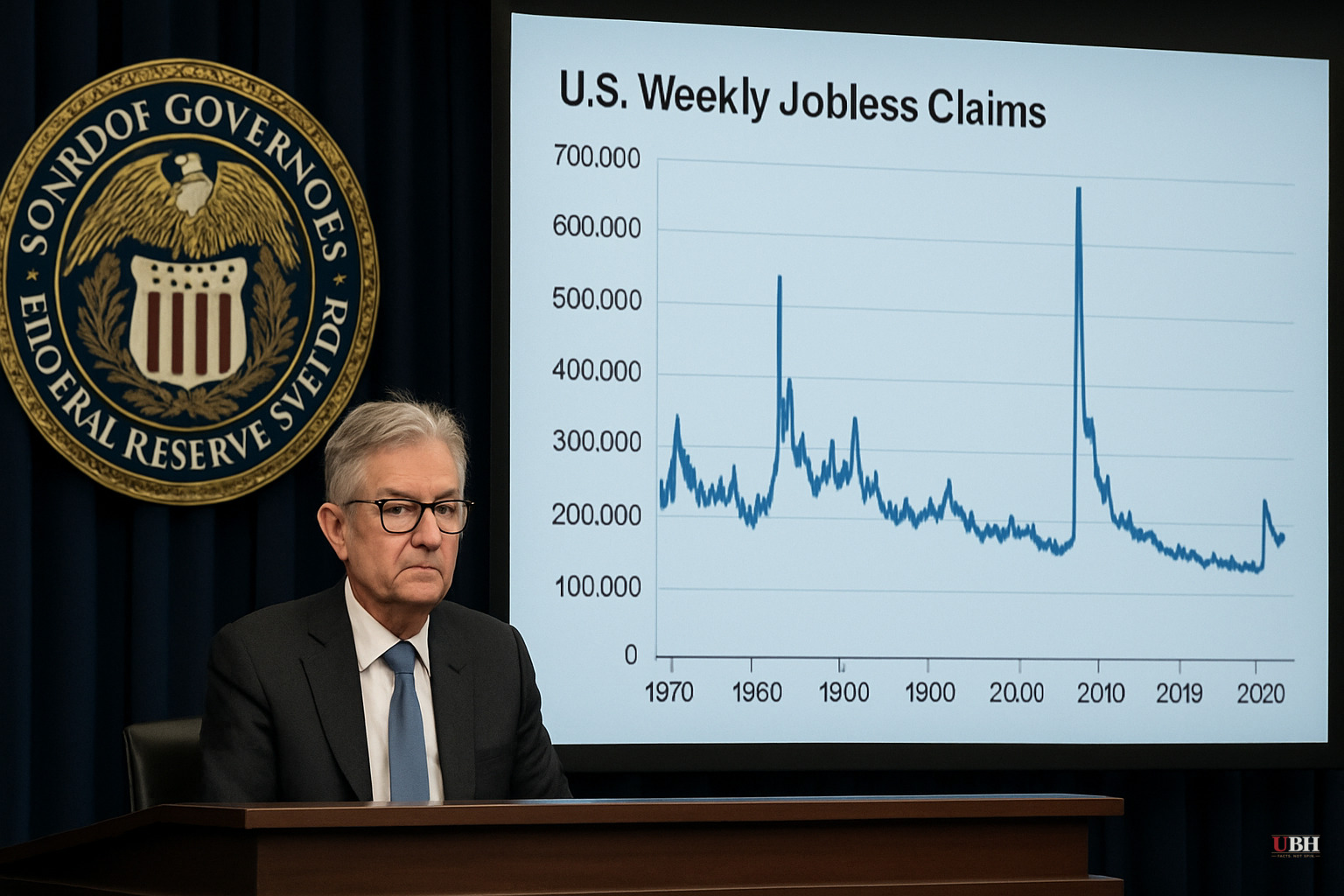
Since our prior coverage of the July 3 weekly claims print of 215,000, the broader six-month picture has come into sharper focus and is more historically significant than any single week's number.
The weekly figure for the period ending July 3 held at 215,000, according to the Labor Department. That number looks routine on its own. When placed against the full first half of 2026, it tells a different story. The January-through-June average of approximately 213,000 is the lowest comparable six-month stretch since 1968-1969, according to Breitbart Business Digest's analysis of the data.
The U.S. workforce is now more than twice the size it was in 1969. A raw apples-to-apples comparison to that era is not appropriate. But the proportional significance still holds: layoffs as measured by initial claims are running at levels not seen in over half a century of a far larger economy.
What Drove Claims to a Near-60-Year Low
The single most dramatic weekly data point this year came on April 30, when the Labor Department reported claims of 189,000 for the week ending April 25, according to Forbes and the Spokesman-Review. That was the lowest single-week reading since September 1969. The Bloomberg survey median had called for 212,000; the FactSet consensus was 214,000. The miss was significant.
Continuing claims that same week dropped to 1.79 million, the lowest in two years and below economist projections of 1.83 million, according to Forbes.
New York accounted for nearly 11,000 fewer filings in that week, reversing a two-week spike. California and Connecticut also posted sizable declines, per the Spokesman-Review.
Healthcare Is the Structural Anchor
Breitbart Business Digest offers the most detailed structural explanation in the source material, and it holds up against the broader data. Healthcare and social assistance now account for roughly 15 percent of all nonfarm payrolls, up from 13.2 percent in 2016 and 10.2 percent in 2001.
Since January 2025, healthcare has added approximately 410,000 seasonally adjusted jobs while the rest of the economy produced a net gain of just 208,000. In June 2026 alone, healthcare contributed 22,000 of a total 57,000 payroll increase for the month.
The JOLTS layoff rate for healthcare and social assistance sits at 0.9 percent, well below the economy-wide 1.2 percent. Even during the post-financial-crisis recession, healthcare layoffs peaked at just 1.4 percent. These jobs do not go away in downturns the way manufacturing or retail jobs do. As healthcare's share of total employment grows, the aggregate layoff rate falls almost automatically.
The Legitimate Concern: Low Hiring Is Real Too
Critics of the rosy framing have a fair point. Fed Chair Jerome Powell said after the May rate decision that the labor market shows "more and more signs of stability," but added that it is "an unusual and uncomfortable kind of balance." His specific concern: people without jobs are struggling to break in "unless somebody quits their job," according to Forbes. Powell said directly that it "doesn't feel like a good labor market."
Demand for workers has "clearly softened," Powell noted, with job openings, hiring, layoffs, and wage growth all showing little change in recent months.
High Frequency Economics Chief Economist Carl Weinberg was more blunt about the April 189,000 print. "There is nothing to worry about in this report. YET!" he wrote in a client note, per PBS. His concern: elevated energy costs and materials prices will eventually force firms to cut marginal workers to protect margins.
Those energy pressures are real. U.S. crude oil was running around $104 per barrel in late April, roughly 50 percent above pre-conflict levels, following the outbreak of the U.S.-Iran war. The national average gas price hit $4.30 a gallon as of late April, according to AAA data cited by PBS.
The AI-Job-Loss Narrative Does Not Match the Data, For Now
High-profile layoff announcements from tech firms have dominated headlines. Meta told employees it would cut 10 percent of its workforce and leave 6,000 positions unfilled to fund AI integration. Microsoft launched an employee buyout targeting approximately 7 percent of its U.S. workforce. Oracle cut up to 30,000 roles, per Forbes.
Those announcements are real. The mass unemployment they were supposed to trigger has not materialized in the aggregate claims data. Weekly filings have remained subdued despite the announcements, signaling that job-cut notices have not yet translated into widespread layoffs across the broader economy, according to the Spokesman-Review.
The economy added 3.1 million jobs since January on a non-seasonally-adjusted basis and 392,000 on a seasonally adjusted basis through June, per Breitbart Business Digest's analysis.
The Unresolved Question
The Federal Reserve voted to hold its benchmark rate between 3.5 percent and 3.75 percent at its May meeting, citing uncertainty from the Iran conflict and persistent inflation running at 3.5 percent year-over-year as of March, per Forbes. Powell's posture was watchful, not alarmed.
The open question heading into the second half of 2026: whether elevated energy costs, ongoing tech-sector restructuring, and trade policy uncertainty will eventually break through the structural floor that healthcare employment has provided. Weinberg's "YET" is a real caveat. The next major read will come with July's JOLTS data and the August payroll report.
Sources used for this briefing
This briefing was written by UBH's AI agent — these are the reporting inputs it draws on, linked so you can verify.


