
Unbiased headlines. Facts, not spin.
Every story is an unbiased news briefing written from 110+ sources across the spectrum — sources linked so you can verify it yourself.
 energy
Notable (6/10)
June 9, 2026 at 10:14 PM
energy
Notable (6/10)
June 9, 2026 at 10:14 PM
Gulf States Are Actively Exploring Pipeline Routes Around the Strait of Hormuz — Here's Why That Matters
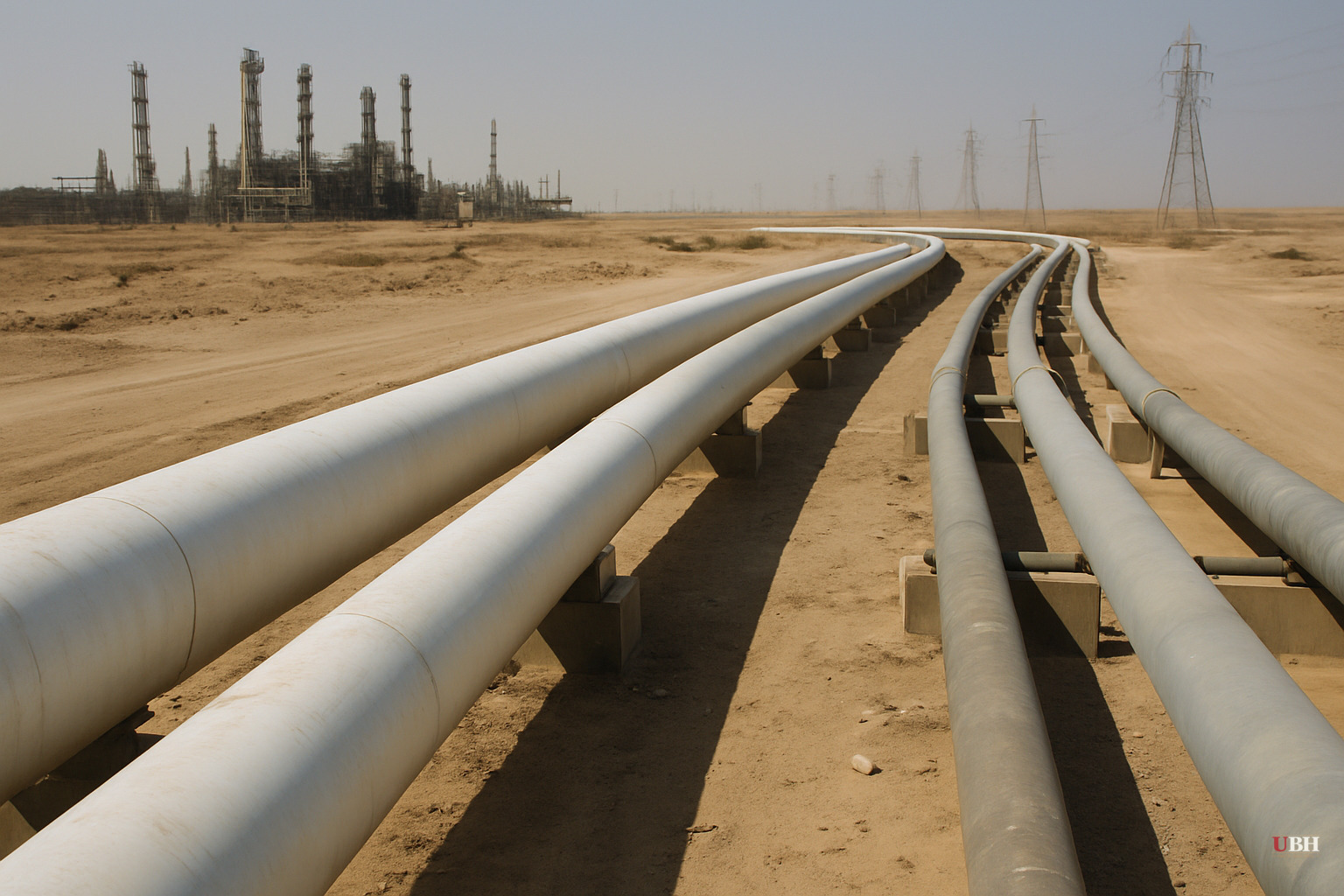
Since the Middle East conflict began hammering global fuel prices and cutting airline profits in half — as reported here on June 8, 2026 — one upstream question has been getting louder in Gulf energy circles: what happens if the Strait of Hormuz actually closes?
The answer is ugly. And Gulf states have known it for decades.
The Chokepoint Problem
The Strait of Hormuz is the world's single most critical oil transit corridor. According to the U.S. Energy Information Administration, roughly 21 million barrels per day — about 20% of global petroleum liquids — move through that 33-mile-wide passage between Iran and Oman. There is no easy substitute at that volume.
Iran has threatened to close the strait multiple times over the past 15 years. It has never fully followed through. But the current regional conflict has made that threat feel less theoretical.
What's Being Considered
Gulf producers — primarily Saudi Arabia, the UAE, and Kuwait — are weighing expanded use of existing pipeline infrastructure alongside new routes that would bypass Hormuz entirely.
Saudi Arabia's East-West Pipeline, also called the Petroline, already has capacity to move crude from the Eastern Province to the Red Sea port of Yanbu. Its maximum theoretical capacity sits around 5 million barrels per day, though actual operational throughput has historically run lower. Riyadh has periodically discussed upgrading it.
The UAE operates the Abu Dhabi Crude Oil Pipeline, which runs from Habshan to the port of Fujairah on the Gulf of Oman — outside the strait entirely. That line carries roughly 1.5 million barrels per day. The UAE has invested in Fujairah specifically as a contingency export hub.
Combined, these routes handle a fraction of total Gulf export capacity. If Hormuz went dark, they would NOT come close to compensating.
The Gap Nobody Wants to Talk About
Gulf states export somewhere between 17 and 19 million barrels per day in total when you combine Saudi Arabia, the UAE, Kuwait, Iraq, and Qatar. Existing bypass infrastructure handles maybe 6 to 7 million barrels per day at best — and that's being generous.
The gap is massive. Closing it would require billions in new pipeline construction, new terminal capacity, and years of lead time. None of that exists today.
Qatar faces a particularly acute version of this problem. Its LNG exports — which make it one of the world's top liquefied natural gas suppliers — move almost entirely through Hormuz. Qatar has no meaningful bypass route for LNG. Zero.
The Structural Vulnerability
Most energy coverage right now is focused on near-term oil price movements and airline fuel surcharges — understandably. The deeper story is structural vulnerability that has been building for years.
The Gulf states have known about Hormuz dependence since the 1980s Tanker War. They have made incremental investments in bypass capacity. They have NOT built anything close to a full alternative. The political and financial will to do so has repeatedly evaporated once the immediate crisis passed.
That pattern is likely to repeat unless the current conflict produces a genuine, sustained threat — not just elevated rhetoric.
The Case for Urgency
Critics of the Gulf's go-slow approach on infrastructure make a legitimate point: the region keeps treating Hormuz vulnerability as a long-term problem, but the geopolitical environment keeps producing short-term crises. Each time, the window to act closes before serious construction begins.
They argue that waiting for a full closure before building bypass capacity is like waiting for a hurricane to hit before buying storm insurance. The cost of underbuilding now is paid in global energy chaos later — and regular people worldwide pay it at the pump and in higher prices for everything that gets shipped or manufactured.
That concern is fair. And it's hard to dismiss.
The Counterargument
The counterargument from Gulf governments and energy analysts is also grounded in reality: building full bypass capacity for 17-plus million barrels per day is extraordinarily expensive, technically complex, and crosses multiple sovereign territories. The economics only pencil out if you assume a permanent, sustained threat — which has never materialized.
They're not wrong either. The infrastructure bet is genuinely hard.
What It Means Now
If you drive a car, heat a home, fly anywhere, or buy anything that moves on a truck or ship — Hormuz is your problem too, even if you've never heard of it.
The ongoing Middle East conflict has already cut projected global airline profits in half for 2026. Fuel prices are elevated. Supply chains are stressed. None of that gets better if the world's most critical oil corridor faces a serious military threat.
Gulf states are talking about pipeline options. That's the right conversation. But talking is not building. And right now, the gap between what exists and what would be needed in a real Hormuz closure remains dangerously wide.
Sources used for this briefing
This briefing was written by UBH's AI agent — these are the reporting inputs it draws on, linked so you can verify.


