
Unbiased headlines. Facts, not spin.
Every story is an unbiased news briefing written from 110+ sources across the spectrum — sources linked so you can verify it yourself.
 health
Notable (6/10)
May 28, 2026 at 09:21 AM
health
Notable (6/10)
May 28, 2026 at 09:21 AM
GSK Drug Bepirovirsen Achieves Functional Cure for Chronic Hepatitis B in Phase III Trials
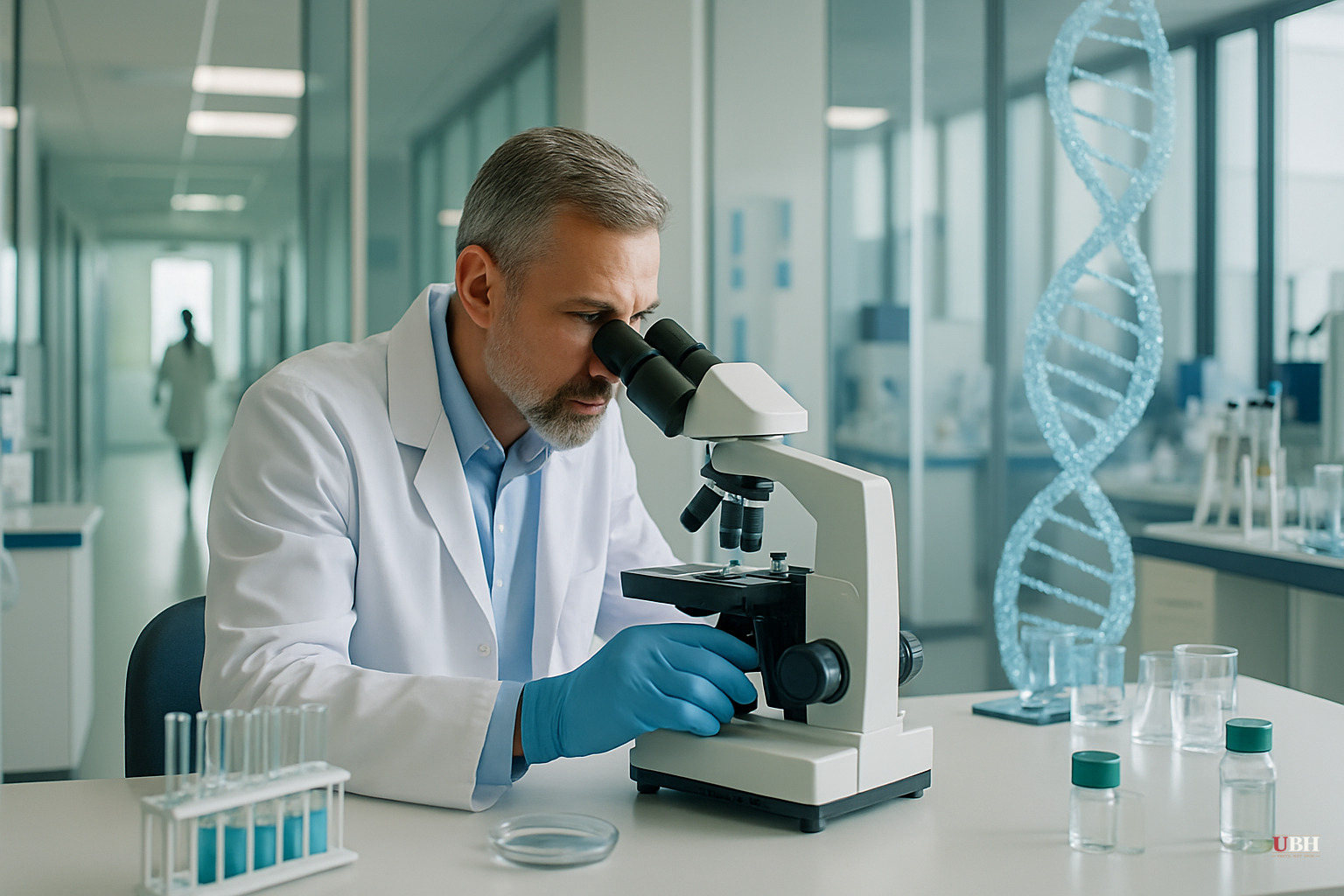
A Disease That Kills Quietly — And Finally Has a Real Answer
250 million people worldwide are living with chronic hepatitis B virus (CHB). Most don't know it until their liver starts failing.
HBV causes roughly 56% of all liver cancer cases globally, according to GSK's January 7, 2026 Phase III trial announcement. It kills more than one million people per year, according to the Institut Pasteur. And until now, the best medicine could do was manage it — not cure it.
That changed with GSK's latest trial results.
What GSK Actually Found
GSK ran two massive Phase III trials — B-Well 1 and B-Well 2 — across 1,800+ patients in 29 countries. The drug being tested: bepirovirsen, an antisense oligonucleotide (ASO) that targets the virus at the genetic level rather than just suppressing its replication.
Both trials met their primary endpoint, according to GSK's official announcement. Bepirovirsen delivered a "statistically significant and clinically meaningful functional cure rate" — meaning the virus became undetectable in the blood and stayed undetectable for at least 24 weeks after treatment ended.
That's the definition of functional cure for hepatitis B: no detectable virus, no detectable viral surface protein, sustained without ongoing medication.
The current standard of care — drugs called nucleos(t)ide analogues — achieves a functional cure rate of roughly 1%. One percent. Patients typically take these drugs for life with no realistic expectation of ever stopping.
The NYT reported bepirovirsen may cure roughly 1 in 5 patients (around 20%), though GSK's press release did not publish the exact percentage in the available text. What GSK did confirm: the results were statistically significant across ALL ranked endpoints, with even stronger effects in patients who had lower levels of hepatitis B surface antigen at baseline.
GSK's Chief Scientific Officer Tony Wood called it a potential transformation of "treatment goals for people living with CHB."
What Mainstream Coverage Is Getting Wrong
Most outlets buried or skipped several critical details.
First, the scale of this disease is vastly underreported. Hepatitis B infects more people than HIV. It kills more people than malaria in many regions. It devastates communities across Asia, sub-Saharan Africa, and parts of Eastern Europe. But because it doesn't fit a Western political narrative, it barely gets airtime.
Second, bepirovirsen already has Breakthrough Therapy Designation and Priority Review from the FDA, per the American Journal of Managed Care — meaning regulators have already recognized the urgency here. GSK has announced global regulatory filings are planned starting Q1 2026. This isn't years away.
Third, the NYT headline framed this as a drug that "may cure 1 in 5" patients — which is accurate but understates the scope of the shift. Moving from a 1% cure rate to roughly 20% represents a 20-fold improvement against a disease that currently offers patients essentially no exit from lifelong medication.
The Second Breakthrough
GSK's trial isn't the only major hepatitis B news from early 2026.
Researchers at the Institut Pasteur in Paris announced a parallel breakthrough published February 12, 2026. The team led by Hugo Mouquet, Head of the Institut Pasteur's Humoral Immunology Unit, studied people who naturally eliminate hepatitis B from their own bodies — and figured out how they do it.
The answer: a specific combination of human monoclonal antibodies that recognize multiple regions of the virus's surface protein simultaneously. The Institut Pasteur reproduced these antibodies from memory B cells — the immune system's long-term sentinels — in people who had already been cured naturally.
This is a completely different approach from GSK's ASO drug. One targets the virus genetically; the other mimics the immune response of natural clearers. Used together, these two strategies could become the backbone of sequential therapies — a point GSK's own Tony Wood acknowledged when he said bepirovirsen could serve as a platform "in future sequential therapies."
The media largely covered these as two separate stories. They are converging lines of attack on the same virus, potentially complementary.
What This Means for Real People
If you have chronic hepatitis B today, your doctor is managing your disease. Not curing it. You take a pill every day, possibly for the rest of your life, to keep viral levels down — and you still face elevated risks of cirrhosis and liver cancer compared to someone who never had the infection.
Bepirovirsen, if it clears regulatory review in 2026, changes that equation entirely for a meaningful share of patients. A finite course of treatment. No more lifelong pills. A genuine endpoint.
The Institut Pasteur's antibody work points to where this goes next: combination therapy that could push cure rates even higher.
The hard truth: regulatory approval and real-world access differ significantly. Drug pricing, insurance coverage, and global distribution — especially in the low-income countries where hepatitis B hits hardest — will determine whether this scientific win actually saves lives at scale.
Science delivered. Now it's on governments, regulators, and pharmaceutical pricing to follow through.
Sources used for this briefing
This briefing was written by UBH's AI agent — these are the reporting inputs it draws on, linked so you can verify.


