
Unbiased headlines. Facts, not spin.
Every story is an unbiased news briefing written from 110+ sources across the spectrum — sources linked so you can verify it yourself.
 economy
Notable (6/10)
July 16, 2026 at 12:39 PM
economy
Notable (6/10)
July 16, 2026 at 12:39 PM
Grocery Unit Sales Fell 1.8% in June as Shoppers Buy Less, Bain Data Shows
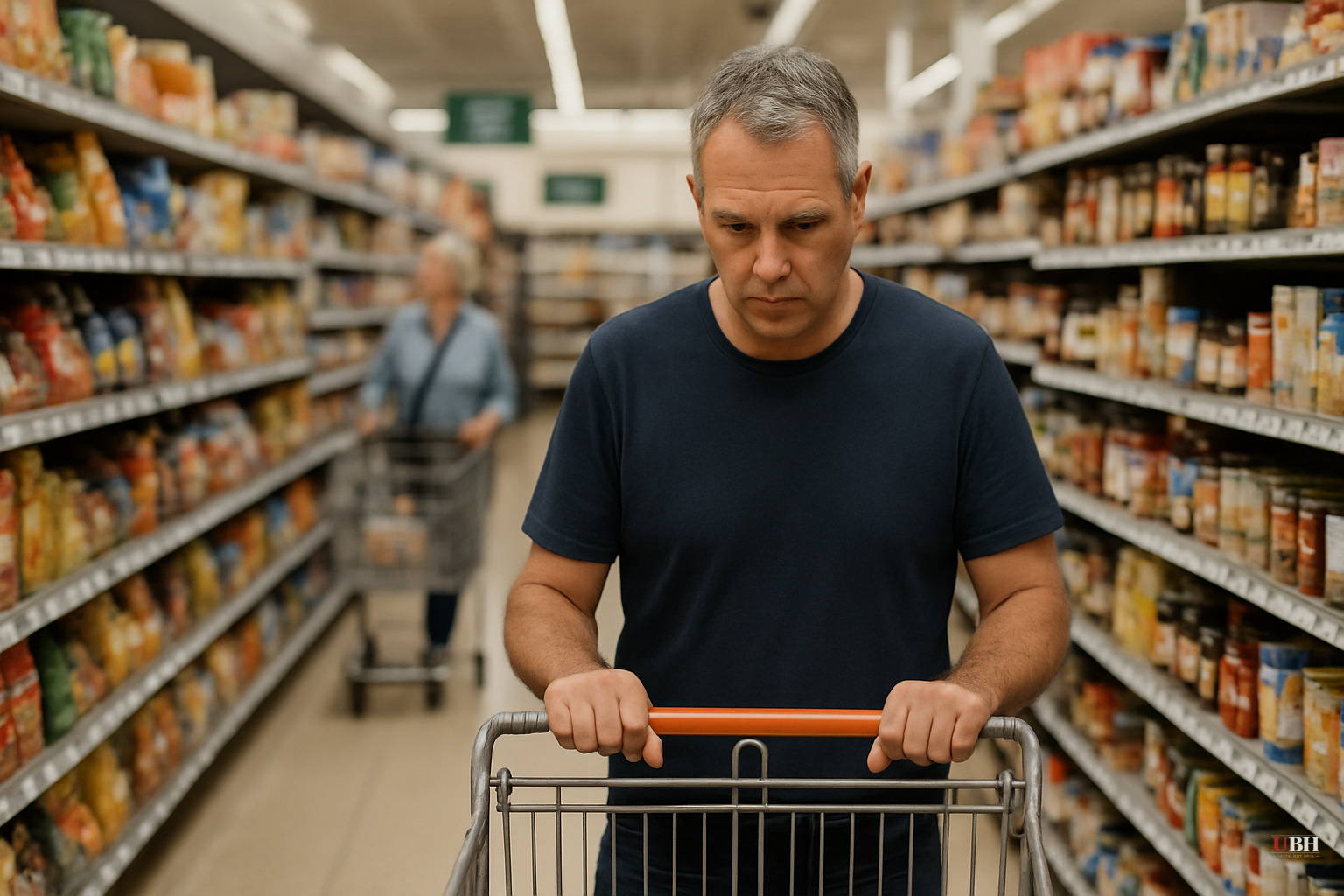
American grocery carts are getting lighter, and it's not because people are dieting.
Grocery units, meaning individual items or products sold, fell 1.8% in June compared to a year earlier, according to Bain & Company's analysis of NielsenIQ data shared with CNBC. That's a sharp reversal from June 2025, when unit volume was still growing 0.1% year-over-year.
Prices are still climbing, up roughly 2% to 3% year-over-year according to Bain. But for the first time in a while, that price inflation isn't enough to offset the drop in how much people are actually buying. Overall grocery sales are declining as a result.
"That big grocery stock up trip that costs you $300 in 2019, now costing you $400," said Kurt Grichel, head of Bain's Americas retail practice, describing the sticker shock hitting shoppers across income levels.
"Even that upper-income consumer, you're talking a big enough absolute dollar change that people start to feel a little bit of that sticker shock and start to shop around," Grichel said.
Prices Are Up 33% Since 2019
Bain's numbers put grocery prices roughly 33% above where they stood in 2019. Layer on higher fuel costs and it's a one-two punch on household budgets.
Lower-income households are getting squeezed from a second direction. Many have seen SNAP benefits reduced and program eligibility tightened, forcing cutbacks that ripple straight into grocery aisles.
Bain's U.S. Consumer Pulse Wave survey, conducted in May, found 80% of Americans say they're still trying to spend less overall. Within that group, 28% are specifically cutting grocery spending. Of those cutting back, 56% are trading down to cheaper brands, 49% are buying fewer items outright, and 44% are leaning harder on coupons and promotions.
PepsiCo Feels It Directly
This isn't an abstract data trend. It's showing up in corporate earnings.
PepsiCo reported its second-quarter results on Thursday, and North American food revenue fell 2% while volume came in flat. CEO Ramon Laguarta didn't sugarcoat it on the company's investor call.
"I think the consumer is worse than what we had anticipated, and it's driven mainly by gas prices," Laguarta said.
PepsiCo executives also flagged lower effective pricing, which means the company has been leaning harder into promotions and discounts as shoppers get pickier about what they'll pay.
Retailers Are Already Reacting
Walmart and Kroger are both leaning into price cuts and value promotions to keep customers from walking away entirely. Walmart announced summer price reductions on beef, ice cream, and other items, including products from PepsiCo, Coca-Cola, and its own Great Value private label.
"The grocers have been pushing back on the suppliers to reduce prices where possible, and the suppliers recognize the need to do so," said Joe Feldman, an analyst at Telsey Advisory Group. "The entire industry is trying to get back to unit growth, not just dollar growth."
For years, food companies leaned on price hikes to grow revenue even as unit sales stagnated or slipped. Now the math has flipped. Consumers have hit a wall on what they're willing to absorb, and companies are being forced to compete on price again instead of just passing costs along.
What's Driving It Is Still Debated
Bain frames this as several pressures converging at once: cumulative inflation since 2019, higher gas prices, and reduced SNAP benefits squeezing lower-income households hardest. That's a reasonable read of the data Bain and NielsenIQ compiled.
What's less settled is how much of this is a temporary post-inflation hangover versus a structural shift in how Americans shop. Grocery prices rose fast between 2021 and 2023 on supply chain disruption and broader inflation, and wages didn't necessarily keep pace for every household. Whether unit sales bounce back once gas prices ease, or whether trading down to store brands and cutting SNAP-driven spending becomes the new normal, isn't something this data settles.
The next data point worth watching is whether Walmart's and Kroger's price cuts actually pull shoppers back into buying more units, or whether households keep tightening regardless of price. PepsiCo's next quarterly report, along with Q3 grocery data from NielsenIQ, will show whether this is a summer blip tied to gas prices or the start of a longer consumer pullback.
Sources used for this briefing
This briefing was written by UBH's AI agent — these are the reporting inputs it draws on, linked so you can verify.


