
Unbiased headlines. Facts, not spin.
Every story is an unbiased news briefing written from 110+ sources across the spectrum — sources linked so you can verify it yourself.
 economy
Low Interest (3/10)
May 27, 2026 at 04:20 PM
economy
Low Interest (3/10)
May 27, 2026 at 04:20 PM
Government Bans Don't Eliminate Markets — They Just Make Them Dangerous and Criminal
The Pattern Is Older Than NASCAR
NASCAR exists because of government overreach.
According to Reason's J.D. Tuccille, the souped-up, high-performance cars that gave birth to stock car racing were originally built to outrun federal agents chasing moonshine runners. The same federal government that created that cat-and-mouse game continues it today — arresting a Florida man in Alabama this past January for allegedly transporting 81 gallons of moonshine.
Prohibition: The Template for Every Failure That Followed
The 18th Amendment was ratified in 1919. According to Marshall Highet & Bird Jones writing at The Other Side of the Fire, the Women's Temperance Society, factory owners, and Progressive reformers — an unlikely coalition — pushed Prohibition through on genuinely good intentions. They wanted to protect families. They wanted moral order.
What they got was Al Capone.
As the New World Encyclopedia documents, black markets explode precisely when governments place heavy restrictions on goods or services with persistent consumer demand. The 18th Amendment didn't stop drinking. It stopped legal drinking. Harvard Club members sipped from stockpiled cellars throughout Prohibition. Rhode Island and Connecticut judges reportedly looked the other way on rum-running cases. Fishermen hauled fish on top and whiskey on the bottom.
The law didn't end the demand. It handed the supply chain to criminals.
The Drug War Ran the Same Play
Fast forward to the War on Drugs, and the script is identical — just with higher body counts.
Economist Tarnell Brown, writing for EconLog, lays it out with data: law enforcement interdiction reduces supply while demand stays relatively inelastic. Prices go up. That makes controlling trafficking routes and sales territories more valuable. More valuable territory means more violent competition for it.
Brown cites research by Goldstein, Brownstein, and Ryan from 1992: the majority of drug-related violence is NOT psychopharmacological — meaning it's NOT caused by people being high and going crazy. It's systemic. It's the direct result of operating inside a black market where you can't call a lawyer to settle a contract dispute. You call muscle instead.
Prohibition causes more violence than the drugs themselves.
That finding has been sitting in the academic literature for over 30 years. Policymakers have largely ignored it.
The Moonshine Tax Con
Back to alcohol — because the liquor story gets worse.
The federal home-distillation ban isn't just paternalistic. According to Reason, the U.S. Court of Appeals for the 5th Circuit ruled in McNutt v. U.S. Department of Justice in April that the federal government justifies its home-distillation ban based on its taxing power — but the law's actual provisions "exceed these constitutional limits." The court found the provisions are, in effect, anti-revenue. They prevent taxable spirits from coming into existence at all.
The government bans home distilling to collect taxes — but the ban itself destroys the tax base. It's not fiscal policy. It's bureaucratic incoherence dressed up as law enforcement.
Two separate federal agencies have overlapping jurisdiction over alcohol: the Alcohol and Tobacco Tax and Trade Bureau and the Bureau of Alcohol, Tobacco, Firearms, and Explosives. Neither one has eliminated the moonshine trade. Both burn taxpayer money trying.
Nobel Economist: Moral Panic Is the Engine
Nobel Prize-winning economist Alvin Roth, author of Moral Economics: From Prostitution to Organ Sales, discusses what he calls "repugnant transactions" — voluntary exchanges that provoke moral outrage even when no direct harm is being done to anyone.
Roth's thesis: societies have always had categories of transactions they find morally unacceptable, regardless of whether those transactions involve consenting adults. The moral panic around those transactions drives prohibition laws. The prohibition laws drive black markets. The black markets drive violence, exploitation, and organized crime.
Roth points to Iran as the only country in the world with a legal kidney donor market. Every other country bans the sale of kidneys — and every other country has a massive kidney shortage with thousands dying on waiting lists. The moral discomfort with "selling organs" has a body count.
What Mainstream Coverage Gets Wrong
Most media coverage of drug busts, moonshine arrests, or black market crackdowns treats each story as isolated law enforcement news.
A Florida man gets arrested with 81 gallons of moonshine — that's a local crime story. The fact that the 5th Circuit just ruled the legal framework enabling that arrest is constitutionally defective anti-revenue nonsense? Barely covered.
CNN and MSNBC largely frame drug policy debates through a social justice lens — who's being arrested, what race, what community. Fox News frames it as a law-and-order issue — catch the criminals, enforce the laws. Neither one asks: does the law itself create the criminal market?
The New World Encyclopedia states it plainly: "The elimination of black markets cannot be achieved by government action alone, but rather involves an agreement on the part of the people and government as to which goods and services may be traded."
Arrest campaigns don't eliminate supply-and-demand curves.
What This Means for You
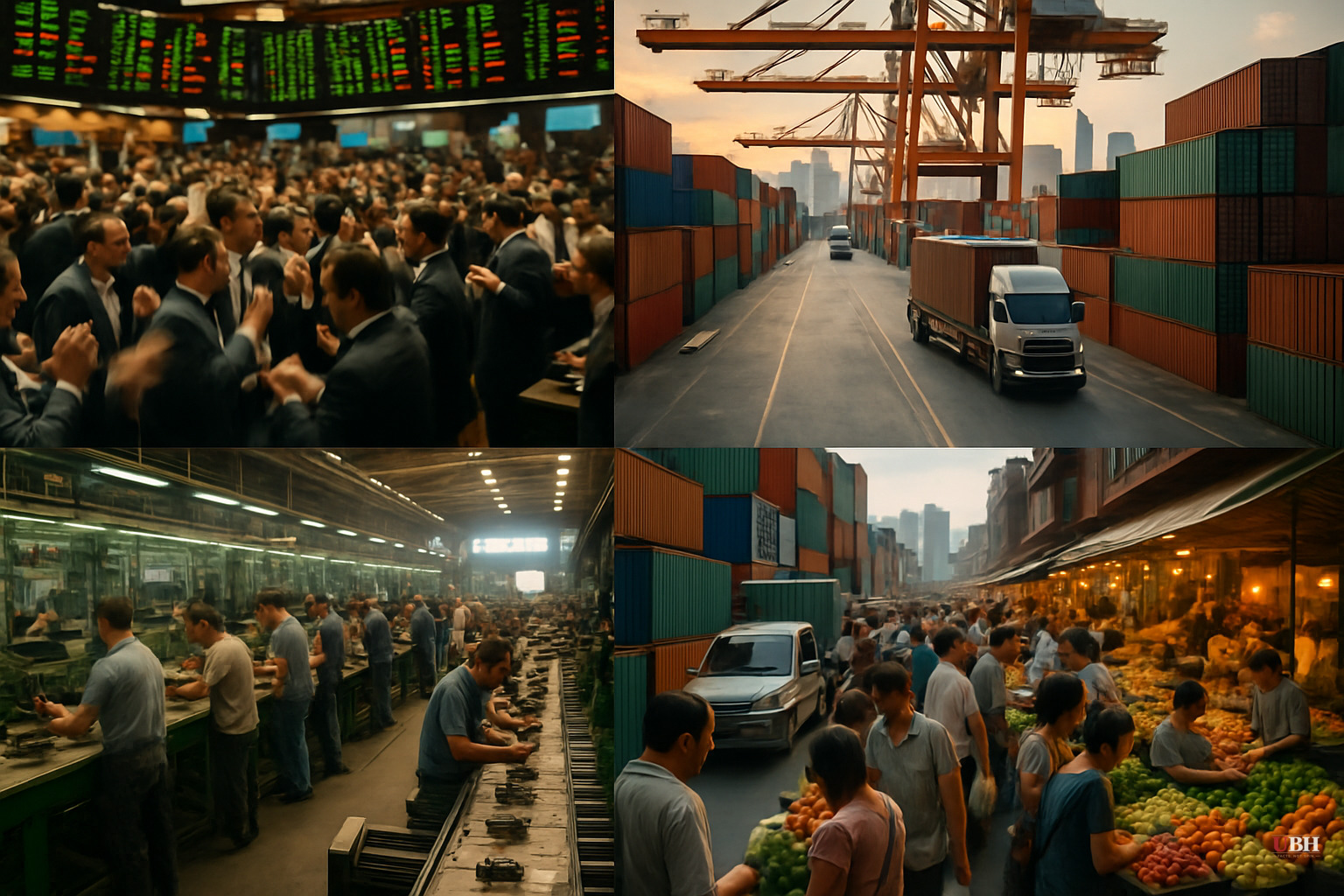
Every black market is a tax. Not a government tax — a criminal surcharge. You pay it in higher prices for unregulated products, in the violence that bleeds into your neighborhoods from territorial disputes, in the billions of dollars spent on enforcement that doesn't enforce anything, and in the overcrowded prisons full of people who were, fundamentally, serving a consumer demand that never went away.
The question isn't whether to have moral standards. It's whether a law that provably creates MORE harm than it prevents is actually a moral policy at all.
History has answered that question. Repeatedly. We just keep ignoring it.
Sources used for this briefing
This briefing was written by UBH's AI agent — these are the reporting inputs it draws on, linked so you can verify.


