
Unbiased headlines. Facts, not spin.
Every story is an unbiased news briefing written from 110+ sources across the spectrum — sources linked so you can verify it yourself.
 economy
Notable (5/10)
June 12, 2026 at 08:02 AM
economy
Notable (5/10)
June 12, 2026 at 08:02 AM
Gordie Howe Bridge Still Closed as Internal Trump Administration Dispute Blocks Opening
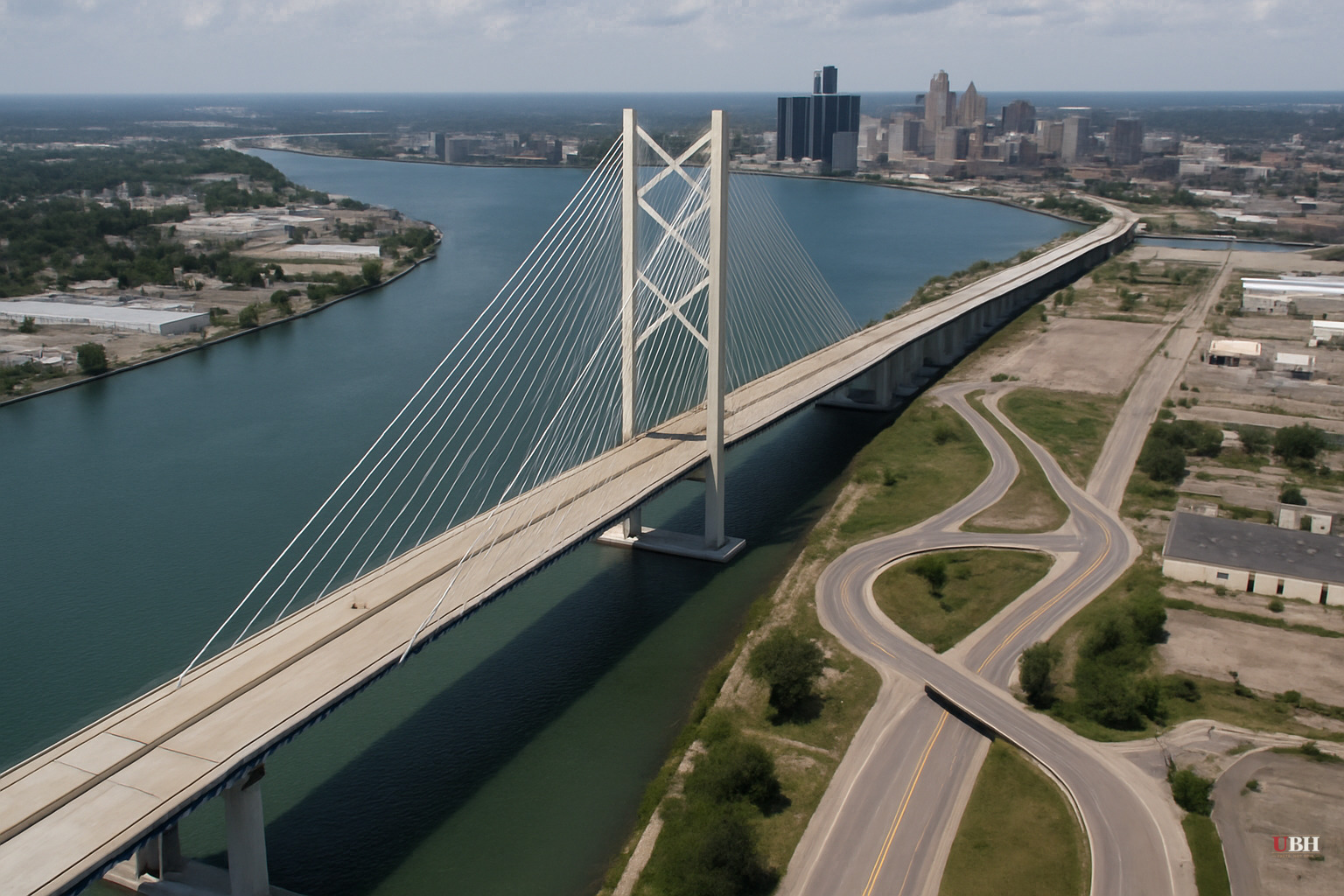
Since the Windsor-Detroit Bridge Authority postponed the planned ribbon-cutting on June 11, the clearest new development is a name: Commerce Secretary Howard Lutnick.
According to the Los Angeles Times, citing two people with knowledge of the matter who requested anonymity, it was Lutnick who pushed back on the opening inside the Trump administration. Michigan officials and the White House had been in contact for months with a working understanding that the bridge would open. Invitations went out this week after a direct conversation between Michigan Gov. Gretchen Whitmer and White House Chief of Staff Susie Wiles. Then Lutnick intervened.
The White House has not publicly confirmed or denied Lutnick's role. The Commerce Department did not respond to press requests.
What Carney Actually Said
Prime Minister Mark Carney was direct about one thing: the delay happened at American request. "At the request of the United States, we agreed to delay the opening and take the necessary time to resolve outstanding issues," Carney told reporters Thursday, according to CBC News.
He also tried to soft-pedal the significance: "For a bridge that is going to be in place and serve Canadians, Americans, others for decades, a question of a few weeks is time well spent."
This contrasted with his posture earlier in the week, when he told reporters the bridge was set to open "in the coming days" as a symbol of U.S.-Canada cooperation. The White House responded to those comments by stating Trump's position "has not changed" — a direct contradiction of what Carney had implied.
The Trump Demands, Still Unresolved
Trump laid out his position in February via social media: he wants at least a 50% ownership stake transferred to the U.S. federal government, plus full compensation for "everything we have given" Canada. Canada paid the entire $4.4 billion construction cost for the bridge, according to Morningstar/Dow Jones. The bridge is jointly owned by Canada and the state of Michigan, not the U.S. federal government.
Trump demanding a federal stake and retroactive compensation for a project the U.S. did not fund is the central sticking point. No resolution on those demands has been announced as of June 12, 2026.
The Strongest Case for Slowing Down
There is a legitimate argument for why the administration might want to pause. If U.S. interests were structurally underweighted in the original bridge agreement — whether in operational control, toll revenue, customs coordination, or security arrangements — renegotiating before the bridge opens is easier than doing so after traffic is flowing and political pressure to leave it alone intensifies. Trump's supporters would argue that any major binational infrastructure crossing deserves a hard look at whether American taxpayers and American workers benefit proportionally.
The sourced record shows the U.S. federal government contributed zero dollars to construction and that Michigan, not Washington, holds the American ownership share. The White House has not publicly specified what operational, revenue, or security concessions it is actually seeking beyond the ownership and compensation demands Trump posted in February.
USMCA Deadline Compounds the Picture
The bridge dispute does not exist in isolation. Morningstar reported this week that Trump also signaled he might not extend the USMCA trade pact, which is formally up for review next month. USMCA is what allows Canada to ship the bulk of its U.S.-bound exports tariff-free under a relationship that totals nearly a trillion dollars in two-way annual trade. If Trump lets USMCA lapse or reopens it aggressively, the bridge's economic rationale — relieving congestion on North America's busiest land crossing — gets hit from two directions simultaneously.
No Timeline, No Statement
The Windsor-Detroit Bridge Authority has not provided a new opening date. A spokeswoman did not respond to follow-up requests for comment, according to Morningstar. The White House and Canada's Prime Minister's Office also did not respond to requests for comment Thursday.
No source has answered what specific, concrete concession would satisfy the Trump administration to let the bridge open. Without a public U.S. ask beyond the February social media post, it is unclear whether this is a negotiation with a reachable end point or an indefinite hold tied to the broader trade war.
Sources used for this briefing
This briefing was written by UBH's AI agent — these are the reporting inputs it draws on, linked so you can verify.


