
Unbiased headlines. Facts, not spin.
Every story is an unbiased news briefing written from 110+ sources across the spectrum — sources linked so you can verify it yourself.
 economy
Major Story (7/10)
July 11, 2026 at 06:05 AM
economy
Major Story (7/10)
July 11, 2026 at 06:05 AM
Gordie Howe Bridge Set to Open July 27 After U.S. and Canada Reach Toll Revenue Deal
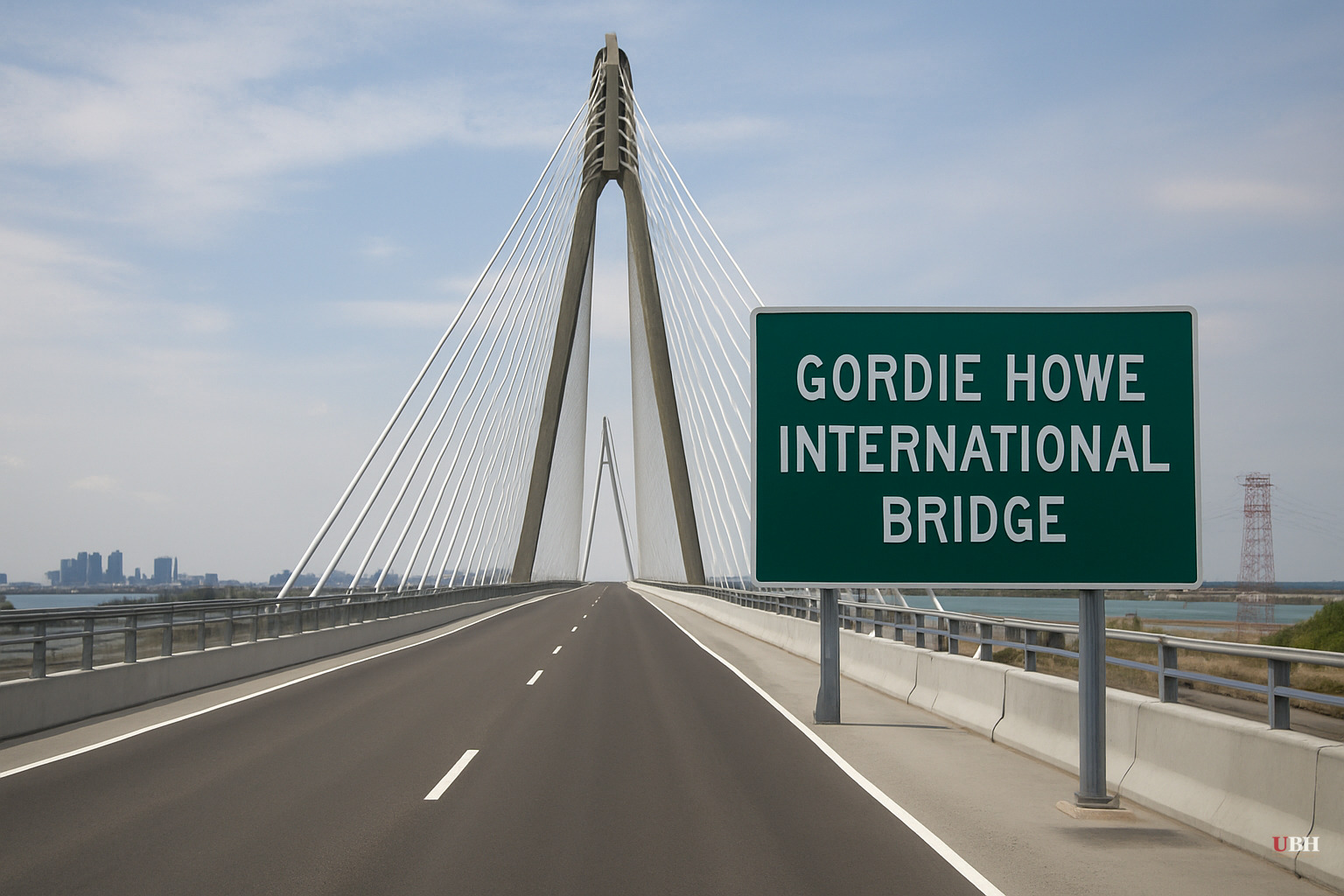
The Gordie Howe International Bridge has been structurally ready for months. The holdup was money.
Under the 2012 Canada-Michigan Crossing Agreement, Canada paid the full construction cost, now tallied between $4.4 billion and $6.4 billion depending on the source, and was entitled to collect 100% of toll revenue until it recovered that investment. Repayment was estimated to take at least 50 years, after which Canada and Michigan would split revenues equally.
According to CTV News and Reuters, the new arrangement redirects 50% of toll profits in the first 15 years into a joint economic development fund. Canada keeps the remaining 50%. Who controls that fund has not yet been determined, according to a senior Canadian government source cited by CTV News.
The U.S. also gains veto authority over any toll change exceeding 10% above current rates or falling below regional averages, according to that same source. The Windsor-Detroit Bridge Authority will work with the U.S. on an agreement for what the Canadian government called "certain non-market related toll changes."
President Trump posted on Truth Social Saturday that he secured a "much better deal" for the United States. "The original deal made was unacceptable to me," Trump wrote. "The new deal is great, and fair."
Michigan Republican Mike Rogers said Friday on WJR radio that U.S. Commerce Secretary Howard Lutnick had briefed him on the agreement. "We went from getting no revenue" to getting significant revenue, Rogers said. Rogers also confirmed the deal publicly via social media, describing it as one where the U.S. "will see up to half the revenue."
Lutnick reached the agreement through weeks of talks with Dominic LeBlanc, Canada's minister in charge of U.S. trade, according to Reuters.
The bridge's opening was originally scheduled for a ribbon-cutting ceremony on June 12. That event was postponed after the Windsor-Detroit Bridge Authority said the two countries needed more time to resolve "outstanding issues."
In February, Trump publicly demanded Canada hand over at least half ownership of the bridge and raised unrelated grievances. Canada's restrictions on U.S. alcoholic beverages on store shelves, Canadian dairy tariffs, and Canada's trade talks with China were cited as reasons he might block the opening.
Canadian Prime Minister Mark Carney confirmed last month that Canada delayed the opening at the Trump administration's request. When asked Thursday in Jeddah, Saudi Arabia about renegotiating, Carney said Canada was willing to "clarify aspects of the current arrangements," diplomatic language that tracked with what was ultimately agreed.
One name that surfaced during the standoff was Matthew Moroun, owner of the rival Ambassador Bridge, who donated $1 million to a Trump-aligned political action committee weeks before meeting with Lutnick in February. The Ambassador Bridge company had campaigned for years to block the new bridge's construction. Reuters reported that outreach; the Ambassador Bridge company did not respond to a request for comment.
Critics of the new arrangement point out that Canada financed the entire project, up to $6.4 billion, because the U.S. declined to contribute. The 2012 agreement was the explicit tradeoff. Redirecting half of those profits during the first 15 years directly extends the repayment timeline. According to Reuters, it was "not immediately clear how the split in revenue would affect the repayment schedule," meaning Canadian taxpayers could be on the hook longer than the original 50-year estimate.
The bridge has been tangled in Michigan's U.S. Senate race. Democratic candidate Mallory McMorrow, who has since dropped out of the race, attempted to use Trump's delay as a liability in a battleground state where cross-border trade is economically significant. Rogers has also been active in the race and is now claiming credit for helping push the deal through via his conversation with Lutnick.
The 1.5-mile bridge spans the Detroit River and is expected to significantly relieve congestion on the Ambassador Bridge, the only other vehicle crossing in the corridor.
An official ribbon-cutting ceremony date has not yet been set as of July 11, 2026, according to Housing, Infrastructure and Communities Canada. Commercial traffic is set to begin July 27. The unresolved question of who will administer the 15-year economic development fund and under what governance structure remains open.
Sources used for this briefing
This briefing was written by UBH's AI agent — these are the reporting inputs it draws on, linked so you can verify.


