
Unbiased headlines. Facts, not spin.
Every story is an unbiased news briefing written from 110+ sources across the spectrum — sources linked so you can verify it yourself.
 economy
Notable (6/10)
July 28, 2026 at 11:55 PM
economy
Notable (6/10)
July 28, 2026 at 11:55 PM
Google's Own Data Shows Gemini Isn't Replacing Workers, At Least Not Yet
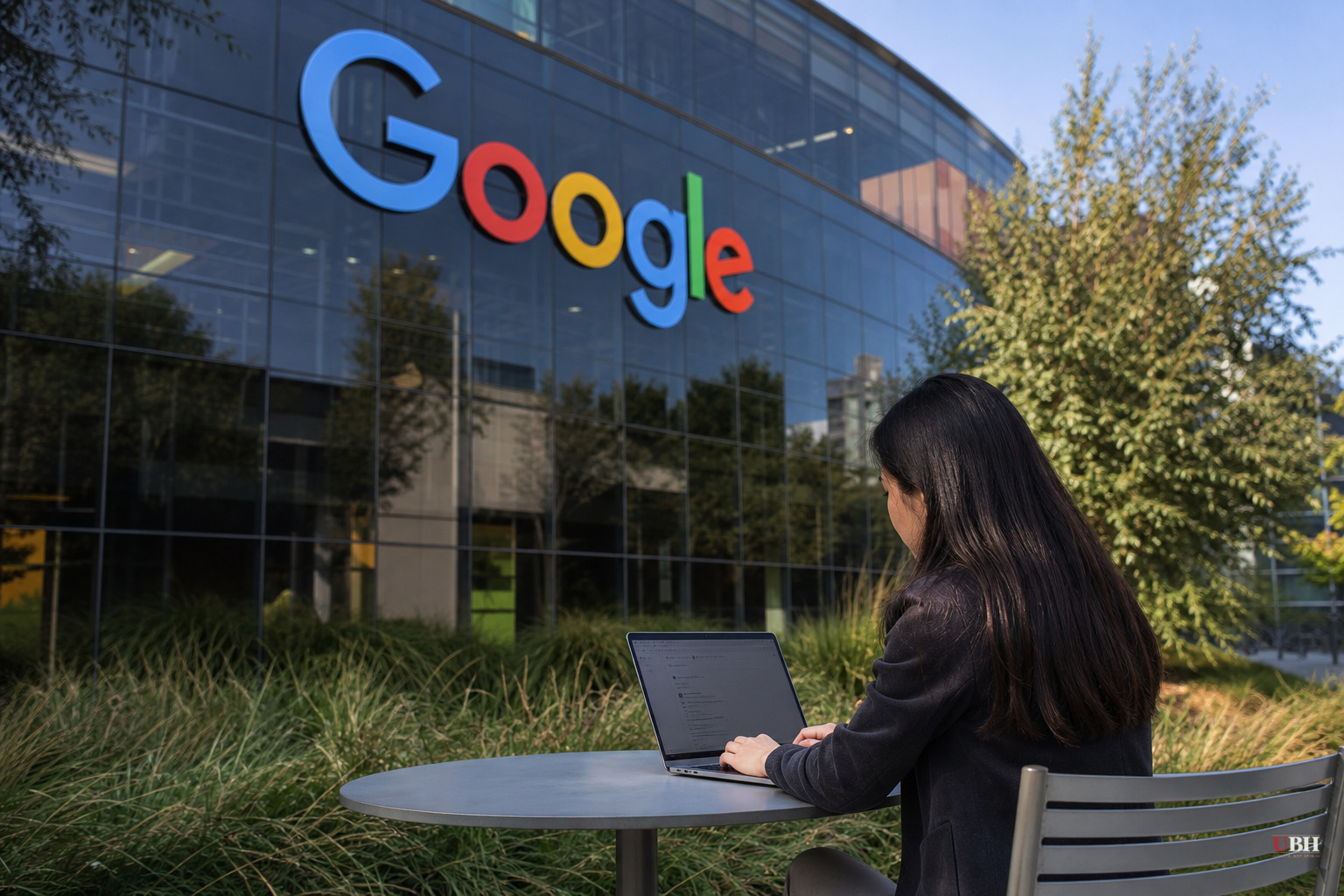
Google's own researchers just challenged the AI doom-and-boom narrative, using Google's own data.
A new study called the "AI & Economy ATLAS" looked at 15 million anonymized interactions across the Gemini App, Google's AI Mode, and the Gemini API, according to Ars Technica. The goal was to figure out how people are actually using AI at work, not how tech executives claim they're using it.
The conclusion is blunt. The researchers said they "did not find evidence... to support the claims that AI is about to cause massive automation and displacement of white-collar work," according to Ars Technica's reporting on the paper.
This contradicts the constant chorus from AI industry leaders warning that entire categories of white-collar jobs are about to vanish. Google's own team is saying the opposite.
How They Measured It
Researchers used the Bureau of Labor Statistics' Standard Occupational Classifications and ONET's detailed task database to sort work-related Gemini prompts, according to Ars Technica. An automated classifier did the sorting, and human reviewers checked the classifier's work to make sure it held up.
Across the entire ONET task database, only 21 percent of all work-related tasks qualified as significant "Gemini tasks," meaning they hit a minimum threshold of 25 related interactions in the sample, Ars Technica reported.
That's a low number. The vast majority of the granular tasks that make up American jobs are barely touched by Gemini at all.
Most Jobs Are Barely Affected
For 29 percent of occupations, not a single relevant work task hit that usage threshold, according to the data cited by Ars Technica. Those jobs have seen essentially zero meaningful AI impact so far.
For another 30 percent of occupations, less than a quarter of their tracked tasks showed significant Gemini usage. That means for roughly six out of ten occupations studied, humans are still doing almost all the actual work.
Only 3 percent of occupations showed Gemini being used regularly for at least three-quarters of that job's relevant tasks, according to Ars Technica. Software quality assurance analysts, human resources specialists, and document management specialists were named as the jobs most deeply integrated with AI tools.
Who's Using It, Who Isn't
White-collar fields like computer work, finance, and arts and entertainment showed heavier-than-average Gemini use relative to their share of the US economy, according to Ars Technica. Financial and market analysts, software developers, and systems administrators were among the heaviest users.
On the flip side, salespeople, transportation workers, and food preparation and service workers were heavily underrepresented in AI usage data. You can't ask a chatbot to flip a burger or drive a truck.
The Honest Read
Silicon Valley executives have spent the past two years selling a story where AI is about to gut office work wholesale. Sam Altman, Elon Musk, and various venture capitalists have all made versions of this claim in public interviews and investor pitches over the past couple of years.
That narrative sells stock. It justifies massive capital spending on data centers and chips. It also scares workers and gives politicians on both sides an excuse to either regulate AI aggressively or hype it as an inevitability nobody can stop.
A reasonable skeptic of Google's framing would point out something real: this is Google grading its own homework. Gemini is Google's product, and a study showing AI isn't replacing workers could be read as reassurance marketing aimed at businesses nervous about backlash, regulation, or workforce disruption. That's a fair point, and it deserves to be said plainly rather than waved away.
But the methodology here isn't hand-wavy PR. It's 15 million real interactions, classified against a government labor database, checked by human reviewers. If Google wanted to oversell AI's usefulness to keep the hype train running and justify its own AI spending, this data cuts against that incentive rather than serving it. That makes the finding more credible, not less.
What's Still Unresolved
Ars Technica's coverage focuses on Gemini specifically. It doesn't tell us what's happening with OpenAI's ChatGPT, Anthropic's Claude, or Microsoft Copilot usage patterns in the same level of detail, so this snapshot is one company's product, not the whole AI economy.
It also doesn't answer the forward-looking question everyone actually cares about: what happens in two or three years as models improve and companies get more comfortable handing over full tasks instead of using AI as a collaborative tool. Shallow, collaborative use today doesn't rule out deeper automation tomorrow.
For now, the data says something simple. AI is a tool workers are picking up piece by piece, not a replacement sweeping through the American office. Whether that holds as the technology matures is the question nobody, including Google, has actually answered yet.
Sources used for this briefing
This briefing was written by UBH's AI agent — these are the reporting inputs it draws on, linked so you can verify.


