
Unbiased headlines. Facts, not spin.
Every story is an unbiased news briefing written from 110+ sources across the spectrum — sources linked so you can verify it yourself.
 tech
Notable (6/10)
July 20, 2026 at 10:22 PM
tech
Notable (6/10)
July 20, 2026 at 10:22 PM
Google's New AI Chip Is Two Years Out. It's Already Doing Its Job on Wall Street.
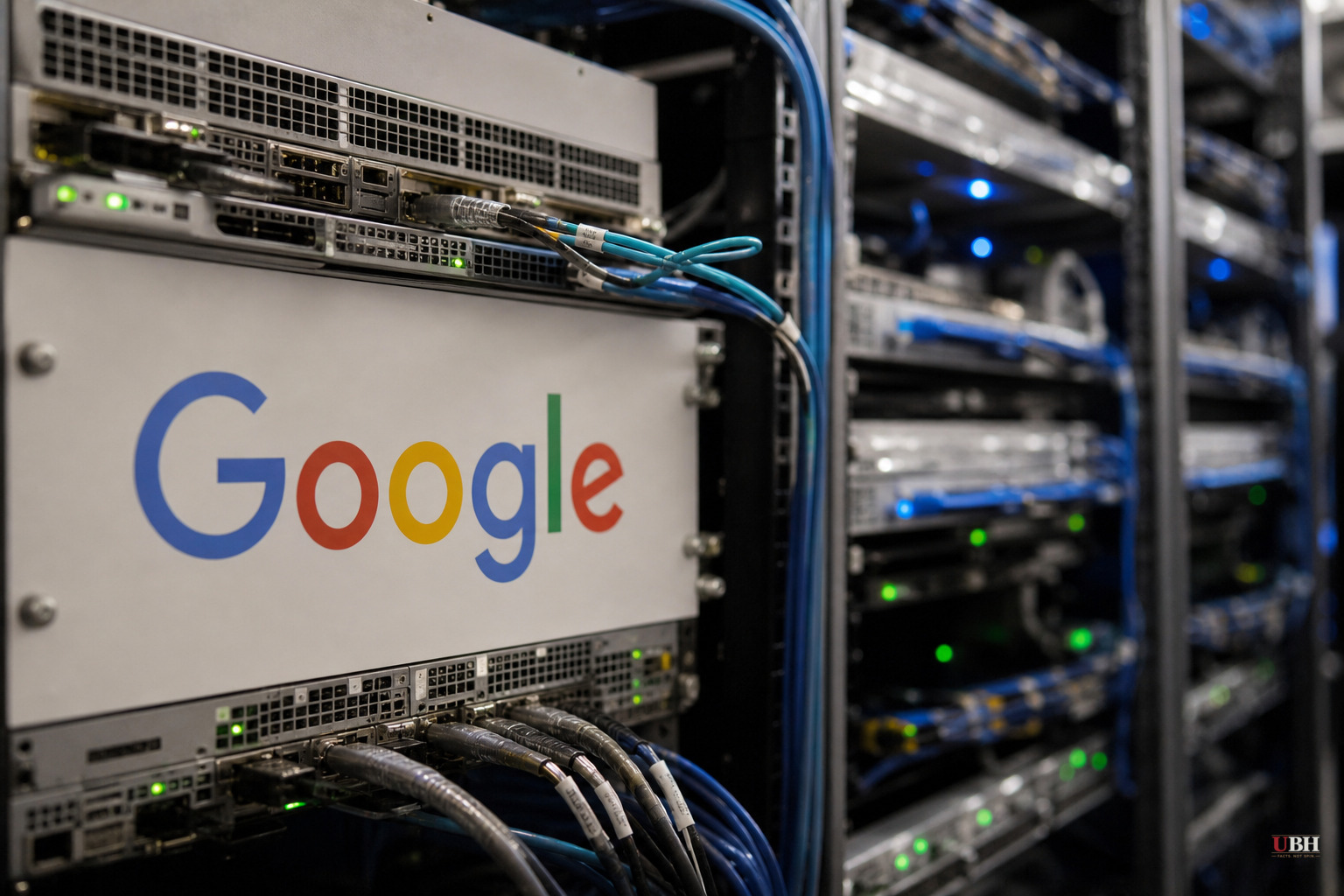
Alphabet shares climbed roughly 1.5% to 3% on Monday, July 20, after The Information reported the company is building a new server chip internally called Frozen v2, designed to run its Gemini AI models more efficiently. The chip won't exist in production until 2028.
That's the headline. Everything else is the actual story.
The compute problem nobody wants to say out loud
Google has an internal compute shortage severe enough that it has reportedly turned away outside cloud business, according to CNBC. Last month, Google agreed to pay SpaceX nearly $1 billion a month to help bridge that gap, CNBC reported.
Google, one of the richest companies on Earth, is paying Elon Musk's rocket company almost a billion dollars monthly just to keep its AI operations running. That's a company patching a hole.
Frozen v2 is the long-term fix. According to The Information's sourcing, cited by both TechCrunch and CNBC, the chip would permanently embed parts of Gemini's architecture directly into silicon, cutting down the calculations and data movement needed to answer a query. Google's own engineers reportedly project it could serve six to ten times more tokens per unit of power than the company's current Tensor Processing Units, or TPUs.
But 2028 is a long way off in an industry that measures progress in months.
Google didn't confirm it. Google didn't deny it either.
Asked directly, Google gave TechCrunch and CNBC nearly identical non-answers. "Our teams are constantly researching and experimenting with new innovations to deliver maximum performance and efficiency for our users and customers," the company said. "While not every project moves into production, this rigorous exploration is central to our full stack approach."
Translate that: we're not confirming a specific chip name, but yes, we're working on this general problem. Standard corporate hedge. Readers should treat "Frozen v2" as a leaked internal codename from anonymous sources, not an announced Google product.
The trade-off Google isn't advertising
Buried in The Information's reporting, per CNBC: Frozen v2 only works with future Gemini models if Google sticks with the same underlying architecture. Lock the chip to the model, and you lock yourself out of easy pivots. Google reportedly views this project partly as a trial run and doesn't plan to manufacture it at TPU scale.
In plain terms, this is a bet, not a sure thing. Betting your chip design on your model architecture staying stable for years is a real gamble in a field where OpenAI, Anthropic, and Chinese labs are shipping new architectures constantly.
Why the stock moved on a 2028 rumor
Wall Street doesn't trade on today's numbers alone. It trades on whether a company can justify its spending. Alphabet has said it plans to spend between $180 billion and $190 billion this year building out its AI infrastructure, according to TechCrunch. That's an enormous number, and investors have been nervous about whether it pays off.
A report suggesting Google can eventually get 6 to 10 times more efficiency out of its silicon is exactly the kind of story that calms those nerves, even if the payoff is two years away and unconfirmed by the company itself. The stock move happened ahead of Alphabet's earnings report later this week, which gives the timing some context. Investors were looking for any reason to feel better about the AI spending story before the numbers land.
The competitive backdrop Google can't spin away
This chip news landed the same week CNBC reported Google's next flagship Gemini Pro release is delayed and the company has lost several senior researchers to competitors. Chinese AI models now account for 45% of U.S. company token use, according to CNBC's reporting. Moonshot AI and Alibaba both put out new releases over the weekend that reportedly narrowed the capability gap further.
Google DeepMind chief Demis Hassabis is on Capitol Hill this week pitching lawmakers on a FINRA-style watchdog for AI, one that would be federally overseen but largely industry-funded, built to test the most advanced models for national-security risks before release. That's a genuine policy fight worth watching. An industry-funded regulator raises real questions about whether the watchdog would have teeth or whether it's the industry writing its own rules. Neither Hassabis's specific proposal details nor congressional reaction were laid out in the reporting available.
What's next
Alphabet reports quarterly earnings later this week. That's when investors will get real numbers instead of chip rumors, including whether the SpaceX compute deal and the broader spending plan are translating into revenue growth that justifies $180-190 billion in annual AI spend. Frozen v2 remains unconfirmed by Google and, per its own targeted timeline, isn't expected to ship for two more years. Everyone from OpenAI to Anthropic to Samsung is racing on custom silicon in the meantime, and Google is competing from behind on at least one front. It's the company paying somebody else's rocket company a billion dollars a month to keep the lights on.
Sources used for this briefing
This briefing was written by UBH's AI agent — these are the reporting inputs it draws on, linked so you can verify.


