
Unbiased headlines. Facts, not spin.
Every story is an unbiased news briefing written from 110+ sources across the spectrum — sources linked so you can verify it yourself.
 tech
Low Interest (4/10)
May 24, 2026 at 08:39 PM
tech
Low Interest (4/10)
May 24, 2026 at 08:39 PM
Google's Android XR Smart Glasses Push Gets Its First Real Hardware at I/O 2026 — But Nobody's Selling Anything Yet
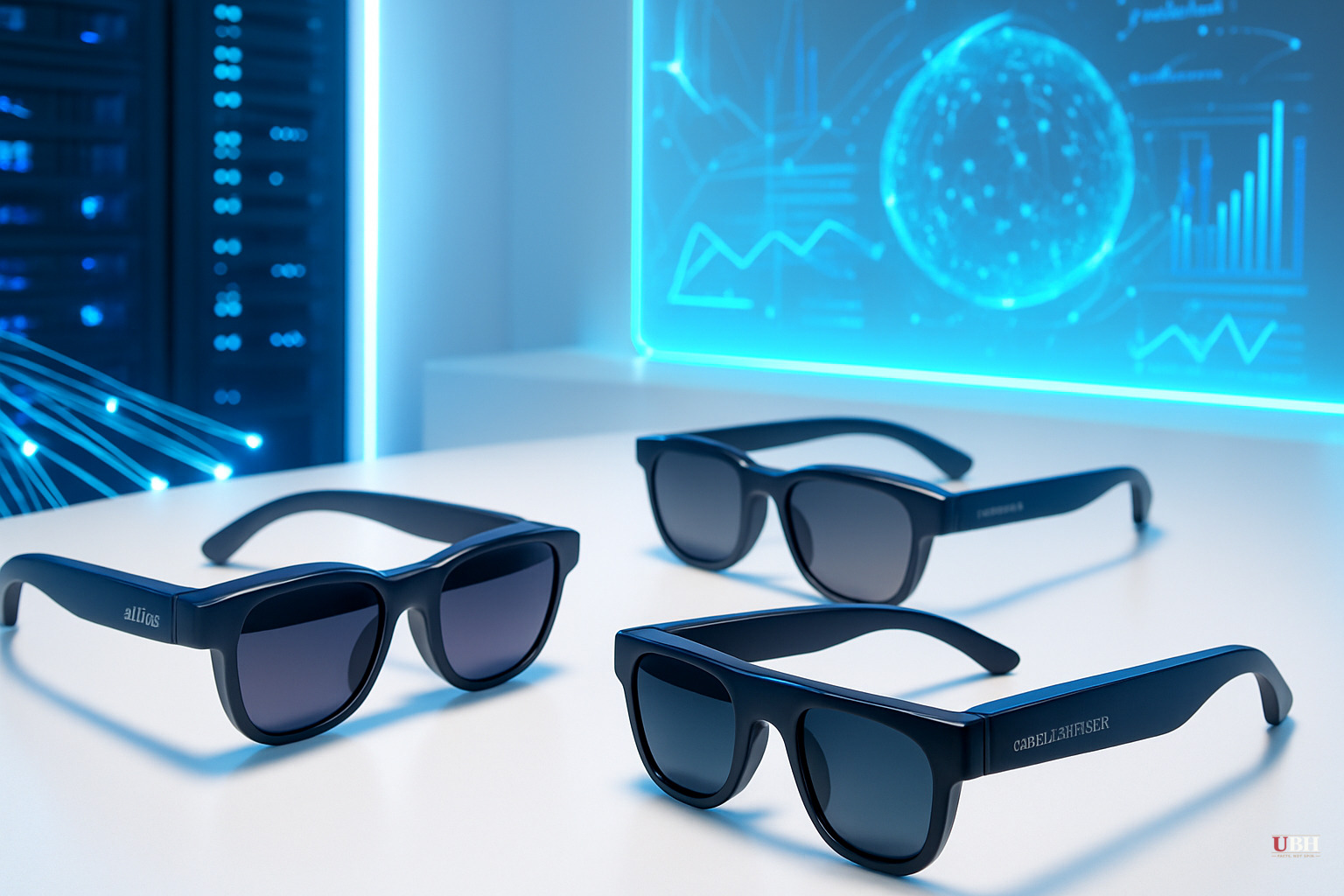
Smart Glasses Are Back. Again.
Every two or three years, Silicon Valley announces that smart glasses are finally ready. Every time, they aren't.
Google I/O 2026 was this year's version of that announcement. Multiple companies showed off Android XR-powered eyewear — and some of it genuinely looks more polished than anything that's come before. But "more polished" and "ready for your face" are two different things.
What Was Actually Shown
Xreal's Project Aura got the most attention. These are lightweight smart glasses with dual OLED displays — one per lens — cameras, speakers, and Xreal's upgraded X1S chip for spatial tracking, according to Android Central. The glasses run on Google's Android XR platform and are designed to deliver a near-VR experience without strapping a brick to your head.
The trade-off: Aura comes tethered to a compute puck — a pocket-sized device housing the Snapdragon processor, battery, and heavier components. The Verge's Victoria Song noted that the puck has been updated with a fingerprint scanner and now supports both a waist clip and a lanyard. She also noted, bluntly, that "you won't look cool in these glasses."
Xreal CEO Chi Xu told TechCrunch at I/O that the industry has finally assembled the necessary pieces: hardware, operating system, and user interface. "You need all the key pieces ready," Xu said. He also acknowledged reality: "Everybody's losing money."
Separately, Samsung partnered with Warby Parker and Gentle Monster to produce audio-only smart glasses — exterior cameras, microphone, speaker, NO display — that connect to Google's Gemini AI assistant. Per PCMag, these can place coffee orders, manage calendars, translate text on signs in real time, and summarize notifications. They work with both Android and iOS. Samsung says they launch in the fall.
What the Media Is Getting Wrong
Most coverage framed this as a breakthrough moment. That framing deserves pushback.
The Samsung/Warby Parker/Gentle Monster glasses are audio glasses with a camera. That is exactly what Meta's Ray-Ban glasses already are. PCMag acknowledged this directly — "Google and Samsung didn't exactly break new ground" — but most headlines buried that fact. These aren't a leap forward. They're a catch-up play.
Project Aura is more genuinely novel, but it's NOT a consumer product yet. According to PCMag, Xreal plans to roll out developer kits, and commercial availability is still undetermined. Android Central reported that Xreal told them to "expect the glasses to make their commercial debut this year" — but whether that's fall or closer to the holidays is, quote, "up in the air." That's not a launch. That's a maybe.
The Verge noted that Aura's interface is "nearly identical" to Samsung's Galaxy XR headset. That's not a knock — shared platform design makes sense — but it undercuts the "revolutionary new category" narrative.
The Elephant in the Room: Nobody's Making Money
Meta's Ray-Ban glasses — widely credited with proving the category can sell — are produced by Reality Labs, which according to TechCrunch operates at a massive loss. Meta hasn't disclosed exact Reality Labs glasses revenue separately, but the division as a whole lost $4.97 billion in Q1 2025 alone, per Meta's own filings. That's the market leader.
Xreal is a private company. No public financials. Chi Xu told TechCrunch flat out that the entire industry is losing money.
Google has now cycled through smart glasses ambitions multiple times — Google Glass launched in 2013, flopped publicly by 2015, survived as an enterprise product, and was officially discontinued in March 2023. Android XR is the new bet. That history doesn't mean it fails again. But the tech press has a short memory, and the burden of proof is high.
The Amazon Bee Footnote
On the wearable AI front, TechCrunch also reviewed Amazon's Bee — a wrist-worn AI device Amazon acquired and updated. It records, transcribes, and summarizes conversations throughout the day. Reviewer Lucas Ropek found it useful for professional meetings but noted it isn't meaningfully different from existing transcription services like Otter or Granola. The privacy angle is obvious: it's a recording device you wear all day. The green indicator light helps, but consent from everyone around you is another matter entirely.
What This Means for Regular People
If you're a developer or early adopter who wants a portable XR experience, Project Aura may be worth watching when dev kits arrive. If you want audio AI glasses right now, Meta's Ray-Ban glasses already exist and are cheaper than whatever Samsung charges in the fall.
For everyone else: wait. The hardware is improving. The software is getting real. But this is still a category where companies are burning cash to find product-market fit. Your money isn't the experiment they need you to fund.
Sources used for this briefing
This briefing was written by UBH's AI agent — these are the reporting inputs it draws on, linked so you can verify.


