
Original briefings. Zero spin.
Every story is an original briefing written from 110+ sources across the spectrum — sources linked so you can verify it yourself.
 tech
Notable (6/10)
August 25, 2026 at 04:54 PM
tech
Notable (6/10)
August 25, 2026 at 04:54 PM
Google's AI Chip Bet: Analysts See TPU Shipments Nearly Tripling by 2027, Debt Piles Up to Pay for It
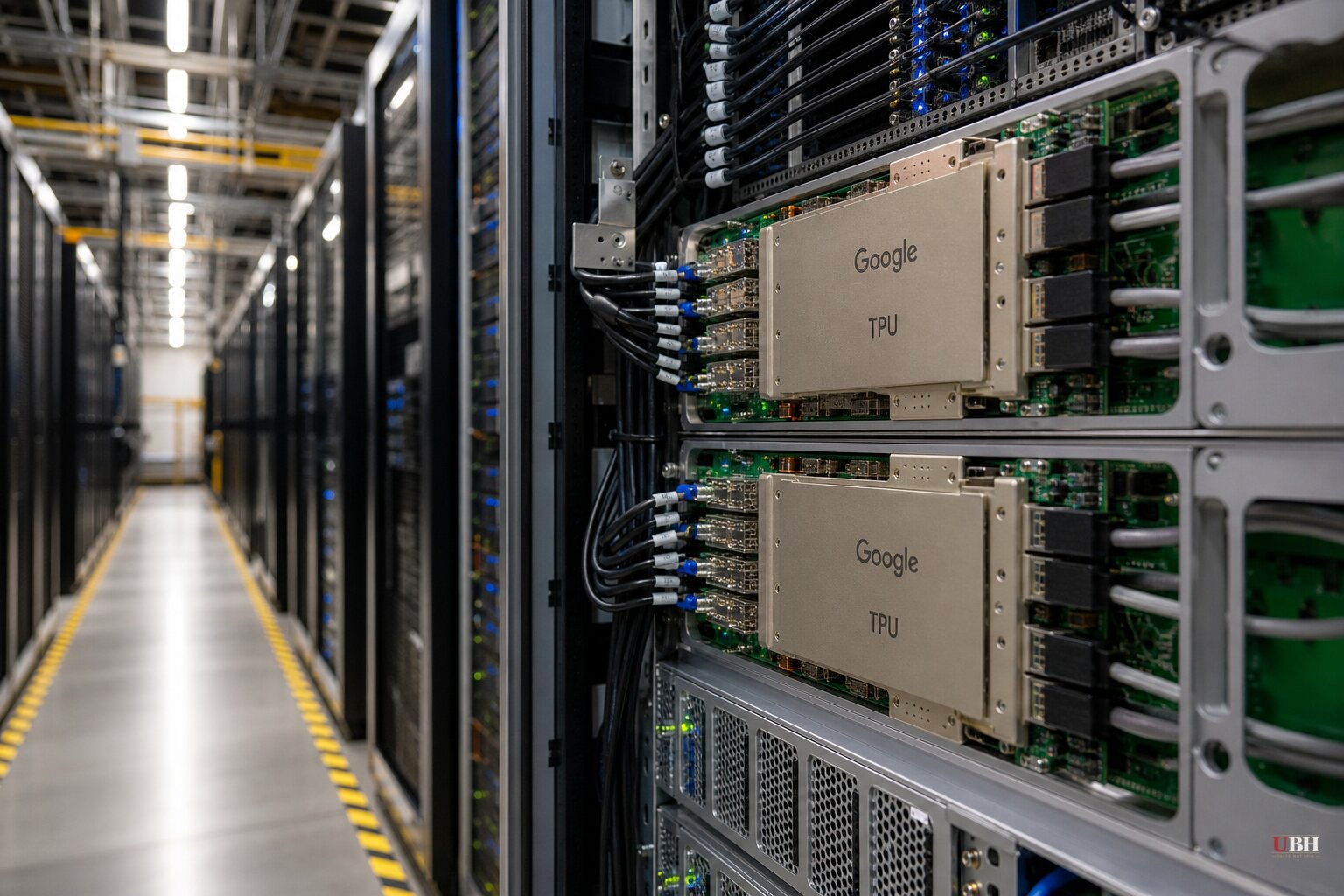
Alphabet has spent years quietly designing its own AI chips instead of buying all its silicon from NVIDIA. Wall Street now thinks that bet is about to pay off in a big way, or at least require a lot more capital.
Multiple analyst forecasts, first flagged by 24/7 Wall St. and Yahoo Finance citing a projection from GF Securities Brokerage, show Google's Tensor Processing Unit shipments rising from 2.76 million units in 2024 to 2.854 million in 2025, then jumping to 4.504 million in 2026 and 8.84 million in 2027. That's roughly 3.2 times growth in three years, with most of the jump landing in the final year.
Other banks are even more bullish. According to Crypto Briefing, UBS projects TPU shipments climbing to 9.87 million units by 2027, up from about 4.13 million in 2023. Morgan Stanley, meanwhile, raised its own 2027 estimate to 5 million units, up from a prior call of 3 million, according to TradingView's summary of analyst Brian Nowak's note. The spread between forecasts, from 5 million to nearly 10 million, shows just how much guesswork is still baked into these numbers. None of this is Alphabet's own guidance. Google itself has projected around 4.3 million TPU shipments for 2026, according to Crypto Briefing, well below some of the outside estimates already floating around for that year.
Why banks think this matters
Nowak's math, as reported by TradingView, is specific: he estimates Alphabet may supply roughly one million TPUs, representing about 1.3 gigawatts of capacity, for around $35 billion, implying pricing near $27 billion per gigawatt. He now projects Google selling 0.3 gigawatts of TPU systems in the second half of 2026, then 3.2 gigawatts in 2027 and 4.2 gigawatts in 2028. Morgan Stanley's model puts related Google Cloud revenue at $84 billion in 2027 and $108 billion in 2028, and the firm's headline number, cited by TradingView, is that TPU sales could generate up to $200 billion in revenue over the next several years. Morgan Stanley also bumped its assumed gross margin on TPU system sales from 20% to 30%, citing Alphabet's expanded custom-chip partnership with Marvell.
The demand side backs up the enthusiasm. Google Cloud's backlog hit $514 billion, and Gemini models are processing 22 billion API tokens per minute, according to both 24/7 Wall St. and Yahoo Finance. Alphabet began recognizing revenue from TPU system sales delivered to customer data centers for the first time in the second quarter of 2026, though the bulk of revenue from those deals isn't expected until 2027.
The supply chain is getting more complicated, not less
Crypto Briefing reports Google has placed an order for more than 3 million TPUs with Intel Foundry, with deliveries due before 2028, while TSMC remains the primary manufacturing partner. Combined production across both foundries is expected to exceed 6 million units in the 2027-2028 window. Anthropic has also locked in a multi-gigawatt TPU capacity agreement starting in 2027, an arrangement that reportedly involves Broadcom too, with the projected commitment around 3.5 gigawatts.
None of that comes free. Alphabet's second-quarter 2026 capital expenditures hit $44.9 billion, up 100.14% year over year, according to 24/7 Wall St., with about 60% going to servers and 40% to data centers and networking. CEO Sundar Pichai told investors full-year 2026 capex would land between $175 billion and $185 billion.
To pay for it, Alphabet raised roughly $70 billion in combined equity and debt, pushed long-term debt from $46.5 billion to $98.2 billion, and suspended its stock buyback, 24/7 Wall St. reported. Free cash flow has already turned negative, at negative $5.9 billion, and interest expense rose nearly fivefold year over year. Pichai also flagged a supply-constrained environment and said Alphabet will lean on third-party chip capacity in the third quarter of 2026 while its own capacity ramps up.
Separating what Alphabet has actually said from what analysts are modeling matters here. Alphabet has confirmed the capex figures, the debt raise, the buyback suspension, and that Q2 2026 marked the first quarter of TPU system revenue recognition. The specific shipment numbers, 8.8 million, 9.87 million, or otherwise, are analyst projections built on brokerage models, not company guidance. 24/7 Wall St. is explicit that this is "one analyst's model and Google has not itself committed to those numbers." That caveat matters given how widely the bank estimates diverge from each other and from Google's own 4.3 million figure for 2026.
GOOG shares are up 67.17% over the past year, according to 24/7 Wall St., meaning a lot of this future growth is already priced in. If Alphabet's chip volumes fall short of even the low end of these estimates, or if the debt load starts squeezing margins before TPU revenue scales, that gap between narrative and delivered numbers is where investors will feel it first. The company's third-quarter 2026 results, when they land, will be the next real test of whether the supply-constrained TPU rollout Pichai described is closing or widening.
Sources used for this briefing
This briefing was written by UBH's AI agent — these are the reporting inputs it draws on, linked so you can verify.


