
Original briefings. Zero spin.
Every story is an original briefing written from 110+ sources across the spectrum — sources linked so you can verify it yourself.
 tech
Notable (6/10)
Event date: August 21, 2026
tech
Notable (6/10)
Event date: August 21, 2026
India's Data-Centre Capacity Quadrupled Since 2020, Government Says Power Demand Will Hit 17GW by 2032
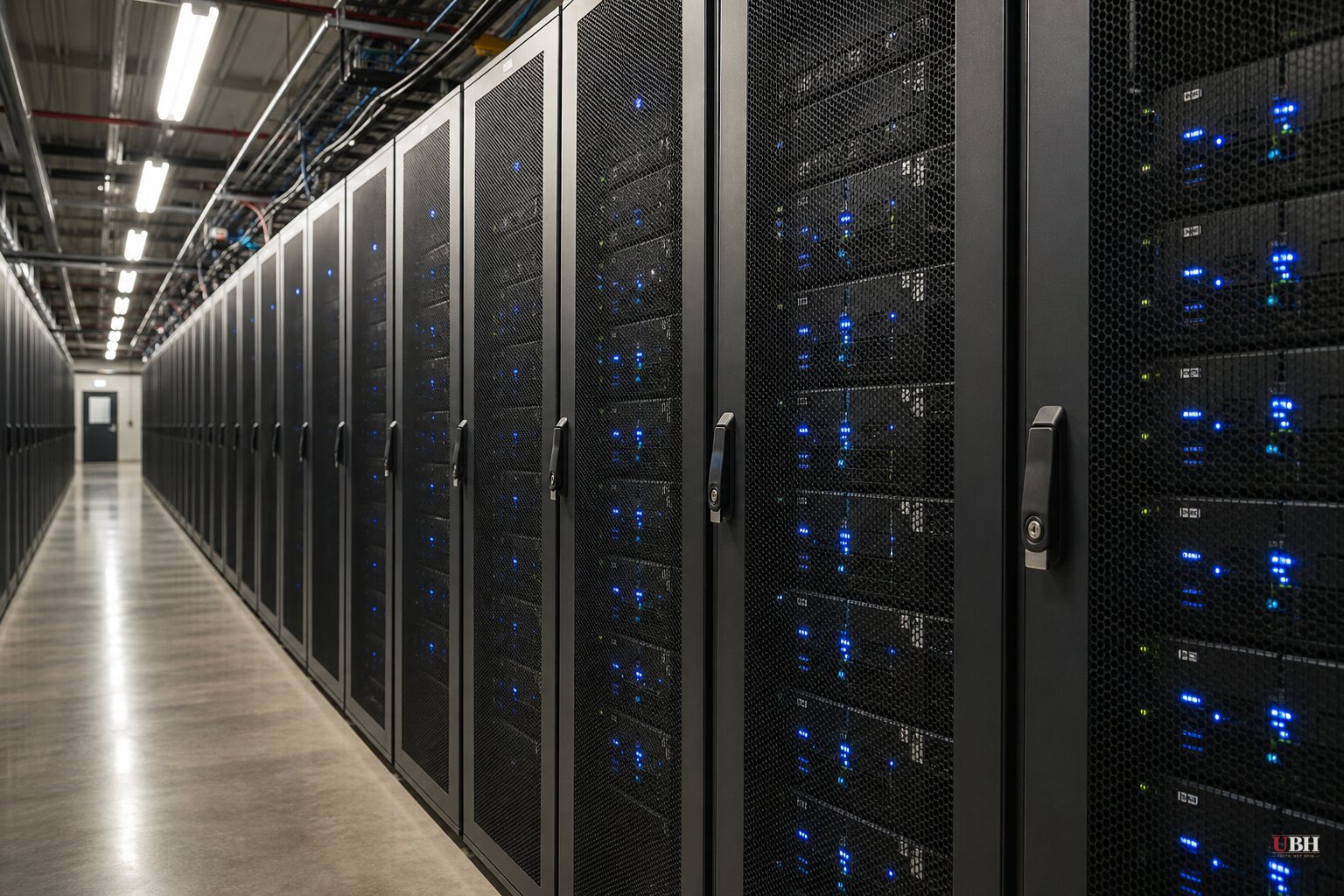
India's data-centre industry didn't sneak up on anyone. Growth accelerated when government subsidies, tax breaks and cheap land arrived in a sector deemed strategic. Now the industry faces the one problem money can't instantly fix: electricity.
The numbers themselves aren't in dispute. Minister of State for Electronics and Information Technology Jitin Prasada told the Lok Sabha on August 5, 2026, in a written reply, that India's data-centre capacity grew from 375 MW in 2020 to about 1,575 MW currently, according to ANI News. Indian Television reported the same figure and the same source. That's the government's own account, not a private analyst's guess, and it's the most conservative number in this story.
From there, the estimates diverge fast, and readers should notice that.
BloombergNEF, cited by Fortune India and by Energetica India, puts live IT capacity at 1.7GW, with another 1.3GW under construction and 3.2GW more that has already secured land, power and permits. BNEF expects data-centre electricity demand to grow more than eightfold, from 11 terawatt-hours in 2025 to 91 terawatt-hours by 2035.
Anarock, a real estate consultancy cited by Business Standard, tells a different story with different math: 1.8GW of capacity as of the first half of 2026, rising to over 6.7GW by 2030, a near-threefold jump in four years. Anarock also projects India's data-centre real estate footprint, measured in square feet rather than power, will roughly quadruple from 27 million square feet to 101 million square feet by 2030, backed by more than $300 billion in investment commitments.
Arabian Post, drawing on a separate industry assessment from July, cites yet another figure: 12GW of operational capacity by 2030 versus 2.2GW in 2025, with AI-dedicated capacity alone climbing from about 275MW in 2025 to more than 6.5GW by decade's end.
None of these numbers are wrong exactly. Arabian Post's own reporting explains why they diverge: "industry studies use different definitions of operational capacity, committed projects and IT load." That's a fair caveat, and one other outlets in this batch skip entirely. Readers comparing headlines across these sources without that context would reasonably think the coverage is contradictory. It isn't contradictory so much as it's measuring different things with different yardsticks, and no single outlet here reconciles all three.
Where the money is going
Adani and Reliance have committed a combined $210 billion to Indian data centres, roughly 45% of total announced investment, according to BNEF via Fortune India and Energetica India. Google, Amazon and Microsoft have pledged about $84 billion between them, largely for hyperscale AI campuses. About 95% of all announced investment nationally is aimed at hyperscale AI facilities specifically, not general-purpose cloud infrastructure.
The specifics get concrete fast. Business Standard reports Google committed $15 billion to a data centre in Visakhapatnam, Andhra Pradesh. Reliance is building a 168 MW AI-enabled facility in Jamnagar that Meta will lease as its first built-to-suit centre in India, according to both Business Standard and Arabian Post, with delivery expected within two years of the June 2026 announcement.
Maharashtra remains the dominant hub, according to Energetica India, holding 55% of the country's live IT capacity and the largest pipeline of approved projects. Mumbai, Navi Mumbai, Chennai, Hyderabad, Bengaluru and Delhi NCR are the established centers, Indian Television reported, while Andhra Pradesh, Madhya Pradesh, Chhattisgarh and West Bengal are emerging as newer destinations.
The power problem nobody's solved
Every source in this batch agrees on one point: the grid is the constraint.
The Central Electricity Authority, under India's Ministry of Power, estimates data centres could require around 17GW of power by 2031-32, according to Indian Television. Arabian Post cites a slightly different figure, 13.56GW by the same period, again reflecting different modeling assumptions rather than a factual contradiction.
Right now, data centres account for less than 1% of India's installed power capacity, Indian Television reported. That's a small base, which is exactly why an eightfold jump in electricity demand by 2035 is plausible without requiring a miracle. But India's installed generation capacity has only grown at a 7.1% compound annual rate since 2021, according to Energetica India, and slower transmission build-out has already delayed some generation projects. Without faster transmission investment, that mismatch could bottleneck the entire buildout regardless of how much capital Adani, Reliance or Google throw at it.
The government's response so far is regulatory, not just aspirational. New Delhi has rolled out the Green Energy Open Access Rules, a Green Energy Corridor Scheme, and the Green Term Ahead Market to push renewable power toward data centres, according to both ANI News and Indian Television. It has also passed the SHANTI Act, the Sustainable Harnessing and Advancement of Nuclear Energy for Transforming India Act, aimed at supporting future deployment of small modular and micro nuclear reactors for exactly this kind of industrial load.
Whether that legislative groundwork moves fast enough to keep pace with 6.7GW to 12GW of new capacity by 2030, depending on whose estimate you believe, remains an open question. None of these six sources actually answer it. The capital is committed. The land is being secured. The permits are being issued. The electrons still have to come from somewhere, and that's a slower problem than writing a check.
Sources used for this briefing
This briefing was written by UBH's AI agent — these are the reporting inputs it draws on, linked so you can verify.


