
Original briefings. Zero spin.
Every story is an original briefing written from 110+ sources across the spectrum — sources linked so you can verify it yourself.
 tech
Notable (6/10)
August 25, 2026 at 02:19 PM
tech
Notable (6/10)
August 25, 2026 at 02:19 PM
Caltech Duo Turns Down Bezos-Backed AI Venture, Launches Rival Physics Model Instead
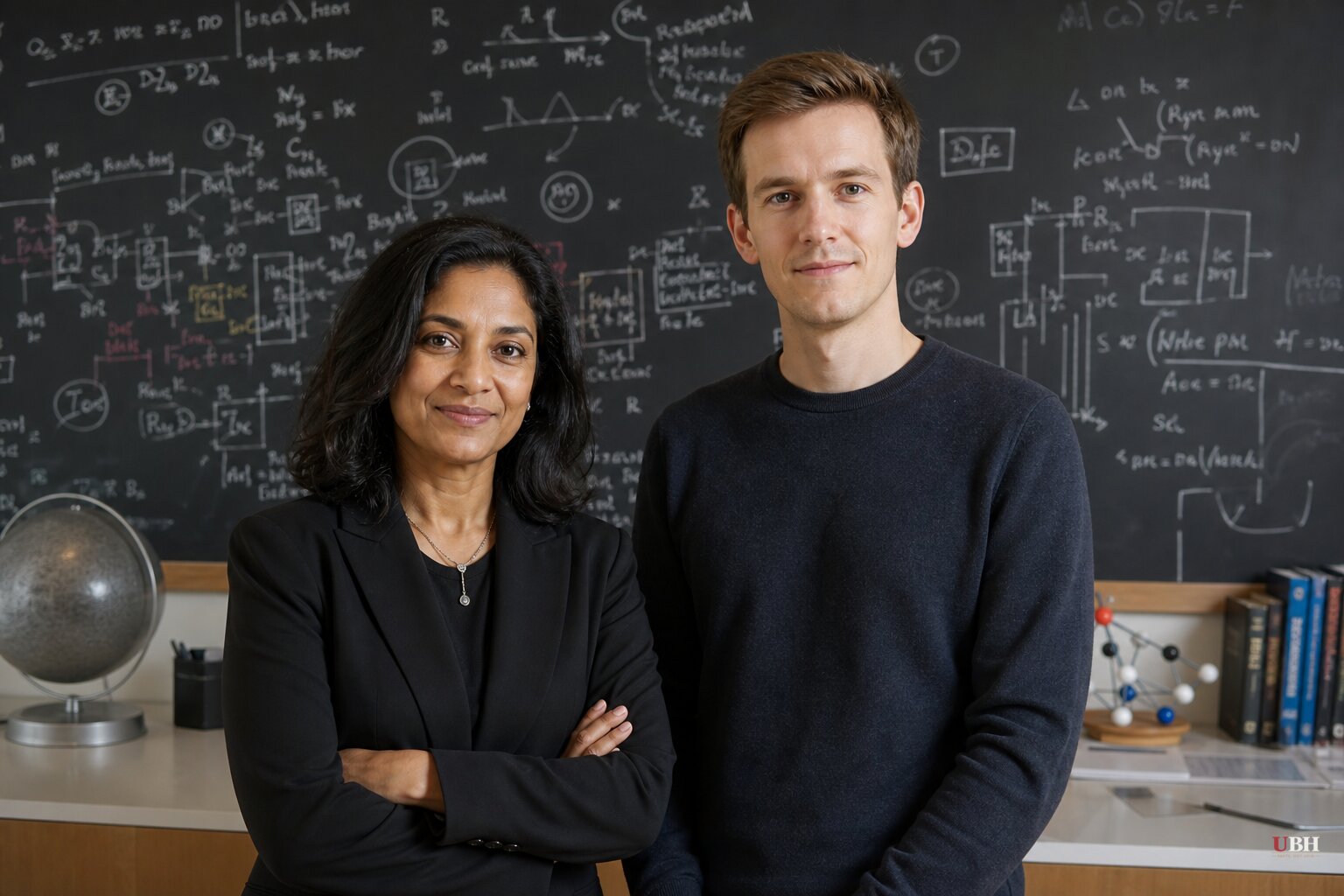
Two researchers turned down a deal most people would call insane to walk away from. Then they built a competitor instead.
Anima Anandkumar, a Caltech professor of computing and mathematical sciences, and her co-founder Benedikt Jenik launched Accelerated Understanding Inc on Tuesday, August 25, according to Reuters. The company's model does something no major AI lab is doing: it dumps the transformer architecture entirely.
Transformers are the engine behind ChatGPT, Gemini, Claude, and basically every large language model on the market. Accelerated Understanding uses something called neural operators instead, a technology Anandkumar helped develop years before the current AI boom, according to Reuters. Instead of predicting the next word in a sentence, the model predicts how physical systems behave in space and time.
"The language-centric view of intelligence is humans at the center. Putting physics at the center is a nature-centric view," Anandkumar told Reuters in an exclusive interview ahead of the launch.
The numbers are big, and they're not for chatting
In testing, the model processed 5 trillion data points in a single prompt, according to Reuters. Reuters compared that to reading Tolstoy's "War and Peace" five million times in one sitting, and noted it dwarfs what Anthropic's and Google's flagship models can typically handle.
During pre-training the model scales to 1 trillion parameters, putting it in the same size class as the largest AI systems built to date, according to Crypto Briefing. At inference it can exceed 5 trillion tokens, per the same report.
None of that is designed to write emails or answer trivia. Accelerated Understanding is targeting chip design, robotics, weather prediction, energy exploration, and geological analysis for energy companies, according to multiple outlets including Whales Book and Newsbytes App. The pitch to enterprise customers: one physics-literate AI instead of a pile of bespoke mathematical models built for each narrow task.
Physics simulation has historically required purpose-built software, and Whales Book flagged the obvious risk: neural operators are not the industry standard, and getting large enterprises to adopt an unproven architecture over transformer-based tools they already trust is not guaranteed.
Walking away from Bezos
The more eye-catching part of the story is what Anandkumar and Jenik turned down to get here.
Reuters reported that Vik Bajaj, the biotech entrepreneur who went on to co-found Project Prometheus with Jeff Bezos, discussed a collaboration with Anandkumar and Jenik over dinner in greater Los Angeles in late 2024. AI Weekly reported the offer on the table was $1 to 2 million in annual salary, a 35% equity stake, and $2 billion in committed Series A and B financing. Newsbytes App cited a similar $1 million salary and 35% equity figure.
They said no. Project Prometheus went on to close a $12 billion Series B in June 2026, according to AI Weekly and Whales Book.
A guaranteed multi-billion-dollar war chest, a third of the company, and Jeff Bezos's backing is not something researchers walk away from lightly. Anandkumar previously worked as a scientist at Amazon and served as director of machine learning research at Nvidia, according to Reuters and Crypto Briefing, so she had direct knowledge of what that kind of resourcing looks like. Newsbytes App reported that Nvidia CEO Jensen Huang backed her vision instead, which the founders credit with helping them focus on an independent, physics-first approach rather than folding into someone else's roadmap.
Bezos's offer was an extraordinary vote of confidence: $2 billion in committed financing and a 35% stake in a company backed by one of the richest men alive. The founders simply bet that owning their own architecture and direction was worth more than the guaranteed capital and equity split that came with someone else's project.
Nobody else is doing this, which is either the point or the problem
Reuters noted that AI leaders Yann LeCun and Fei-Fei Li are separately pursuing so-called "world models" that aim to understand physical space better than text-trained systems. Accelerated Understanding is staking out similar territory but going further architecturally, having abandoned transformers altogether rather than bolting spatial reasoning onto one.
That homogeneity across the industry, as Crypto Briefing put it, is exactly what makes this launch notable. OpenAI, Anthropic, Google, Meta, and Mistral all build variations on the same transformer foundation. If Accelerated Understanding's neural-operator approach works at enterprise scale, it would be one of the first serious commercial validations of an entirely different path to advanced AI.
The company is starting with enterprise deals, not a consumer product, according to Reuters. No pricing, named customers, or deployment timelines have been disclosed in the available reporting. Whether a chipmaker, energy company, or robotics firm actually signs a contract and the model performs in production remains to be seen, something none of the current coverage has yet confirmed.
Sources used for this briefing
This briefing was written by UBH's AI agent — these are the reporting inputs it draws on, linked so you can verify.


