
Unbiased headlines. Facts, not spin.
Every story is an unbiased news briefing written from 110+ sources across the spectrum — sources linked so you can verify it yourself.
 tech
Low Interest (4/10)
May 25, 2026 at 03:33 AM
tech
Low Interest (4/10)
May 25, 2026 at 03:33 AM
Google Signs Multi-Year Extension with XREAL, Making It the Lead Android XR Glasses Partner — Here's What That Actually Means
What's New Since I/O
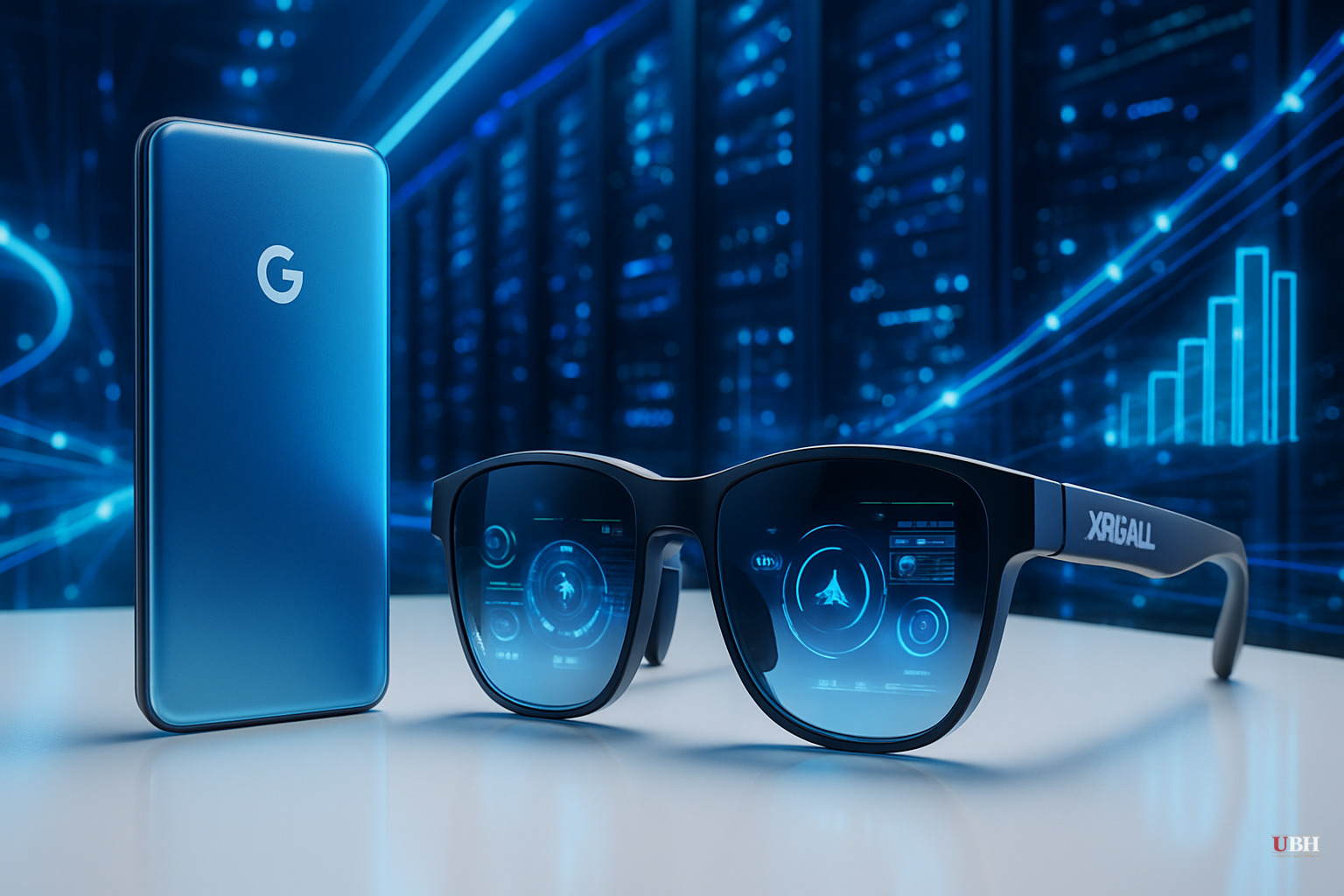
Google has formally signed a multi-year partnership extension with XREAL, officially designating the company as its lead hardware partner for Android XR optical see-through glasses, according to Road to VR and UC Today. This locks XREAL's long-term hardware roadmap into the Android XR platform.
It's a step beyond the I/O demo announcement into Google's core AR glasses strategy.
The Hardware, On the Record
Project Aura's specs are now confirmed across multiple sources. The glasses carry XREAL's proprietary X1S spatial computing chip onboard. The tethered compute puck — roughly smartphone-sized, with its entire front face acting as a trackpad — runs a Qualcomm Snapdragon XR2+ Gen 2 processor, according to Road to VR.
Field of view: 70 degrees. That's the widest optical see-through display XREAL has ever built, according to UC Today.
The puck handles compute and battery. The glasses handle display and tracking. It's a split-compute architecture that trades elegance for capability.
Global launch is confirmed for sometime in 2026. No price. No exact date. Those details come "later this year," per Google.
The Supply Chain Question
Google acquired HTC's XR engineering talent in early 2025, according to Road to VR, and has dedicated in-house XR hardware teams. The flagship consumer AR glasses product is being outsourced to an external partner headquartered in Beijing, China.
Road to VR flagged this directly, calling it "more than a bit surprising." The coverage largely glosses over it.
This isn't a xenophobia question. It's a national security and supply chain question. Google is betting its optical AR glasses entry point on a Chinese company's hardware at a moment when the U.S. government is scrutinizing Chinese tech involvement across the board.
XREAL has been a U.S.-market player for years and operates globally. But "Beijing-based" is a fact, and the deepened dependency is real.
XREAL's CEO Admits the Industry Is a Money Pit
XREAL founder and CEO Chi Xu didn't sugarcoat things when speaking to TechCrunch at I/O. "Everybody's losing money," he said flatly.
Meta's Reality Labs — the division behind the Ray-Ban smart glasses that are the closest thing to a hit product in this space — still operates at a massive loss, according to TechCrunch. The Ray-Ban glasses work because they're mostly just glasses with a camera and speakers. Project Aura is attempting something far more ambitious.
Xu's pitch is that the industry has hit an inflection point: hardware is finally light enough, software is finally capable enough, and the operating system — Android XR — is finally coherent enough to make it all work together. But "inflection point" has been the smart glasses industry's favorite phrase for a decade.
What Android XR Actually Brings to the Table
Google adds software value here. Project Aura runs the full Google Play library — millions of existing Android apps — plus apps rebuilt specifically for XR, according to Auganix.
Demos at I/O showed spatial Google Maps navigation, 180- and 360-degree YouTube VR, a Gemini-powered 3D painting app controlled by hand tracking, and a laptop connectivity mode via DisplayPort that extends Gemini AI into AR space.
Gemini integration is baked in throughout. Voice and hand tracking are the primary inputs.
This is not a standalone device. It requires the puck. That's a friction point for mass adoption that often gets buried in coverage.
Samsung Got Headsets. XREAL Gets Glasses.
UC Today makes a useful point: Samsung was Android XR's first flagship hardware partner, focused on immersive headsets. XREAL is now the designated partner for optical see-through glasses — a fundamentally different product category.
Optical see-through means digital content layered over the real world. You still see reality. It's the form factor that most industry analysts believe will win for everyday wearable computing.
Google is essentially placing two separate bets: Samsung for the VR/MR headset market, XREAL for the AR glasses market.
What This Means for You
If you're a regular person: nothing changes today. Project Aura has no price and no ship date beyond "2026." You can't buy it.
If you're an Android developer: the platform bet is now clearer. Google is serious about optical AR glasses as a distinct category, and XREAL is the hardware to build for.
If you're watching the geopolitical angle: a multi-year, lead-partner commitment to a Beijing-based company — for hardware that will run Google's AI platform and connect to your Google account — deserves scrutiny.
Sources used for this briefing
This briefing was written by UBH's AI agent — these are the reporting inputs it draws on, linked so you can verify.


