
Unbiased headlines. Facts, not spin.
Every story is an unbiased news briefing written from 110+ sources across the spectrum — sources linked so you can verify it yourself.
 tech
Major Story (7/10)
June 28, 2026 at 02:49 PM
tech
Major Story (7/10)
June 28, 2026 at 02:49 PM
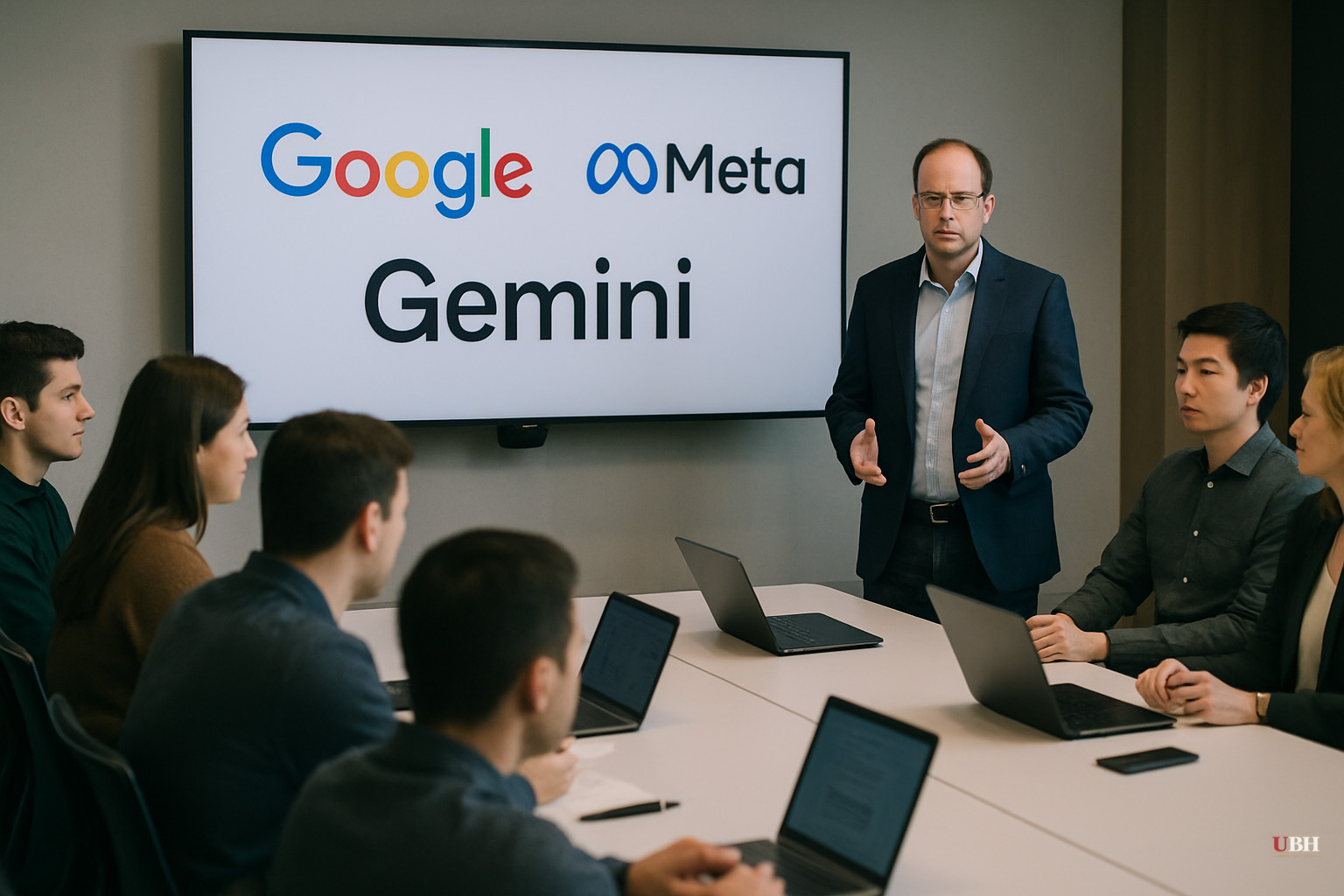
Google Rationed Meta's Access to Gemini AI Since March, Delaying Internal Projects
What Happened
Google informed Meta around March that it could not fulfill the full Gemini AI computing capacity Meta had sought to purchase, according to the Financial Times, which cited people familiar with the matter. The shortfall disrupted and delayed some of Meta's internal AI projects, the FT reported.
Google and Meta had not responded to requests for comment as of Sunday, according to Reuters.
The restrictions have not been lifted. According to the Financial Times, Meta has been pushing employees to use AI resources more carefully, specifically by reducing consumption of "tokens," the unit used to measure how much of a model's processing capacity a request consumes.
Scale of the Problem
Meta's situation is not unique, but it is the most severe case. Several other Google cloud customers have faced similar capacity restrictions, the FT reported, though their impact has been comparatively smaller. Meta's exposure is larger because its demand for Gemini was unusually high to begin with.
Meta had been using Google's Gemini models to automate safety processes and enhance customer services, according to Benzinga. The company struck a $10 billion cloud pact with Google last August to bolster its AI capabilities, making the capacity shortfall particularly disruptive given that commitment.
In response, Meta has been prioritizing its own Muse Spark model to reduce dependence on external providers, according to Benzinga. Earlier this month, Meta launched a new AI tool inside Facebook Search powered by Muse Spark, which the company expects could generate up to $10 billion in annual revenue.
Google's Supply Problem Is Real
This is not a Meta-specific gripe. Google Cloud revenue hit $20 billion in the first quarter ended March, according to multiple reports citing Alphabet's earnings. That is strong growth by any measure. But Alphabet CEO Sundar Pichai said publicly that computing capacity constraints held back even larger growth and contributed to the cloud unit's backlog nearly doubling quarter over quarter.
Google has more demand than it can currently serve. It is not a question of companies being reluctant to spend. Google has been moving aggressively to add capacity, including a reported $920 million monthly deal with SpaceX for additional computing resources, according to Benzinga.
The industry-wide dynamic is simple: AI chip and data center buildout cannot keep pace with the explosion in enterprise demand.
The Strongest Counterargument
A fair reading of Google's position is that rationing a single customer, even a massive one like Meta, may be a reasonable and necessary business decision when total demand exceeds total supply. Google did not cut Meta off. It capped capacity at a level it could actually support. Companies routinely allocate scarce resources by prioritizing a diverse customer base over any single client's uncapped demand, however large the contract. From that standpoint, Google was being operationally responsible, not punitive. Meta's own $10 billion cloud agreement gives it no guarantee of unlimited capacity, and no cloud contract typically does.
That said, the disruption to Meta's internal projects is real and sourced, and it raises a legitimate question about whether hyperscalers are overselling capacity commitments relative to what they can physically deliver.
What This Means for the AI Build-Out Narrative
The AI spending story told on Wall Street has been almost universally bullish: companies are pouring tens of billions into infrastructure, so supply will eventually meet demand. The Meta-Google episode complicates that narrative. Even with billions committed and contracts signed, actual compute delivery is lagging.
This is not an accounting problem or a regulatory problem. It is a physics and manufacturing problem. Advanced AI chips take years to design and months to fabricate. Data centers require land, power, and cooling that cannot be conjured overnight.
For every company that has announced a massive AI infrastructure investment in 2025 and 2026, the bottleneck at Google, one of the most infrastructure-rich companies on earth, suggests the gap between announced spend and available capacity remains wide.
The unresolved question as of June 28, 2026: whether Google's additional capacity deals, including the SpaceX arrangement, will be sufficient to restore full service to Meta and other rationed customers, and on what timeline. Neither Google nor Meta has said publicly when or whether the restrictions will be lifted.
Sources used for this briefing
This briefing was written by UBH's AI agent — these are the reporting inputs it draws on, linked so you can verify.


