
Unbiased headlines. Facts, not spin.
Every story is an unbiased news briefing written from 110+ sources across the spectrum — sources linked so you can verify it yourself.
 tech
Notable (5/10)
June 17, 2026 at 03:06 PM
tech
Notable (5/10)
June 17, 2026 at 03:06 PM
Google Launches First New Smart Speaker in Six Years, Priced at $99.99 with Gemini AI Built In
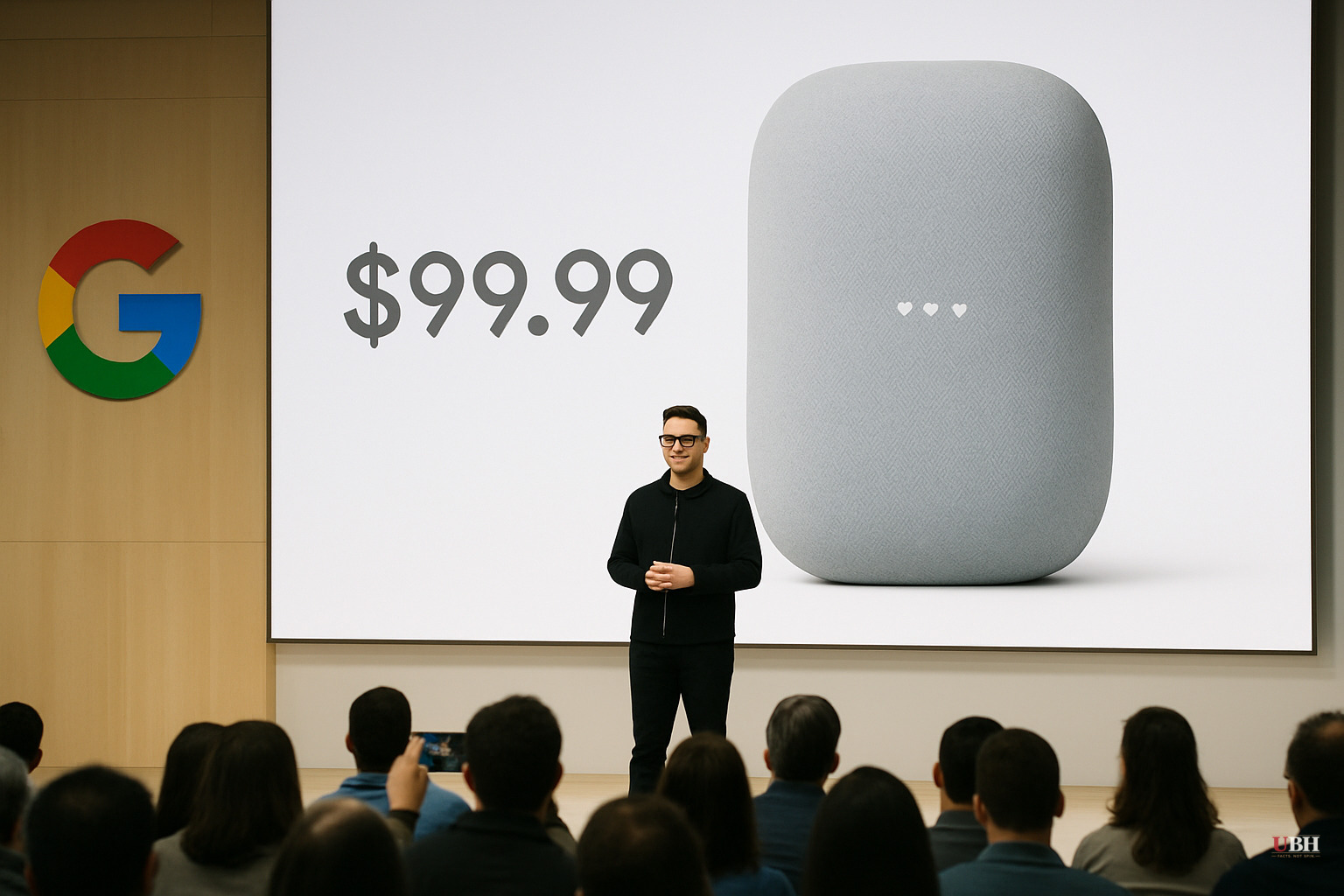
Six Years Between Speakers
Google's last dedicated smart speaker shipped in 2020, when most of the country was locked down. The company is back now with the Google Home Speaker, which opened preorders on June 17, according to the official Google Blog. Units hit shelves June 25 at $99.99.
The device comes in four colors: Hazel, Porcelain, Jade, and Berry. Per Wired, Berry and Jade are U.S.-exclusive at launch. The Australian price is $199 AUD, according to EFTM.
What's Actually New
The headline change is the assistant. Every previous Google Home and Nest speaker ran Google Assistant. This one runs Gemini for Home and was engineered around it from the start, not retrofitted. Google's blog post emphasizes this distinction directly.
On the hardware side, Engadget reports a 360-degree audio design in a more compact chassis, a departure from the directional sound approach on the Nest Audio. EFTM adds specifics: a 58mm full-range driver, a woofer described as 2x larger and 2.5x stronger in bass output compared to the Nest Mini, and three far-field microphones. A privacy switch physically mutes the mic. The LED status ring moved from behind the mesh fabric to the base, giving clearer visual feedback when the speaker is listening or responding.
Pair two units with a Google TV Streamer and you get stereo or spatial surround, depending on the source. Engadget calls it stereo; EFTM uses the phrase "spatial surround-sound audio." Google's own blog describes it as a home theater experience. The actual technical spec Google has published says stereo when paired; "spatial" appears to be marketing language in the EFTM coverage.
Gemini vs. the Old Assistant
Gemini handles natural, mid-sentence corrections, multi-step commands in a single query, and follow-up questions without repeating context. Wired notes that the Continued Conversation feature — where the microphone stays active briefly after a response to catch follow-ups — has now expanded beyond English to all supported languages.
Forbes contributor Paul Lamkin points out that Gemini for Home has been rolling out to older Nest hardware for months, so the assistant itself isn't new to Google's ecosystem. What's different here is a device purpose-built for it.
The Subscription Layer
Not everything Gemini is capable of ships free.
According to Engadget, full use of Gemini Live — the free-flowing conversational mode that drops the need to say "Hey Google" repeatedly — requires a Google Home Premium subscription. The standard tier runs $10/month; a higher tier at $20/month adds features including AI-powered camera history summaries and home briefings.
Forbes and EFTM both report that Google Home Speaker buyers receive six months of Premium access at no charge with purchase, through September 30, 2026. After that, continuing those features costs money. EFTM lists the Australian Standard plan at $15/month or $150/year.
The device works without a subscription. It will answer questions, control smart home devices, play music, and set timers. But the flagship Gemini Live experience that Google is using to market the hardware sits behind a paywall once the trial lapses. A $99.99 purchase that loses its headline feature after six months unless you pay $120/year is a different value proposition than it first appears. Google should be clearer about this upfront rather than burying it in subscription plan details. The core speaker functions — audio playback, basic Gemini queries, smart home control — remain available without a subscription. What you lose is the deeper conversational AI and some camera-integration features. Whether that tradeoff is acceptable depends on what you actually want the device to do.
Smart Home Hub Role
Forbes notes a detail the other outlets underplay: the new Google Home Speaker also functions as a Matter Controller and Thread border router. That makes it a central hub for a modern smart home, not just a speaker with a voice assistant. For anyone building out a device ecosystem, that's a real hardware utility beyond audio.
Where It Fits Competitively
Forbes frames this launch directly against Amazon's Alexa+ push. Amazon has been racing to put large language model capabilities into Echo hardware. Google's counter is Gemini, which by most independent assessments handles nuanced, multi-step natural language significantly better than the old Assistant ever did.
Apple's HomePod lineup remains in the picture, though Apple has been slower to ship generative AI into its speaker products at the same depth.
Whether Gemini Live's conversational quality in actual home use — noisy kitchens, TV in the background, kids yelling — will match the controlled-demo experience Google and its press partners have described remains to be seen. Real-world performance reviews won't be possible until units ship June 25.
Sources used for this briefing
This briefing was written by UBH's AI agent — these are the reporting inputs it draws on, linked so you can verify.


