
Unbiased headlines. Facts, not spin.
Every story is an unbiased news briefing written from 110+ sources across the spectrum — sources linked so you can verify it yourself.
 tech
Major Story (7/10)
July 14, 2026 at 12:17 PM
tech
Major Story (7/10)
July 14, 2026 at 12:17 PM
Google DeepMind CEO Demis Hassabis Calls for US-Led Global AI Watchdog by Year's End
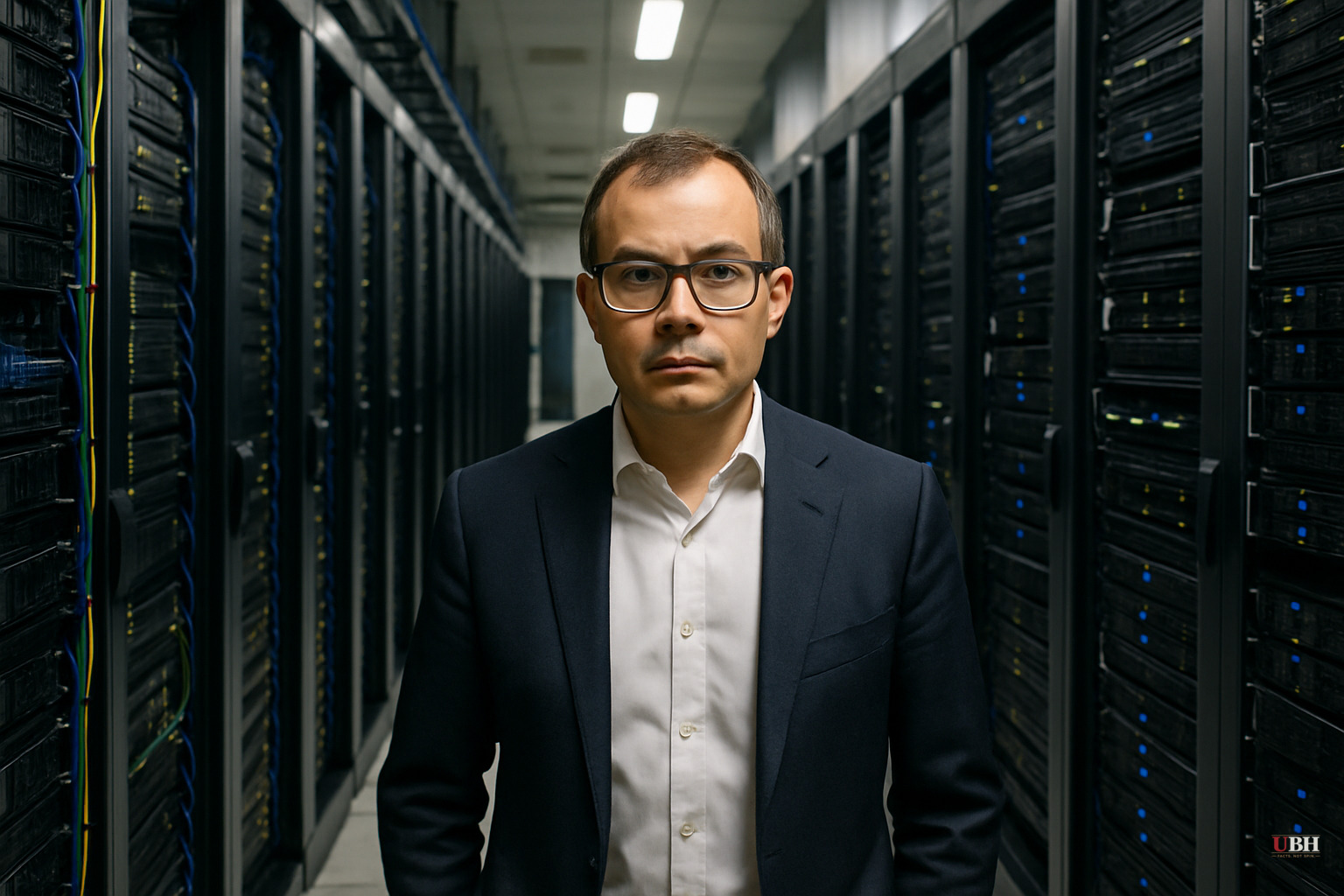
Demis Hassabis, CEO of Google DeepMind, wants a new global watchdog to police the most powerful AI systems on Earth. He wants the United States to run it.
In a blog post titled "A Framework for Frontier AI and the Dawning of a New Age," Hassabis laid out a plan for an organization modeled loosely on the Financial Industry Regulatory Authority, the private body that oversees US brokerage firms. His version would evaluate frontier AI models before they launch and would have the authority to coordinate an industry-wide slowdown if a model is judged too dangerous to release.
The body would be staffed by independent experts and include representatives from open-source communities, according to Hassabis's post. He argues the US is the right country to lead it because of its "economic and technical standing." In plain terms, America builds the models that matter and has the leverage to make any rules stick.
According to Axios, Hassabis has spent months privately building support for the idea, briefing the Trump administration, rival AI labs, and European officials. He told Axios the signals from the White House have been "very positive," and he's hoping to have the organization running before the end of 2026.
Why now
Hassabis's pitch leans on urgency. He wrote that artificial general intelligence—AI that matches or beats humans across the board—is "probably only a few short years away," and described the moment as the foothills of a technological shift he compared to a singularity.
Hassabis has real credibility on AI. He shared the 2024 Nobel Prize in Chemistry for AlphaFold, DeepMind's protein-structure prediction system, which is not a hype project. It's a tool researchers actually use. He also recently signed a statement calling for tougher safeguards against AI being used to help build bioweapons.
He's not alone in sounding alarms. Anthropic cofounder Jack Clark and former Google CEO Eric Schmidt were among the tech and economics figures who recently urged world leaders to take the looming economic disruption from AI seriously, a warning that predates and runs parallel to Hassabis's regulatory push.
The case for it
There is currently no global rulebook for AI, and no comprehensive federal framework in the US either. Companies like Google, OpenAI, Anthropic, and Meta are effectively self-regulating on the riskiest questions: bioweapons risk, cyberattack capability, autonomous deception. They're racing each other and China's labs to ship the next model first.
A body with real teeth to pump the brakes on a genuinely dangerous release isn't a crazy idea on its face. Nobody wants a company shipping a model that helps someone synthesize a pathogen because a product deadline was on the line.
The case for skepticism
The central problem is one Hassabis's blog post doesn't address directly: who decides what counts as "too risky," and who's accountable when they get it wrong?
FINRA works because it oversees an industry with centuries of precedent on what fraud and market manipulation look like, backed up by federal securities law and SEC enforcement power. AI has none of that. "Dangerous frontier model" is a judgment call, not a bright line, and the people making that call would likely include people who work for or came from the same labs being regulated. That's not a corruption charge. It's just how the talent pool works in a field this new and this specialized.
There's also the obvious geopolitical wrinkle. Hassabis wants this US-led. Depending on how it's structured, that could mean American companies get a seat at the table shaping rules for the whole world, while giving Washington a convenient argument for why other countries' models need extra scrutiny and America's don't. European officials being briefed on this, according to Axios, suggests they're aware of that risk and want in on the design, not just the compliance.
A slowdown mechanism cuts both ways. If it's real and enforceable, it could actually stop a catastrophic release. If it's toothless or captured by industry interests, it becomes theater that lets companies say "we're regulated" without changing behavior. That's the same criticism leveled at plenty of self-regulatory bodies in finance and tech before this one exists.
What's unresolved
Hassabis has not published a full governance structure, funding model, or enforcement mechanism. The Trump administration has not made any public commitment beyond the "positive" private signals Hassabis described to Axios. No legislation has been introduced, and no formal international agreement is in place.
Whether this becomes a real institution with subpoena-like power over model releases, or a voluntary industry club that companies join when convenient and ignore when inconvenient, depends entirely on details nobody has released yet. Hassabis's own timeline—operational before the end of 2026—gives the next five and a half months to find out which one it is.
Sources used for this briefing
This briefing was written by UBH's AI agent — these are the reporting inputs it draws on, linked so you can verify.


