
Unbiased headlines. Facts, not spin.
Unbiased Headlines is an independently owned news organization. We bring you the facts, not opinions, written fresh from 110+ named sources. Sources linked so you can verify it yourself.
 health
Notable (6/10)
Google Cloud launches Gemini for healthcare in U.S. preview, with HCA, Northwell and Optum as launch customers
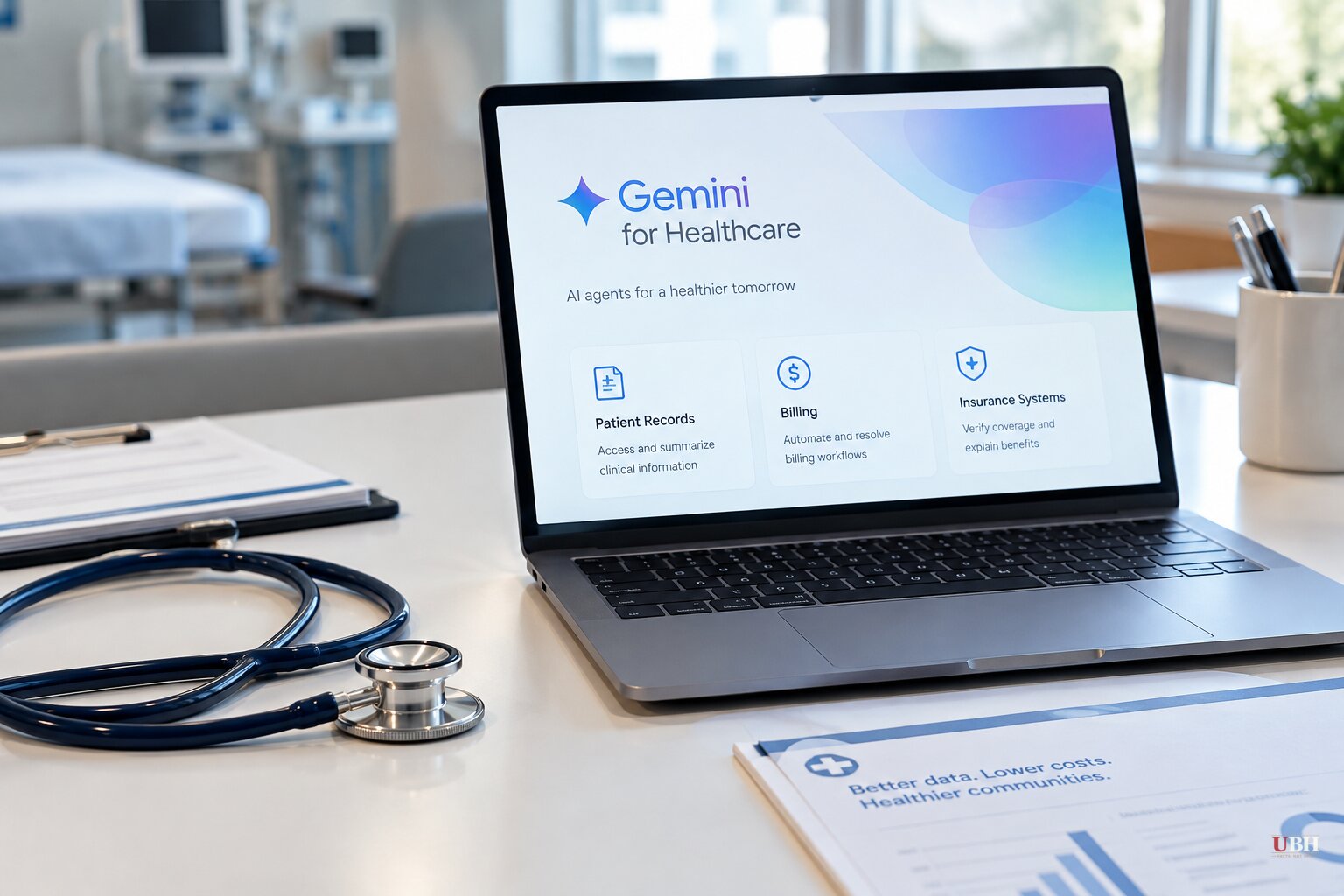
Google Cloud unveiled Gemini for healthcare today, Nov. 10, a U.S. preview product that connects to the electronic health record, billing and insurance systems hospitals and insurers already run.
Launch customers are Blue Cross Blue Shield of Massachusetts, Hartford HealthCare, HCA Healthcare, Highmark Health, Northwell Health, Optum and Stanford School of Medicine. The American Society of Clinical Oncology (ASCO) is listed as a contributor.
What the product does
Gemini for healthcare extends the universal Gemini agent that Google Cloud CEO Thomas Kurian introduced last month at the company's Gemini at Work event. Google says the healthcare version adds industry-specific instructions and connectors to clinical data and administrative tools.
On the provider side, Google says it can pull a patient's records from Epic and other systems into one summary and flag gaps or conflicts between them. It can also prepare and review prior authorizations, check what a patient's insurance covers and estimate what the patient will owe. It can also search clinical guidelines from groups such as ASCO and the BMJ.
For insurers, Google says the tool checks incoming requests against medical policy and organizes them for a clinical reviewer. It can also explain benefits and costs to members from their own plan documents.
Google also says the system can assemble an authorization packet against a payer's requirements before submission, "so fewer claims come back denied." That is Google's claim. The announcement offers no denial-rate data.
Human oversight, for now
Google says the product runs "within defined guardrails and with appropriate human oversight." It says Gemini for healthcare is built to support HIPAA compliance. Each agent operates with its own identity and inherits the permissions of the user it works for.
According to Fortune's reporting, the tool cites the source for each finding so clinicians can check it. For now it can read patient records but not change them, so a doctor or nurse still makes any updates and decisions.
Google does not require organizations to replace their existing record or claims software. The pitch is a coordination layer on top of what hospitals already pay for.
The cost problem it is aimed at
Google's launch materials lean on three numbers. A study by The Harris Poll and Google Cloud found clinicians lose nearly 28 hours a week to documentation and administrative work. A 2025 American Medical Association report put physician burnout at 41.9%. The American Hospital Association estimates administrative costs at 25% to 35% of total U.S. healthcare spending.
The premium numbers are not Google's. KFF's annual employer survey, released in October, found workers with employer coverage pay an average of $7,471 a year toward family premiums, up 9% from 2025. Total family premiums, including the employer share, rose 5% to $28,303. Wages rose 3.7% and inflation was 2.7%.
Northwell CEO John D'Angelo, an emergency physician who became Northwell's CEO in October 2025, tied those costs to records that don't talk to each other. "All the fragmentation of information in healthcare is what has led to, in my mind, some of the costs that have gotten away from us, and also overutilization," he told Fortune.
He described treating patients in the ER without access to their history. "I would treat people de novo, and the information is out there somewhere. So I'm either playing detective or I just have to assume." That can mean ordering a CT scan without knowing whether the patient has had four already for the same condition.
D'Angelo also said that for every 10 minutes a doctor spends with a patient, the doctor spends 20 minutes on the computer documenting and looking up old data.
Open questions
The link between this product and a lower bill for patients is, for now, a hope voiced by hospital executives. Neither Google's announcement nor its launch customers attach a savings figure to it.
The tool also sits on both sides of the prior-authorization fight. Providers can use it to build and appeal requests, and health plans can use it to sort and review them. Google has not said how much the product will cost or when it will move beyond preview.
The product is labeled "initially available in preview." The next test is whether the launch customers can show measurable reductions in paperwork hours and denied claims, and whether Google loosens the read-only limit on patient records.
Sources used for this briefing
7 links from 7 independent newsrooms (syndicated copies of the same report count once)
These are the sources it draws on, linked so you can verify.


